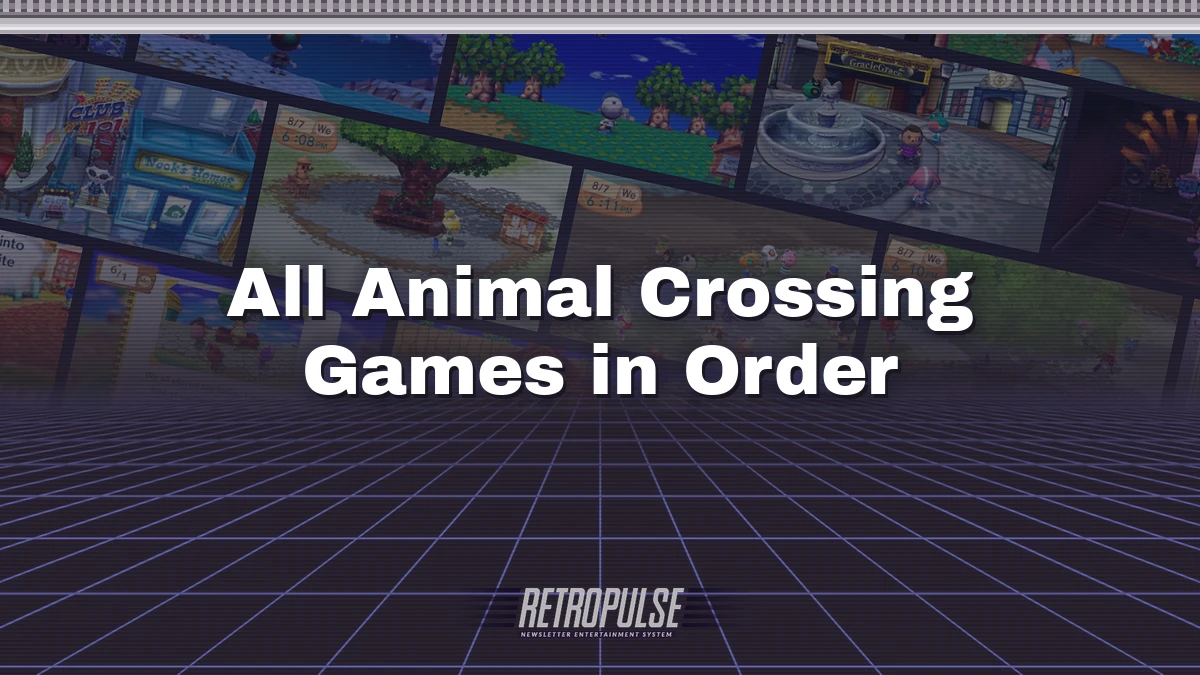
There are 9 Animal Crossing games, listed here in US release order from the 2002 GameCube game to New Horizons in 2020. Spin-offs are marked.
Animal Crossing (2002)
 Sep 16, 2002
 Oct 17, 2003
 Sep 24, 2004

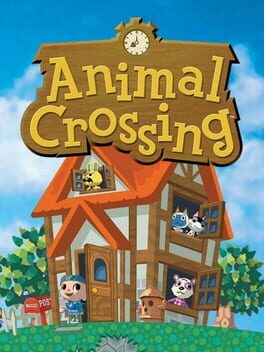
You move into a village of talking animals, and shopkeeper Tom Nook gives you a house and a mortgage to pay off. The game runs on a real clock and calendar, and the series is still known for that. You can collect NES games such as Donkey Kong and Excitebike and play them inside the game. A Game Boy Advance on a link cable opens an island, where Kapp'n ferries you over to pick coconuts and befriend the animal who lives there. Turn the game off without saving and a mole named Mr. Resetti turns up the next time you play to scold you.
Japan got it first as Dōbutsu no Mori on the Nintendo 64 in 2001, then on the GameCube that December. It started as a role-playing adventure for the 64DD add-on, with the main action in dungeons. The 64DD kept getting delayed, so the game moved to a cartridge and co-director Katsuya Eguchi turned it into a life simulator. Swapping dungeons for a home loan is a bold way to deal with a delay. Translators Nate Bihldorff and Rich Amtower had to create new holidays and items that made sense outside Japan. The job took six months and was Nintendo of America's largest translation project to that date. Nintendo's leaders in Japan were so impressed with the American version that they added its content back into the Japanese game, released as Dōbutsu no Mori e+ in 2003.


Animal Crossing: Wild World (2005)
 Nov 23, 2005Dec 5, 2005Dec 8, 2005Mar 31, 2006
 Dec 6, 2007Nov 19, 2015Oct 13, 2016

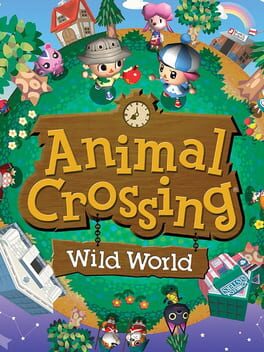
Wild World took the series to the Nintendo DS and was its first game with online play. Through Nintendo Wi-Fi Connection you could visit friends' villages once you had swapped Friend Codes, with up to four DS systems in one village. That service shut down on May 20, 2014.
You use the touch screen to write messages and draw clothes. The ground rolls like a log as you walk, which keeps the sky in view, and you can draw your own constellations up there. It had sold 11.75 million copies by March 31, 2016, making it the ninth best-selling game on the DS. It reached the Wii U Virtual Console on October 13, 2016, without the Wi-Fi play. Japan got the game on November 23, 2005.


Animal Crossing: City Folk (2008)
Nov 16, 2008Nov 20, 2008Dec 4, 2008Dec 5, 2008Jan 28, 2010 May 20, 2014

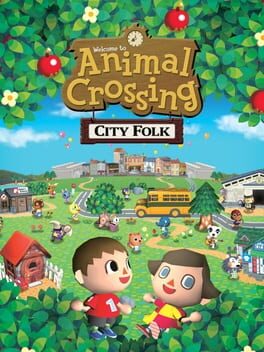
City Folk is known as Let's Go to the City in Europe and Australia, and its big addition is a city area outside your village. You can shop at GracieGrace, which sells high-end items at prices that make Tom Nook's mortgage look friendly, and put your own things up for sale at an auction house.
It was the first Wii game to use Wii Speak, an accessory for talking during online play. You can bring your character over from Wild World, and the routes you walk most often wear away the grass. Critics gave it mixed reviews for being too similar to the earlier games. It sold 3.38 million copies, and Nintendo re-released it in the Nintendo Selects collection in 2011.


Animal Crossing: New Leaf (2013)
Nov 8, 2012Jun 9, 2013Jun 14, 2013Jun 15, 2013
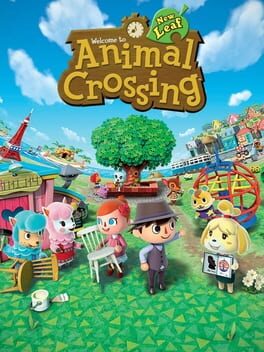
New Leaf makes you the mayor. You arrive in town, the residents mistake you for the new mayor and the job is yours, with a dog named Isabelle as your assistant. You can pass ordinances, such as making shops open earlier or later, and collect funds for public works like bridges and fountains. The mayor idea came about a year into development.
Tom Nook now sells houses, and his nephews Timmy and Tommy run the shop. Hamsters and deer join as new villager types, and the old mayor Tortimer runs an island you reach by boat. Japan got the game on November 8, 2012. A free update in November 2016 added amiibo support, and a retail edition called Animal Crossing: New Leaf - Welcome amiibo followed in late 2016. Photos with Animal Crossing, an augmented reality camera app for the Nintendo 3DS, never had a US release. In Japan it came with Animal Crossing themed eShop cards. Europe got it on July 10, 2015, through a mailing list and competitions only.


Animal Crossing Plaza (2013)
Aug 7, 2013

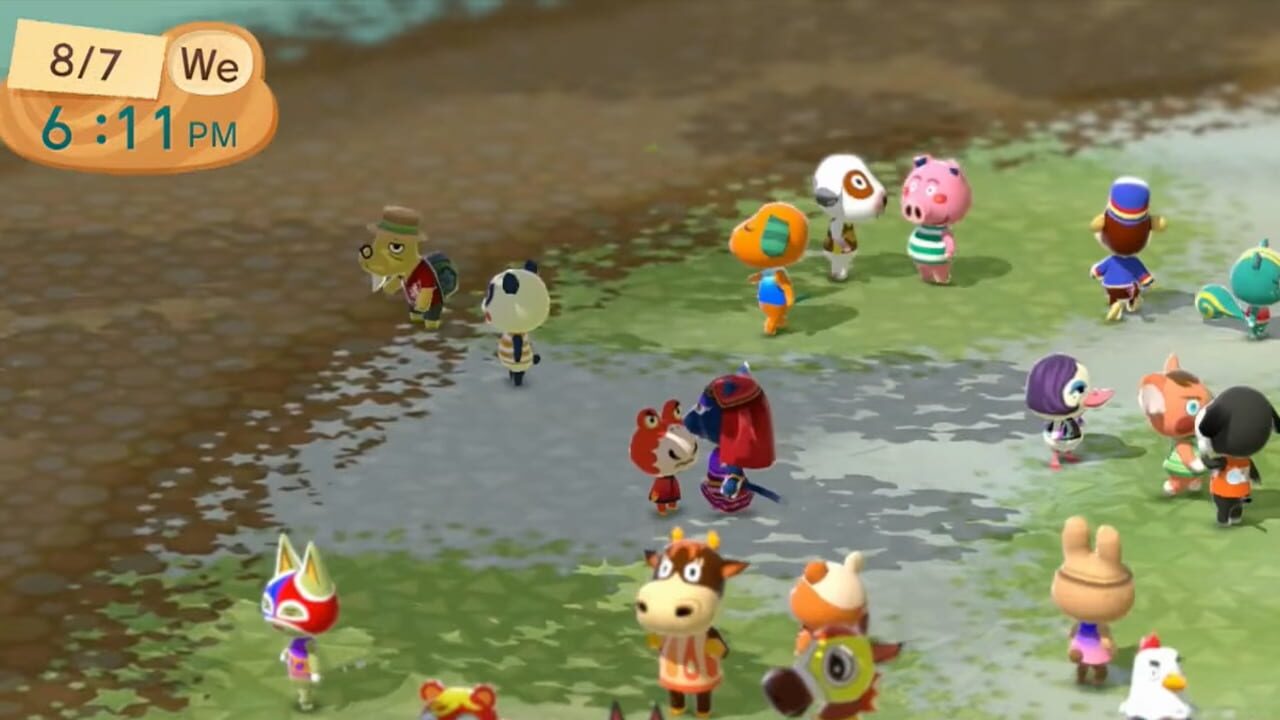
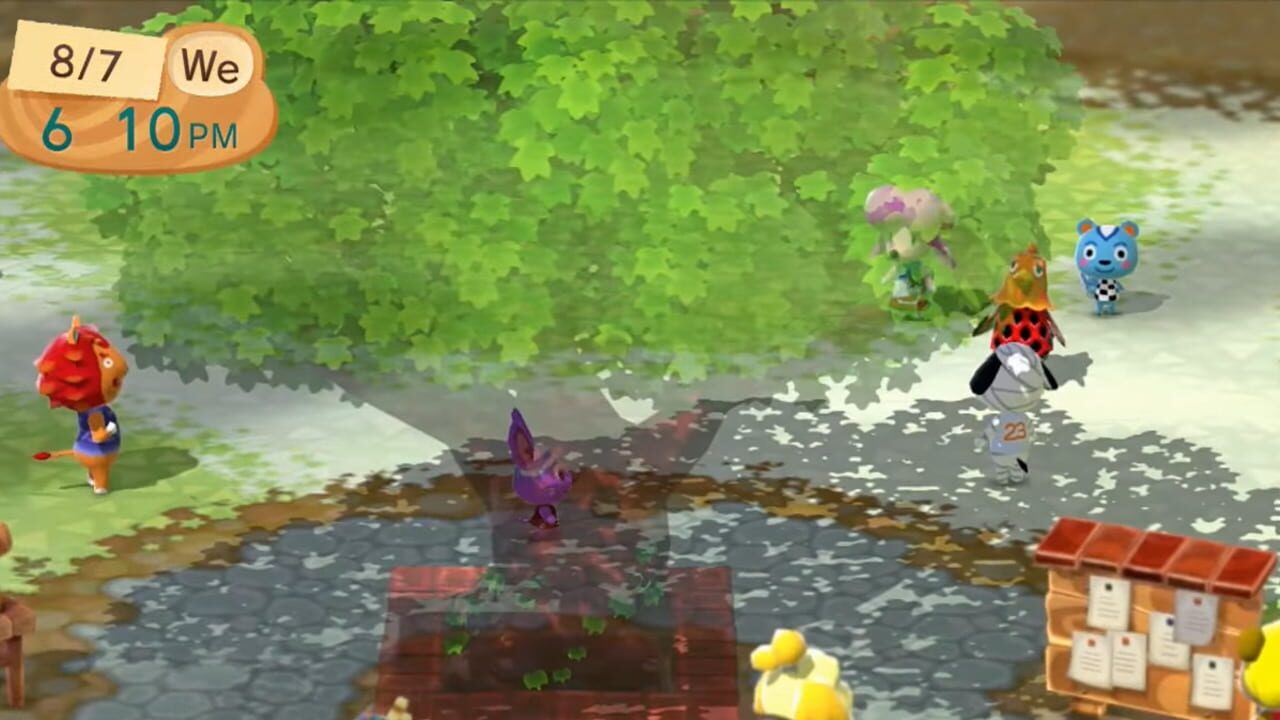
Animal Crossing Plaza was a free Wii U app tied to New Leaf. You imported images from your New Leaf save by SD card, sorted them into albums and shared them through Miiverse, Nintendo's now-closed social network. Characters from the series filled a plaza, and you could talk to them and post about them. Monthly polls had players rank characters on questions like who makes the best secretary.
Nintendo boss Satoru Iwata announced it in a Nintendo Direct on August 7, 2013, and it reached the eShop the same day. Nintendo planned it as a limited-time app, and it left the eShop on December 22, 2014.
Animal Crossing: Happy Home Designer (2015)
Jul 30, 2015Sep 25, 2015Oct 2, 2015Nov 5, 2015
Happy Home Designer drops most of the village life and makes you an employee of Nook's Homes, designing houses for animals based on their requests. You have no budget to worry about. The team considered one and decided it put too much of a burden on your creativity. Scanning amiibo cards lets you design homes for major characters like K.K. Slider and Tom Nook.
Critics liked the creative freedom and the better design controls, but many felt it should have been DLC for New Leaf. It sold 3.04 million copies by March 2016, and its idea came back as Happy Home Paradise, paid DLC for New Horizons. Japan got the game on July 30, 2015.


Animal Crossing: amiibo Festival (2015)
Nov 13, 2015Nov 20, 2015Nov 21, 2015Nov 21, 2015

amiibo Festival is a virtual board game in the style of Mario Party, released alongside eight Animal Crossing amiibo figures, and it generally needs those figures to play. Scanning amiibo cards unlocks eight minigames, including Resetti Bop, a Whac-A-Mole style game that finally lets you get even with Mr. Resetti.
It was a critical and commercial failure. Its Metacritic score is 46 out of 100, and it sold only 20,303 copies in its first week in Japan. Critics disliked the repetitive gameplay and the poor amiibo integration, though they praised the presentation.


Animal Crossing: Pocket Camp (2017)
Oct 25, 2017Nov 21, 2017
Pocket Camp put the series on phones. You look after a campsite in place of a town, gather materials such as wood and cotton, and the alpaca Cyrus turns them into furniture. Neighbors visit when you place their favorite furniture at your campsite, and your relationship with each one has its own experience level, a new mechanic for the series. Australia got it first on October 25, 2017.
Leaf Tickets, bought with real money or earned in the game, cut timers, and fortune cookies work as loot boxes. Nintendo's concerns over those loot boxes led it to shut out Belgian players from August 27, 2019. The service ended on November 28, 2024, and Pocket Camp Complete replaced it on December 2, 2024. It is a paid, offline version with no microtransactions, and players could transfer their save data from the old game.


Animal Crossing: New Horizons (2020)
Mar 20, 2020Mar 20, 2020
New Horizons moves you to a deserted island after you buy a getaway package from Tom Nook. You craft items and furniture through D.I.Y. crafting, earn Nook Miles for simple tasks, and later reshape the land with new cliffs and paths. The weather follows the Northern or Southern Hemisphere depending on where you live, a first for the series. A new autosave also put Mr. Resetti out of work, and he now runs the Rescue Service. It is the best-selling game in the series, with 50.29 million copies sold as of June 30, 2026, and it broke the console record for most digital units sold in a single month.
The Nintendo Switch 2 Edition came out on January 15, 2026, alongside the free 3.0 update for the Switch game. You can buy it separately, or as a paid upgrade pack if you own the Switch edition. It adds 4K resolution, mouse controls with the Joy-Con 2 when designing interiors, and a megaphone that uses the system's microphone to find villagers. Multiplayer goes up to 12 players if everyone is on the Switch 2. The 3.0 update adds a resort hotel run by Kapp'n's family, along with slumber islands and bulk crafting.