There are 7 Legacy of Kain games, listed here in US release order from the 1996 PlayStation original to Legacy of Kain: Ascendance in 2026. Spin-offs are marked.
Blood Omen: Legacy of Kain (1996)
 Nov 1, 1996
 Mar 1, 1997
 May 30, 1997Aug 31, 19971997
 Sep 10, 2009

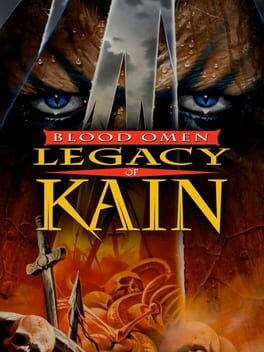
Silicon Knights developed this top-down 2D action-adventure, and Crystal Dynamics published it. You play Kain, a slain nobleman brought back as a vampire, who is dead within the first five minutes, a rough first day. He crosses Nosgoth to kill the Circle of Nine and looks for a cure along the way. His health drains over time, so you keep drinking blood from whatever you can wound. He can turn into a bat to reach checkpoints or a cloud of mist to cross water.
Denis Dyack and Ken McCulloch drafted it around 1993 as The Pillars of Nosgoth. The Soul Reaver sword began as a weapon for Too Human, another Silicon Knights idea. Moving to a different screen on PlayStation can take 20 seconds or more. After a dispute over the rights, Crystal Dynamics kept the series.


Legacy of Kain: Soul Reaver (1999)
Sep 8, 19991999Dec 6, 2012Aug 16, 199919992000Jan 27, 2007Nov 19, 2009Mar 2, 2011
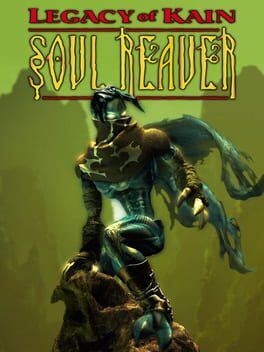
Crystal Dynamics took the series into 3D here, 1500 years after Blood Omen. Kain kills his lieutenant Raziel, who comes back as a wraith to take revenge. You shift between the material and spectral realms, and many puzzles depend on what changes between them. Raziel can walk through gates in the spectral realm, but he can move blocks only in the material one. Vampire enemies must be stunned first, then impaled, set on fire or thrown into sunlight or water.
Amy Hennig directed it. The release slipped from October 1998 to August 1999, and the team split its plans in two after deciding it had "over-designed the game", which explains the cliffhanger ending. It sold 1.5 million copies worldwide by 2001 and reached the Dreamcast in 2000. The remaster brings back a day and night cycle cut from the original.


Soul Reaver 2 (2001)
Oct 30, 2001Nov 23, 2001Feb 14, 2002Nov 20, 2001Nov 30, 2001
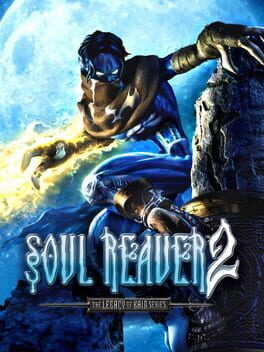
Raziel starts out hunting Kain again, but the goal changes to finding the truth about his own past as he travels through history. The project began on PlayStation and Dreamcast, and it moved to PlayStation 2 after a proof-of-concept demo for E3 2000. The designers wanted fewer of the first game's block puzzles, so they built a wider puzzle system. Instead of many new powers for Raziel, they added required upgrades for the Soul Reaver.
A separate team was making Blood Omen 2 at the same time, and its story caused continuity problems. Hennig read up on time travel fiction and wrote a subplot about temporal paradoxes, which makes Blood Omen 2 a result of how this game ends. Critics liked the story and criticized it for ending without a definite resolution. It still made Sony's Greatest Hits list.


Blood Omen 2 (2002)
Mar 20, 2002Mar 28, 2002 Mar 29, 2002Mar 20, 2002Mar 28, 2002Mar 29, 2002Apr 5, 2002Dec 9, 2002Jan 24, 2003

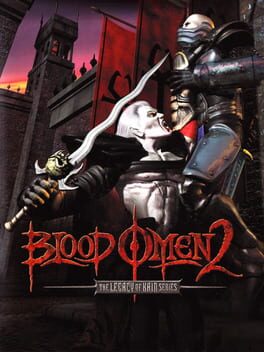
Kain returns as the lead in this sequel to the first game. The story falls between Blood Omen and Soul Reaver, in an alternate timeline created by Soul Reaver 2. He wakes in Meridian, an industrial city, with little memory and much of his power gone. The Sarafan Order beat his army two hundred years earlier, and the vampire Umah tells him how long he has been asleep.
A new team at Crystal Dynamics made it under director Glen Schofield, without the Soul Reaver crew, and it leans on action over puzzles. Kain heals by draining blood from downed enemies and civilians. Weapons break if you use them to block too much. Reviews were average and the game sold well. It reached Windows that month and GameCube in December 2002.


Legacy of Kain: Defiance (2003)
Nov 11, 2003Feb 6, 2004Dec 17, 2003Feb 6, 2004
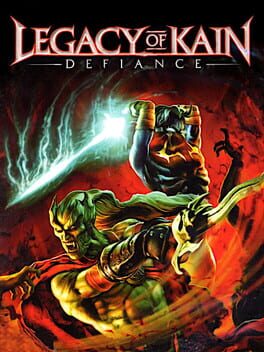
Defiance is the only game of the first five where you play both Kain and Raziel, and it switches between them at set intervals. Kain's only weapon is the Soul Reaver, and five emblems improve it. Raziel has the sword's spectral form and several elemental reavers. Killing enemies teaches both of them new combat techniques. The story follows Kain back through time, with Raziel behind him, and the two uncover who doomed Nosgoth.
Amy Hennig directed it, and Nixxes Software made the Xbox and Windows ports. Reviewers called the camera confusing and said its sudden shifts made players backtrack by accident. The 2026 remaster adds a new third-person camera and lost levels cut from the 2003 release. The original fixed camera is still an option, if you miss walking the wrong way.


Nosgoth (2015)
Jan 21, 2015
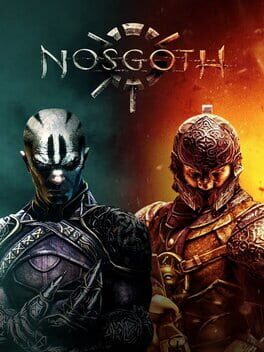
Psyonix developed this free-to-play online game and Square Enix published it for Windows. It stayed in open beta and never got a full release. Each match had two rounds, and teams swapped between vampires and humans after the first one. Vampires fought in melee and could fly or climb buildings. Humans stayed on the ground with ranged weapons like crossbows, and the human side played like a third-person shooter.
Nosgoth was the first game tied to the series in almost ten years, and its move away from single-player stories drew a negative reaction when it was revealed. It was once meant to be part of a single-player project, Legacy of Kain: Dead Sun, which was cancelled in 2012. Square Enix announced the shutdown on April 8, 2016, and the servers closed on May 31, 2016.


Legacy of Kain: Ascendance (2026)
Mar 31, 2026

Ascendance is a 2D platformer, described as a retro action platformer, and it came out the same day as the Switch version of Defiance Remastered. It is the first game in the series to use 2D since the 1996 original, because every sequel moved to 3D.
Michael Bell, Simon Templeman, Richard Doyle and Anna Gunn recorded new voice work for it. Reviews were almost all mixed to negative, and critics also raised concerns about how it changes key points of the lore.