There are 19 Mario Party games released in English, listed here in US release order from the Nintendo 64 original in 1999 to Super Mario Party Jamboree in 2024. The one spin-off, a card game, is marked.
Mario Party (1999)
 Dec 18, 1998
 Feb 8, 1999
 Mar 9, 1999
 Mar 9, 1999

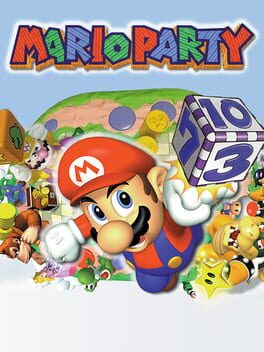
Hudson Soft made the first game for Nintendo, with Mario creator Shigeru Miyamoto as development supervisor. It plays like a board game on your TV. Six Mario characters walk a board and buy Stars from Toad with coins, and one of 50 minigames is played at the end of each turn. Bowser turns up now and then to force a useless item on you. Japan got it on Nintendo 64 in 1998.
Some minigames ask you to rotate the analog stick at top speed, and players used their palms because that was faster. Some got blisters and friction burns. Around 90 complaints reached New York's attorney general, and Nintendo agreed to provide gloves for injured players. Plenty of family board games end badly, but few end with a state settlement. The game skipped the Virtual Console, and its first re-release came on November 2, 2022, on Nintendo Classics.


Mario Party 2 (2000)
Dec 17, 1999Jan 24, 2000Oct 13, 2000Nov 2, 2010Dec 20, 2010Dec 24, 2010Dec 24, 2010Mar 30, 2016Apr 21, 2016Dec 22, 2016
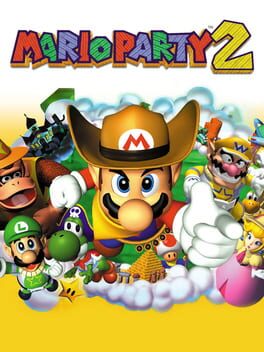
The same six characters came back, and this time they dress to match each board, which only happens in this game. Items arrived here too. You buy them from shops on the board and carry one at a time. There are 65 minigames, 15 more than the first game, with new Battle, Item and Duel types. Japan got it on Nintendo 64 in 1999.
During the final five turns, landing on another player's space starts a one-on-one Duel. Critics praised the improvements over the original and criticized the lack of originality, which is a hard pair of notes to act on. It reached the Wii Virtual Console in 2010 and the Wii U version in North America in 2016. Nintendo Classics added it on November 2, 2022.


Mario Party 3 (2001)
Dec 7, 2000May 7, 2001Nov 16, 2001
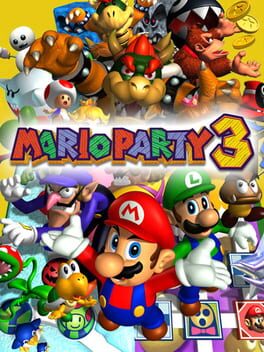
Princess Daisy and Waluigi joined the cast, and a new character called the Millennium Star replaced Toad as host. Each player can hold up to three items instead of one, the biggest change. It has 70 minigames and the first single-player story campaign in the series. Japan got it on Nintendo 64 in 2000.
Duel maps have two players lowering each other's stamina to zero, using partners such as Chain Chomps. Reviews were mixed, and it sold over 1 million copies. It was also the final first-party Nintendo 64 game released in North America. Its first re-release came on October 27, 2023, on Nintendo Classics.


Mario Party 4 (2002)
Oct 21, 2002Nov 8, 2002Nov 29, 2002
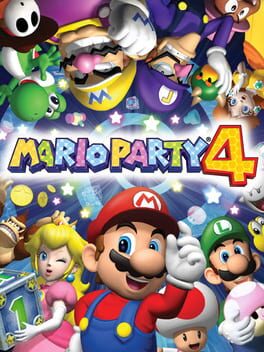
This was the first game in the series on a console other than the Nintendo 64, and the first with boards fully rendered in 3D. It has six boards, 50 minigames and several hosts, including Toad and a Koopa Troopa. Players can team up in pairs in Party Mode. Mushrooms change your size: a mega mushroom lets you steal 10 coins from another player, and a mini mushroom limits your dice to the first five numbers.
It was the last game with Donkey Kong as a playable character until Mario Party 10, a 13-year wait for a gorilla with nothing else on his calendar. Complaints went to the single-player mode. It still won Family Game of the Year at the 2003 Interactive Achievement Awards and sold 2,000,000 copies.


Mario Party-e (2003)
Feb 18, 2003
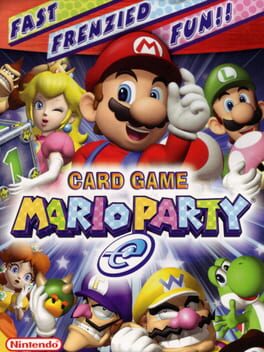
Mario Party-e is a real card game, developed by indieszero. The set has a play mat, an instruction book and a pre-constructed deck of sixty-four cards. You can play it with no console at all, since the Nintendo e-Reader is optional.
Many cards have dot-codes that, when scanned into the e-Reader, start minigames like the ones in the regular series. It is the only Mario Party game for the e-Reader. An extra card came as a promotion in an issue of GamePro.
Mario Party 5 (2003)
Nov 11, 2003Nov 28, 2003Dec 5, 2003
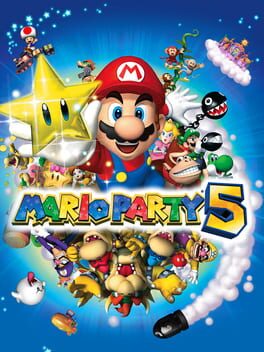
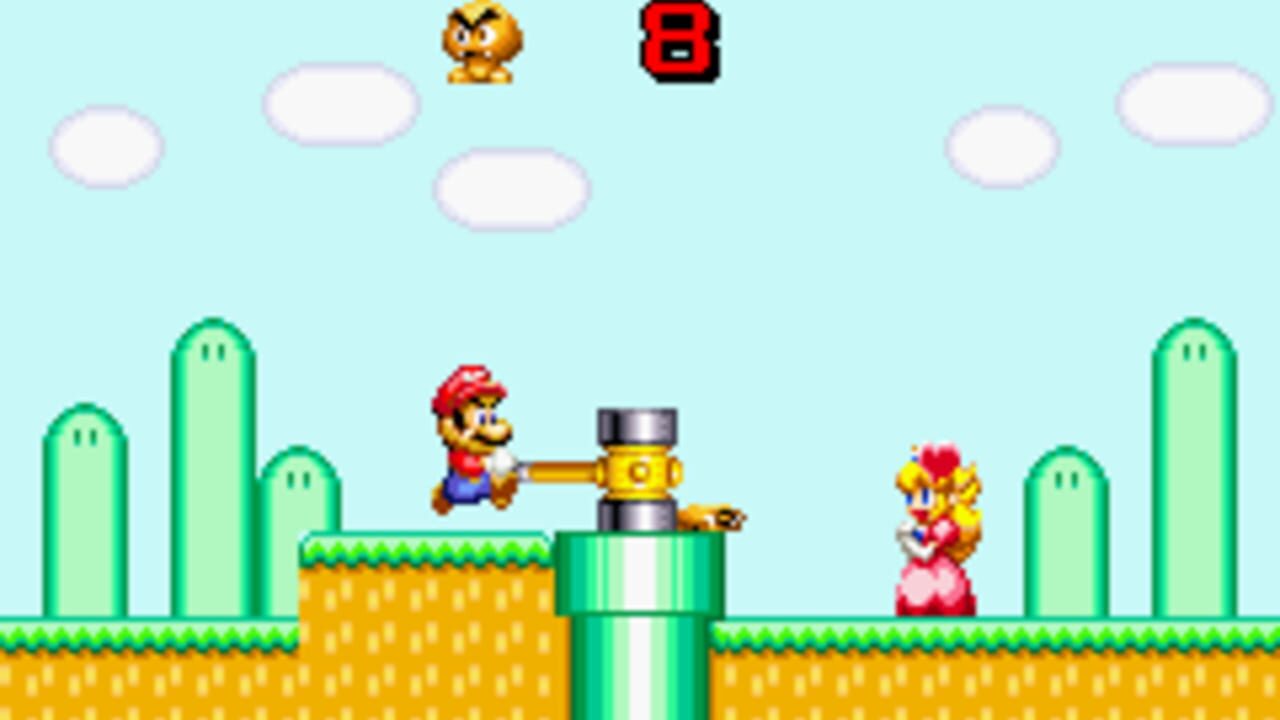
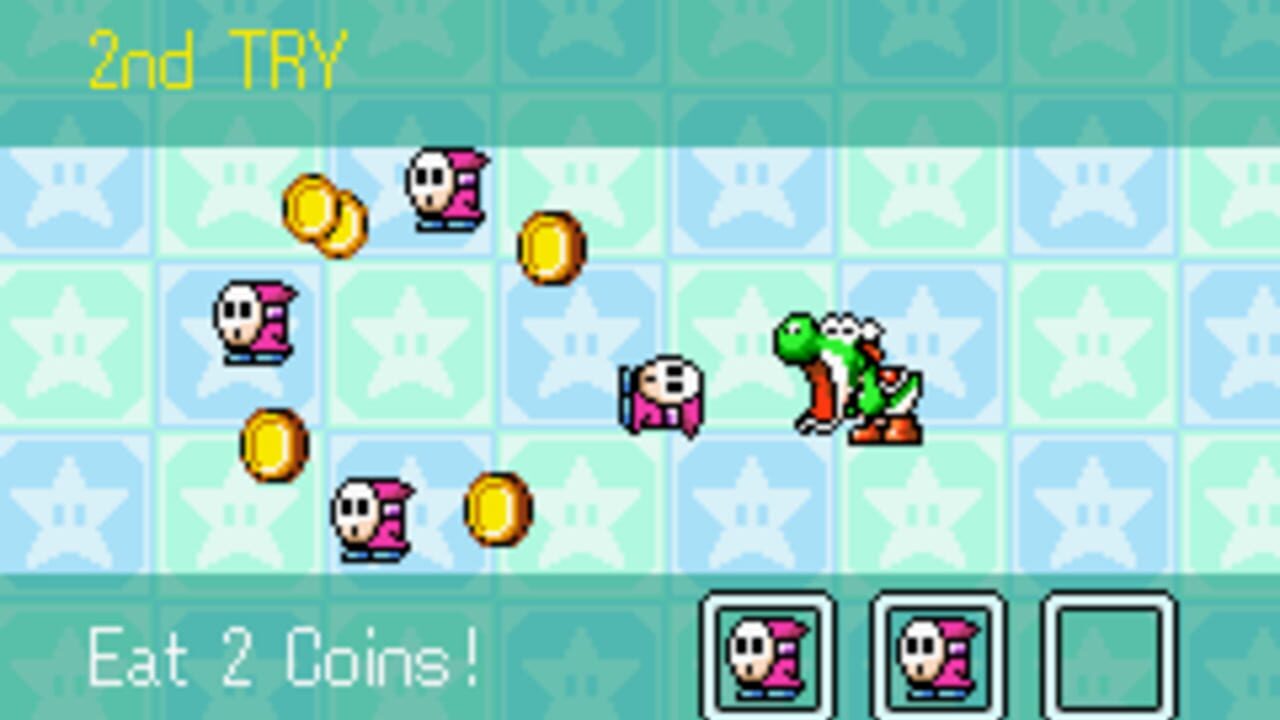
Mario Party 5 is set in the Dream Depot, with seven boards and 78 new minigames. Donkey Kong left the cast, and Toad, Boo and Koopa Kid joined it. The Star Spirits from Paper Mario host the game as the Star Guards. Capsules replaced the old items. A capsule machine gives them away for free on the board, and you can throw one at a space ahead to trap whoever lands there.
Super Duel Mode is the odd new extra. You buy parts with points earned in Party Mode or Minigame Mode and build a battle vehicle from 44 different parts, then fight other machines in tournaments. It became a Player's Choice title, a label for Nintendo games that sold more than one million copies, and won the Console Children's Award.


Mario Party 6 (2004)
Nov 18, 2004Dec 6, 2004Mar 18, 2005Sep 15, 2005
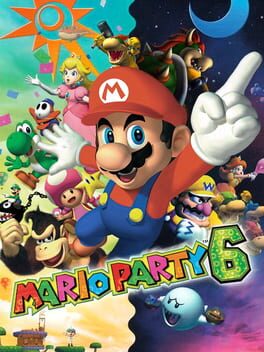
The microphone came in the box with Mario Party 6, and it was the first GameCube game to use one. In mic minigames you say words into it to make things happen. Two new hosts, Brighton and Twila, are a sun and a moon who argue over who is more popular. Toadette joined the cast, but you have to buy her for thirty stars in the Star Bank.
The arguing leads to the game's big idea, a day and night cycle that changes the boards and minigames. No other game in the series applies it to all of them. Critics praised the day and night and criticized the microphone. It sold 1.63 million copies, the worst-selling home console Mario Party.


Mario Party Advance (2005)
Jan 13, 2005Mar 28, 2005Jun 10, 2005Sep 15, 2005Dec 25, 2014Dec 25, 2014
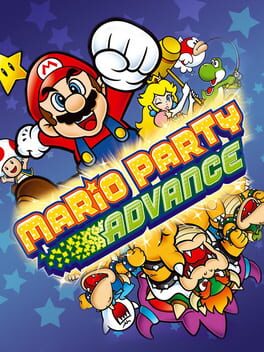
This was the first handheld Mario Party, and it is built for one person. The multiplayer Party Mode from every earlier game is gone. A new mode called Shroom City replaces it, where you pick from four characters and travel around town doing quests for the locals. Those quests win back the minigames and Gaddgets that Bowser scattered around the city, more than 120 in all.
Taking the party out of Mario Party went over about as well as you would guess. Many critics panned the single-player focus, and its Metacritic score of 54 is the lowest of any Mario Party on the site. Some Gaddgets work in multiplayer if players control different buttons on a single Game Boy Advance. It came to the Wii U Virtual Console on December 25, 2014.


Mario Party 7 (2005)
Oct 11, 2005Feb 10, 2006Jun 8, 2006Nov 7, 2005
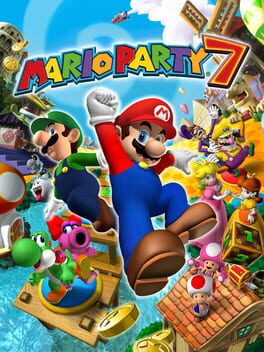
The last Mario Party on the GameCube brings up to eight players together. In 4-Team Battles they split into four teams of two. Toadsworth from Super Mario Sunshine hosts, and Birdo and Dry Bones made their playable debuts. There are 88 new minigames, and many use the microphone from Mario Party 6.
Bowser Time is the new twist, with Bowser causing major disruptions every five turns. Critics praised the minigames and the eight-player mechanics. It sold more than two million copies, which makes it the 11th-best-selling game for the GameCube.


Mario Party 8 (2007)
May 29, 2007Jun 20, 2007Jul 19, 2007Jul 26, 2007
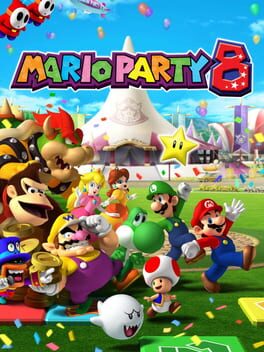
The first Mario Party on the Wii has 73 new minigames, and most use the Wii Remote's motion controls. A ringmaster named MC Ballyhoo and his talking hat, Big Top, host a carnival, with a year's supply of candy as the prize. Candy also replaced capsules. There are fourteen kinds, and they let you do things like hit two dice blocks. You can play as your Mii in certain modes.
It was the last home console game Hudson Soft made in the series. Critics liked the motion controls and disliked the outdated visuals. The United Kingdom release was immediately recalled, and Nintendo gave an assembly error as the reason. It still sold more than eight million copies, the 12th-best-selling game for the Wii.


Mario Party DS (2007)
Nov 8, 2007Nov 19, 2007Nov 23, 2007 May 22, 2008Apr 21, 2016Apr 21, 2016

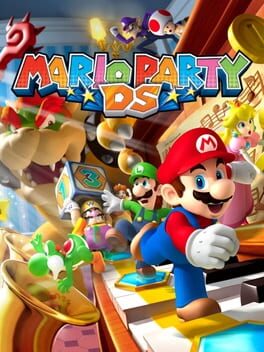
This is the only Mario Party on the Nintendo DS and the last one developed by Hudson Soft. It has 73 minigames, and many use the touchscreen and the microphone, alongside regular ones played with the D-pad and buttons. Eight characters are playable, including Toad. When five turns remain, the Final 5 Frenzy begins and Bowser helps whoever is in last place.
Reviews were mixed, with praise for the minigame variety and criticism for the missing online mode. It has sold more than nine million units, the 11th-best-selling game for the DS. A Wii U Virtual Console version followed in April 2016.


Mario Party 9 (2012)
Mar 2, 2012Mar 8, 2012Mar 11, 2012Apr 26, 2012Apr 11, 2013
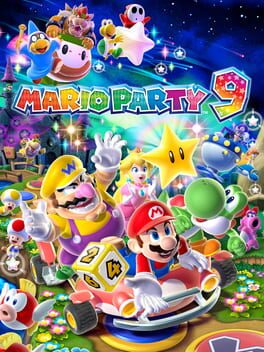
Mario Party 9 was the first game in the series not developed by Hudson Soft. Konami dissolved that studio on March 1, 2012, the day before the European release, and NDcube took over. The new team put all four players in one car. Instead of buying Stars with coins, you pick up Mini Stars along a path and avoid Mini Ztars, the dark purple kind that cost you the Mini Stars you have.
Critics heavily censured the car. Shared fate is a strange thing to add to a game about ruining your friends. There are more than 80 minigames across its seven boards, and it was the final Mario game released on the Wii.


Mario Party: Island Tour (2013)
Nov 22, 2013Jan 17, 2014Jan 18, 2014
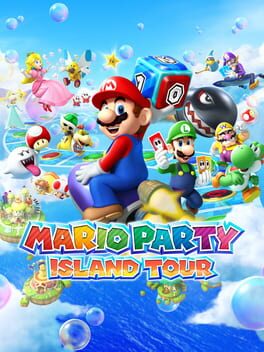
The first Mario Party for the 3DS has seven boards and 81 minigames. Each board has its own goal, and none of those goals involve collecting Stars or coins. On some, you win by being first to the end. Bowser Jr. became playable for the first time in the series.
Reviews were mixed, with praise for the variety and criticism for the missing online multiplayer. It sold 2.95 million units, the 24th-best-selling game for the 3DS.


Mario Party 10 (2015)
Mar 12, 2015Mar 20, 2015Mar 20, 2015Mar 21, 2015
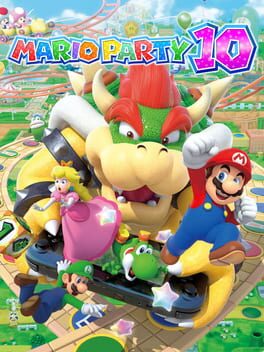
NDcube kept the car from Mario Party 9 and added two modes for the only Mario Party on the Wii U. In Bowser Party, four players form a team against a fifth, who plays Bowser on the Wii U GamePad and tries to drain their hearts. In Amiibo Party, you scan amiibo figures and play on small boards, or use a cardboard cutout if you own none.
Rosalina and Spike became playable, and Donkey Kong returned for the first time since Mario Party 4. It has over 70 minigames. It sold 2.27 million copies, the tenth-best-selling game on the Wii U.


Mario Party: Star Rush (2016)
Oct 7, 2016Oct 8, 2016Oct 20, 2016Nov 4, 2016Apr 27, 2017

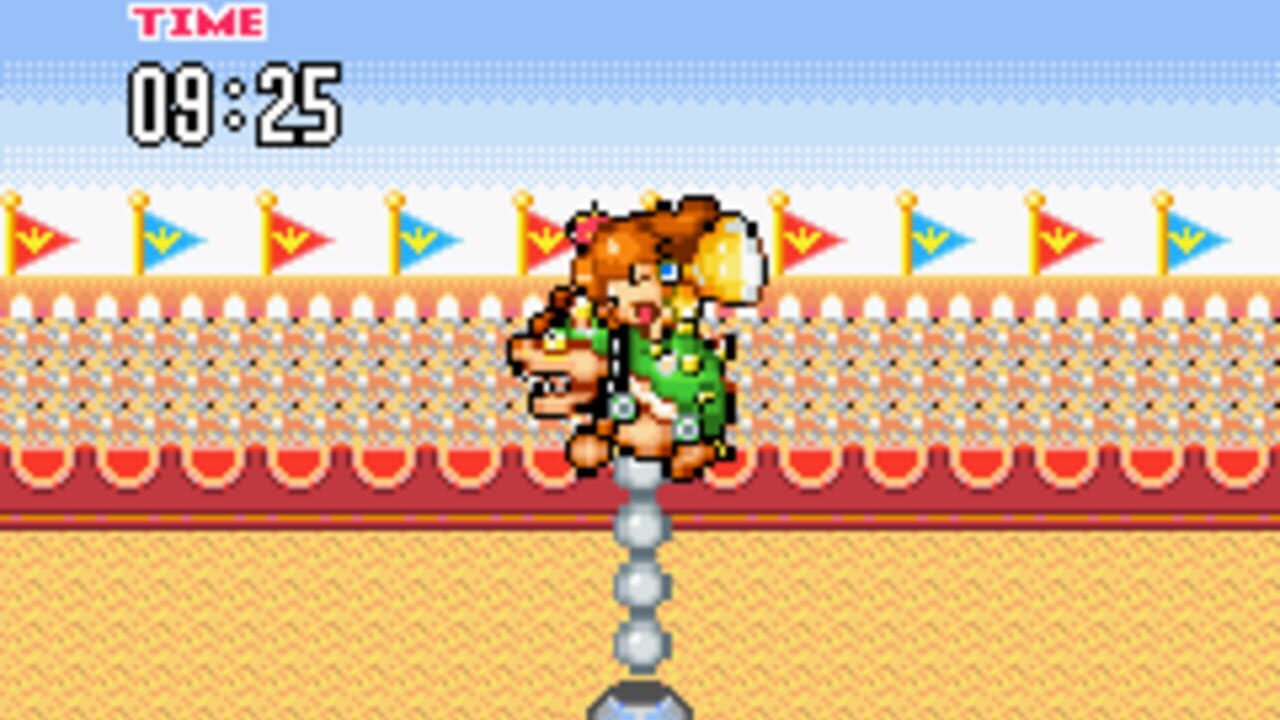
Star Rush dropped both the turn-based play of the early games and the car from Mario Party 9. Everyone now rolls dice and moves at the same time on grid-like boards. In the main mode, Toad Scramble, up to four players start as a Toad each, and you win Stars by placing first in boss minigames.
There are 53 minigames and five side modes, including a rhythm mode and a puzzle game called Boo's Block Party. Some critics praised the new direction and the removal of the car. It also has a Character Museum, which shows characters and their biographies.


Mario Party: The Top 100 (2017)
Nov 10, 2017Dec 22, 2017Dec 22, 2017Dec 28, 2017
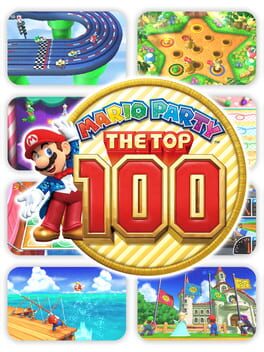
The third and final Mario Party on the 3DS collects 100 remade minigames from the ten home console games before it. You can play them one at a time with no board, which is what most people would do with 100 minigames anyway.
Minigame Match is the only board mode, with a small board where you pop Star Balloons. Critics panned the lack of game boards. Championship Battles and Decathlon use the minigames as contests between players. Only one player needs a copy for four people to play.


Super Mario Party (2018)
 Oct 5, 2018

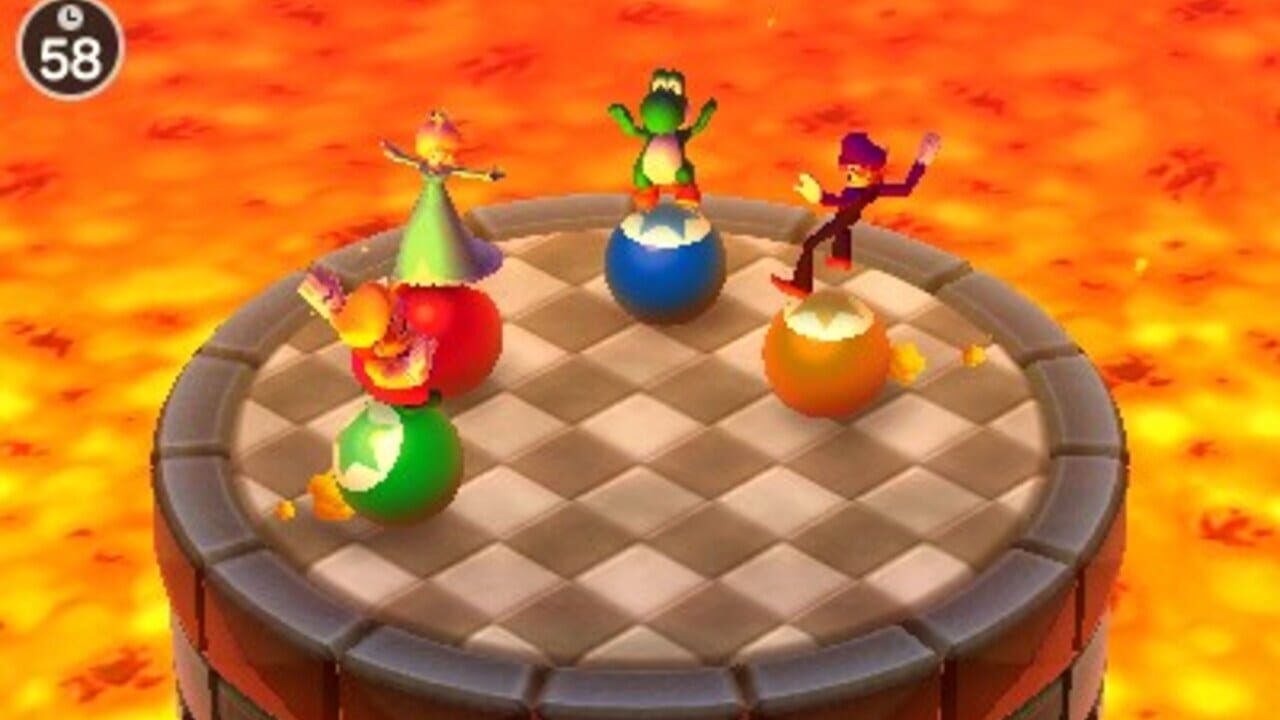
The first Mario Party for the Switch removed the car, so players move around the board on their own again. Allies you pick up add extra rolls to your dice. It has four boards and 80 minigames. Online play arrived in the series here, through a mode called Online Mario-thon, and Toad's Rec Room joins two Switch units into one connected board.
It got positive reviews and has sold 21.28 million copies as of December 2025, which makes it the best-selling Mario Party game.


Mario Party Superstars (2021)
Oct 28, 2021Oct 29, 2021
Superstars rebuilt five boards from the Nintendo 64 trilogy and collected 100 minigames from earlier games, all in HD. Unlike Super Mario Party, it plays with button controls. It has full online support for friends and strangers, which the Nintendo 64 versions could only dream of.
Critics gave it mostly positive reviews for its classic minigames and boards. The two minigames that use stick rotation warn you not to use your palms, more than 20 years after the first game. It had sold 14 million copies by March 31, 2025, the 18th best-selling game for the Switch.


Super Mario Party Jamboree (2024)
Oct 17, 2024
Jamboree has seven boards, two of them back from earlier games, and 112 minigames. Pauline and Ninji joined the largest roster yet. Jamboree Buddies appear on the board and stay with a winner for up to three turns. Up to 20 players can compete in one online mode.
It got positive reviews. An upgraded Switch 2 version with camera, microphone and mouse controls came out on July 24, 2025. As of June 30, 2026, it had sold 11.52 million units.


Never released in English
Dokidoki Mario Chance! (2003), arcades, Japan only.
Super Mario Fushigi no Korokoro Party (2004), arcades, Japan only.
Super Mario Fushigi no Korokoro Party 2 (2005), arcades, Japan only.
Mario Party Fushigi no Korokoro Catcher (2009), arcades, Japan only.
Mario Party Kurukuru Carnival (2012), arcades, Japan only.
Mario Party Fushigi no Korokoro Catcher 2 (2013), arcades, Japan only.
Mario Party Challenge World (2016), arcades, Japan only.