The 15 Metroid games are listed here in US release order, from Metroid on the NES in 1987 to Metroid Prime 4: Beyond in 2025, and spin-offs and remakes are marked.
Metroid (1987)
 1986
 1987Aug 1, 1987
 Jan 15, 1988Jul 20, 2007
 Jul 20, 2007Aug 13, 2007Mar 1, 2012Mar 15, 2012
 Feb 3, 2016Jul 11, 2013Jul 11, 2013

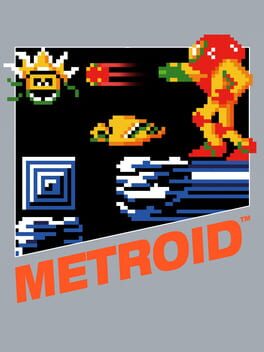
Metroid came from Nintendo R&D1 and Intelligent Systems, directed by Satoru Okada and Masao Yamamoto. It was designed as a shooting game that mixed the platform jumping of Super Mario Bros. with the non-linear exploration of The Legend of Zelda. Samus Aran starts on Zebes with a weak beam and a jump. Power-ups like the Morph Ball and the Bomb then open areas you could not reach before.
The game has no automap and expects you to draw your own. The NES version has a 24-letter password in place of the disk save. Japan got it on Famicom Disk System in 1986. Samus takes off her suit in the third, fourth and fifth endings and shows for the first time that she is a woman.


Metroid II: Return of Samus (1991)
Nov 1, 1991Jan 22, 1992May 21, 1992Sep 28, 2011Nov 24, 2011Nov 24, 2011Jun 15, 2016
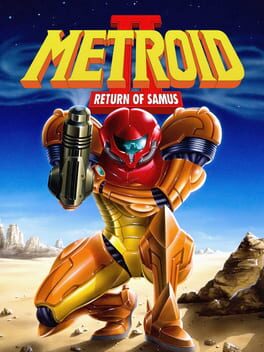
The first handheld Metroid sends Samus to SR388, the Metroids' home planet, to wipe them out. There are 47 to kill, and a detector shows how many are left in the area. Clear them and an earthquake lowers the lava so you can go deeper. The Metroids also evolve here, through Alpha, Gamma, Zeta and Omega forms, and each stage hits harder.
The black and white screen changed Samus for good. Colour had told her two suits apart, so the Varia Suit got its round shoulders, and that look stayed. The Space Jump, the Spazer Beam and the Spider Ball all start here too. It has been on Nintendo Classics since February 2023.


Super Metroid (1994)
Mar 19, 1994Apr 18, 1994Jul 28, 1994Aug 20, 2007Sep 20, 2007Oct 12, 2007Oct 12, 2007Apr 26, 2008May 15, 2013May 15, 2013May 16, 2013 Apr 14, 2016

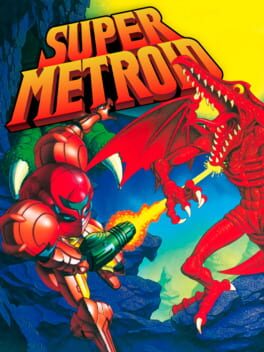
Yoshio Sakamoto wrote and directed this one with a staff of 15. Samus brings the last Metroid to the Ceres space colony, Ridley steals it, and the chase goes back to Zebes. She can now fire in all directions while moving, and the Grappling Hook and the X-Ray Visor are new.
The biggest change is an automap that shows where you have been, with map rooms that fill in part of each area. Sales of graph paper never recovered. The game shipped 1.42 million copies by late 2003 and is often regarded as one of the greatest video games of all time. It joined Nintendo Classics in September 2019.


Metroid Prime (2002)
Nov 18, 2002Feb 28, 2003Mar 21, 2003Apr 3, 20032009
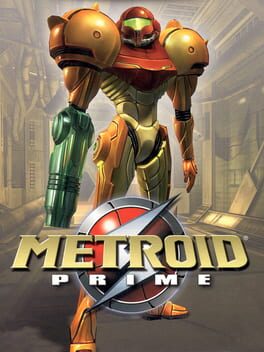
After eight years away, Metroid came back on two systems on the same day. Prime is the first game in the series with 3D graphics and a first-person view, made by Retro Studios in Austin, Texas, with Nintendo staff in Japan. Shigeru Miyamoto suggested a new Metroid in 2000 after seeing the studio's prototype shooter engine. Retro then lost four other projects, which left Prime as its only game.
Nintendo called it a "first-person adventure" because exploring comes before fighting. You lock on to enemies and circle them, and the view drops to third person in Morph Ball mode. The hunt for twelve Chozo Artifacts takes you across Tallon IV. Japan got it on Wii in 2009.
Metroid Prime Remastered is the high-definition version on Switch, released digitally on February 9, 2023, with the physical version following on February 22 in North America. It adds a standard dual-stick shooter control scheme, which came back for Prime 4, and it had sold 1.09 million copies by March 2023.


Metroid Fusion (2002)
Nov 18, 2002Nov 22, 2002Nov 29, 2002Feb 14, 2003 Mar 2, 2006Dec 15, 2011Dec 16, 2011Dec 16, 2011Dec 16, 2011Apr 3, 2014Apr 3, 2014Apr 3, 2014Apr 30, 2014

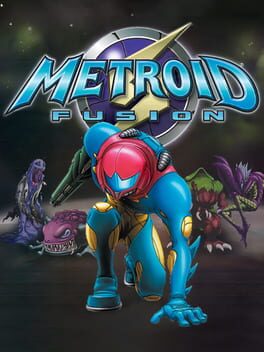
Fusion is the 2D half of the 2002 comeback, made by the R&D1 team behind Super Metroid and written and directed by Sakamoto. The X parasite infects Samus, and an injection of Metroid DNA saves her life. She then goes back to a Federation research station overrun by X.
This is a more linear Metroid. Navigation Rooms tell you where to go, and you get power-ups by downloading them in Data Rooms or absorbing a Core-X after a boss. The X also build the SA-X, an evil clone made from Samus's discarded suit parts, and you spend much of the game running from it. Linking Fusion to Prime by cable unlocks extras in the GameCube game. It joined Nintendo Classics in 2023.


Metroid: Zero Mission (2004)
Feb 9, 2004Mar 19, 2004Apr 8, 2004May 27, 2004Jun 15, 2005Jun 19, 2014Mar 12, 2015Apr 12, 2015Jan 14, 2016
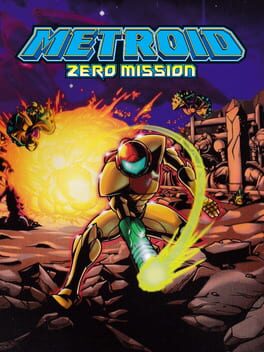
Zero Mission remakes the 1986 game in a bright comic book style, with added items, areas, mini-bosses and difficulty levels. Sakamoto directed it and was the only member of the original team to work on it. A developer suggested porting Super Metroid to the Game Boy Advance, and Sakamoto chose the first game instead.
The story no longer ends at Mother Brain. A new area, Chozodia, puts Samus in her blue Zero Suit with no Power Suit, hiding from the pirates in a stealth section. Finish the game and the original Metroid unlocks as a bonus. It was the best-selling Game Boy Advance game in the United States in its first month, with 151,807 units. It reached Nintendo Classics on June 19, 2024.


Metroid Prime 2: Echoes (2004)
Nov 15, 2004Nov 26, 2004Dec 2, 2004May 26, 20052009
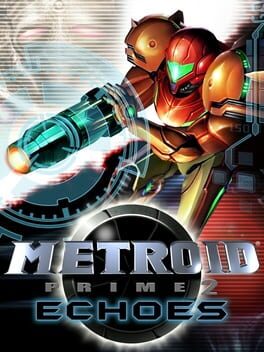
Retro's sequel sends Samus to rescue Federation Marines near the planet Aether. She finds them dead and meets Dark Samus for the first time. Echoes borrows from The Legend of Zelda: A Link to the Past, with a Light Aether and a Dark Aether that share a layout. Dark Aether's air damages the Power Suit, and you move between safe zones to survive it. Retro looked at the first game's huge map and decided you needed two.
The Screw Attack and wall jumping return after time ran out for them in the first Prime, and the new beam weapons use limited ammunition. Critics praised the single-player mode but not its steep difficulty or the multiplayer. More than 1.10 million copies sold. Japan got it on GameCube in 2005, as Metroid Prime 2: Dark Echoes. Japan got it on Wii in 2009.


Metroid Prime Pinball (2005)
Oct 24, 2005Jan 19, 2006Jun 22, 2007
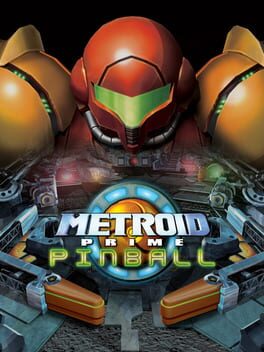
Producer Kensuke Tanabe thought of this as Fuse Games finished Mario Pinball Land, because Samus can already morph into a ball. That joke had been sitting in plain sight for 19 years. Fuse made the game with assets from Retro and help from the Hunters team.
Six tables, each based on an area of Metroid Prime, stretch across both DS screens. Enemies wander the table, Samus can wall jump and fire weapons, and you nudge the table on the touchscreen. Twelve Artifacts open up one more table. It sold with a Rumble Pak, the first time that accessory was available for the DS, and the console shakes when the ball hits something.


Metroid Prime Hunters (2006)
Mar 20, 2006May 5, 2006May 23, 2006Jun 1, 2006Sep 30, 2015Jun 2, 2016Sep 15, 2016Sep 15, 2016
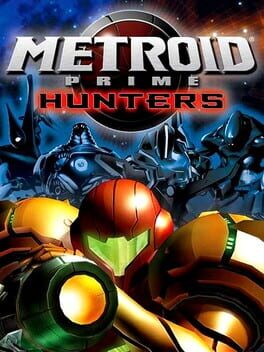
Retro was busy, so Tanabe took the idea to Nintendo Software Technology in Redmond, Washington, where a team of thirty built it. The story sits between Prime and Echoes. Samus follows a message to the Alimbic Cluster and runs into new bounty hunters, each with a unique weapon and alternate form. She also flies her gunship between planets, an idea Corruption took further.
You move with the direction pad and aim by dragging the stylus across the touch screen, and the shoulder buttons fire. There is less exploring here and more shooting, with no assisted aiming. Most of the work went into multiplayer, with Wi-Fi and voice chat, and over 410,000 copies sold in North America in the first month. Sylux first appears here and comes back as the rival in Prime 4. A demo, First Hunt, came with the first batch of Nintendo DS consoles at the North American launch on November 21, 2004. Nintendo used it as a technical showcase for the system, and few later DS games looked as good.


Metroid Prime 3: Corruption (2007)
Aug 27, 2007Oct 26, 2007Nov 8, 2007Mar 6, 2008
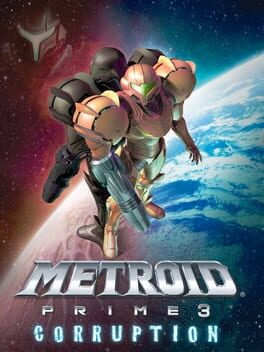
The Nunchuk moves Samus and the Wii Remote aims, a control scheme that took a year to develop and pushed the game back from the Wii's launch. Set six months after Echoes, it opens with Dark Samus infecting Samus with Phazon. The adventure now covers several planets, and you can command her gunship.
Hypermode spends an energy tank on stronger attacks, and using it too much ends in a game over as the Phazon takes Samus over. More than one million copies sold in 2007. Retro announced this as the final chapter of the Prime series, and Prime 4 turned up 18 years later to argue the point.
Metroid Prime: Trilogy came out on Wii on August 24, 2009, with all three Prime games on a single disc. Prime and Echoes get the Wii Remote and Nunchuk controls from Corruption. Nintendo of America stopped producing it in January 2010, then put it on the Wii U eShop in January 2015, and that store closed in March 2023.


Metroid: Other M (2010)
Aug 31, 2010Sep 2, 2010Sep 3, 2010Mar 17, 2016Mar 31, 2016Dec 8, 2016
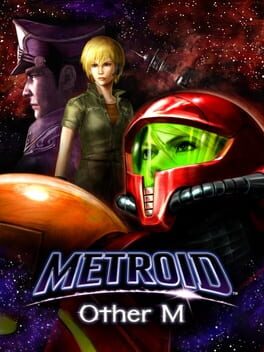
Sakamoto wanted a 3D Metroid, and his usual team had no experience with one, so he approached Team Ninja. Over 100 people worked on it for three years, with D-Rockets handling the cutscenes. The game is set between Super Metroid and Fusion on the Bottle Ship, a derelict space station.
You hold the Wii Remote sideways for third-person action and point it at the screen for a first-person view. The route is linear, and the map marks your next objective. Samus already has some items and waits for her old commanding officer, Adam Malkovich, to authorize them. Reviews were generally positive for the cutscenes and action, and critics and fans criticized the story.


Metroid Prime: Federation Force (2016)
Aug 19, 2016Aug 25, 2016Sep 2, 2016Sep 3, 2016

Next Level Games built this co-op shooter, set after Corruption. It is the first Metroid where you play a Galactic Federation Marine, and you do it from inside a mech that Retro designed. Up to four players take on 22 missions across three planets. There is no Morph Ball and no scanning.
Fans reacted badly when it was announced at E3 2015, because it looked so little like earlier Metroid games. It also has Blast Ball, a three-on-three mode where mechs shoot balls into nets. Soccer in a mech suit was nobody's first request for the series. Blast Ball also came out as a free eShop download on July 21, 2016.


Metroid: Samus Returns (2017)
Sep 15, 2017Sep 15, 2017Sep 16, 2017
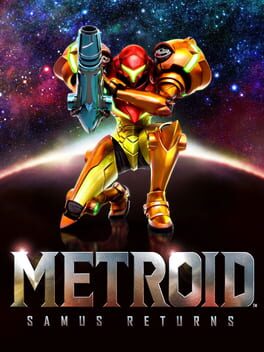
MercurySteam pitched a remake of Fusion, and Sakamoto asked for Metroid II instead. It was the first new 2D Metroid since Zero Mission. MercurySteam made it with Nintendo EPD, a year after an unofficial fan remake, AM2R, came out for Windows.
The story and structure follow the Game Boy original, in a 2.5D view. The new moves change how it plays. A Melee Counter stuns enemies that rush you, Samus can aim freely in any direction, and Aeion abilities like the Scan Pulse show hidden paths and items. The collaboration went well enough that MercurySteam got the next game too.


Metroid Dread (2021)
Oct 7, 2021Oct 8, 2021
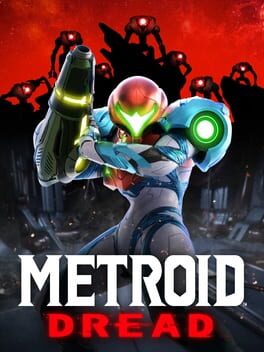
Sakamoto conceived Dread for the Nintendo DS in the mid-2000s, and technical limits ended that version. MercurySteam finally built it as a direct sequel to Fusion. Samus goes to the planet ZDR to find out why seven E.M.M.I. robots stopped responding, and finds them reprogrammed to hunt her.
In their zones you hide, keep quiet and use the Phantom Cloak, which makes Samus invisible but slows her down. If one catches you, you get two narrow windows for a melee counter. An Omega Blaster can destroy them, and each kill gives Samus a permanent upgrade. Dread won Best Action/Adventure Game at the Game Awards 2021, and more than three million copies make it the best-selling Metroid game.


Metroid Prime 4: Beyond (2025)
Dec 4, 2025
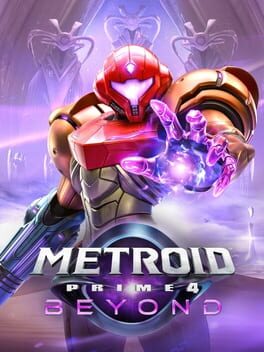
Nintendo announced Prime 4 at E3 2017. The first version was made at Bandai Namco and failed to meet Nintendo's standards, and Retro Studios restarted it from scratch. Samus ends up on the planet Viewros, takes on a mission from the Lamorn and faces her rival Sylux.
The first-person play is back, with psychic abilities that steer beam shots and move objects. The Sol Valley desert is a hub between the areas, and you cross it on a purple motorcycle called the Vi-O-La. Stranded Federation soldiers help with puzzles and combat. On Switch 2 you can use the Joy-Con 2 as a mouse. It sold more than one million copies and received generally positive reviews.
Metroid Ravenous, the next side-scrolling game from MercurySteam, is scheduled for Switch 2 on January 28, 2027. It is not out yet, so it is not on this list.