There are 7 Paper Mario games, listed here in US release order from Paper Mario on the Nintendo 64 in 2001 to The Origami King on the Switch in 2020. Spin-offs are marked.
Paper Mario (2001)
 Aug 11, 2000
 Feb 5, 2001
 2004Jul 10, 2007
 Jul 13, 2007
 Jul 13, 2007Jul 16, 2007Apr 30, 2015May 21, 2015

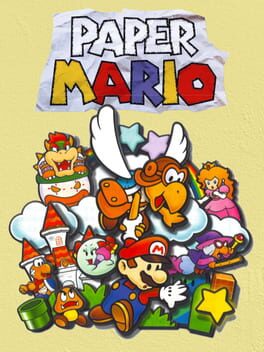
This game began as a sequel to Super Mario RPG and went by the name Super Mario RPG 2, planned for the 64DD disk drive. Square turned the job down because of Final Fantasy VII, so Intelligent Systems developed the game instead. Japan got it on Nintendo 64 in 2000, under the title Mario Story.
Bowser steals the Star Rod, lifts Peach's castle into the sky and makes himself invincible. You find the seven Star Spirits to cancel that power, and Goombario joins you early on. Flat cut-out characters walk through three-dimensional backgrounds. Battles are turn-based, but action commands, timed button presses, make your attacks stronger. GameSpot named it the best Nintendo 64 game of 2001.


Paper Mario: The Thousand-Year Door (2004)
Jul 22, 2004Oct 11, 2004Nov 12, 2004Nov 18, 2004
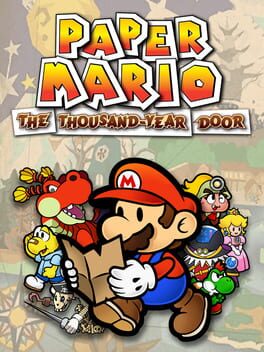
This direct sequel was known as Paper Mario 2 in North America before release. Peach buys a magical treasure map in the town of Rogueport, and Mario learns it could reveal the seven Crystal Stars that unlock the Thousand-Year Door. Between chapters you play briefly as Peach and Bowser. Peach teaches a computer named TEC about love in exchange for the ability to email Mario.
You pick up seven party members along the way, and badges add skills if you have the badge points to equip them. An audience watches every fight and reacts to how well you do. The game won Console Role-Playing Game of the Year at the 8th Annual Interactive Achievement Awards. The Switch remake from May 23, 2024 has redone graphics, animations and music.


Super Paper Mario (2007)
Apr 9, 2007Apr 19, 2007Sep 14, 2007Sep 20, 2007Jun 16, 2016Aug 3, 2016Aug 11, 2016
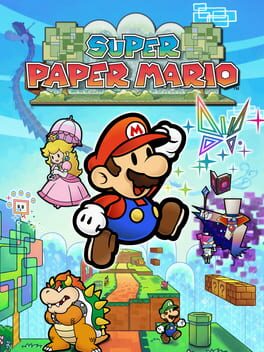
Nintendo announced this one for the GameCube at E3 2006, then released it in April 2007 as the first Mario game for Wii. Director Ryota Kawade wanted to surprise fans with a new concept. The earlier games are turn-based, and this one mixes role-playing with side-scrolling platforming. Mario can flip between 2D and 3D to get around whatever blocks the path.
Count Bleck opens the game by forcing Bowser and Peach to marry, which finally gets Bowser what he wanted and still goes badly. From the town of Flipside you travel through dimensional doors to collect eight Pure Hearts. Luigi, Peach and Bowser join as playable characters, and fairy-like Pixls add abilities. More than 4.23 million copies had sold by 2014, the most in the series.


Paper Mario: Sticker Star (2012)
Nov 11, 2012Dec 6, 2012Dec 7, 2012Dec 8, 2012
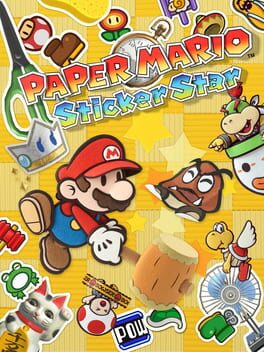
This was the first game in the series on a handheld, built for short bursts with a world map and levels you can stop and resume at any time. Bowser attacks the Sticker Fest in Decalburg and scatters the six Royal Stickers. Mario goes after them with Kersti, a sticker fairy.
Stickers are your attacks. Real objects called Things, such as baseball bats and scissors, become Thing Stickers for puzzles and boss fights. Allies were cut due to complications with the sticker mechanics, and Mario earns no experience points. Many critics reacted negatively to those losses, and the series began to get complaints about its change in genre. The writing and the paper visuals still drew praise.


Mario & Luigi: Paper Jam (2016)
Dec 3, 2015Dec 4, 2015Dec 10, 2015Jan 22, 2016
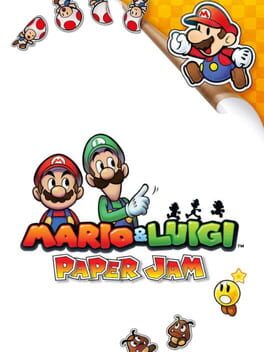
Paper Jam is the fifth installment in the Mario & Luigi series and a crossover with Paper Mario. AlphaDream made it, and Intelligent Systems oversaw production. Luigi knocks open a book in the attic of Peach's Castle and the paper world spills across the Mushroom Kingdom. Both Peaches then get kidnapped by both Bowsers, the kingdom's oldest problem in a two-pack.
You control Mario, Luigi and Paper Mario at the same time, and Paper Mario can squeeze through small gaps the brothers can't. Toadette builds giant papercraft models for battles against enemy dioramas. Critics felt the game failed to use the crossover to its fullest potential. It was the last new Mario & Luigi game from AlphaDream, which filed for bankruptcy in 2019.


Paper Mario: Color Splash (2016)
Oct 7, 2016Oct 7, 2016Oct 8, 2016Oct 13, 2016

The paint idea came from Atsushi Isano, the director at Intelligent Systems, and it was built around the Wii U GamePad. Mario travels to Prism Island with Huey, a talking paint can and the guardian of the Prisma Fountain, to recover six Big Paint Stars. A paint hammer solves coloring-themed puzzles across a world made to look like craft materials, with toilet paper and wrapping paper among the props.
Fights use cards. You sort, paint and flick them on the GamePad touchscreen, and paint makes them stronger. Thing cards show real objects, such as a fire extinguisher. Critics liked the jokes and the soundtrack but criticized its similarity to Sticker Star. Dan Ryckert of Giant Bomb disliked how every character was a Toad.


Paper Mario: The Origami King (2020)
 Jul 17, 2020


Nintendo intended to announce the game at E3 2020, but the expo was cancelled. King Olly, a sentient origami figure, turns Peach into origami and brainwashes her. You destroy five decorative streamers he stretched across the kingdom, with his sister Olivia at your side. The series moved from linear levels to an open world here.
Fights take place on a dartboard split into four rings. You slide the rings to line enemies up and hit several at once, and boss fights put the enemy in the center with Mario on the outside. Bobby's character arc drew critical praise. The game sold three million copies by September 2020, two months after release, the fastest in the series. Critics still said the action-adventure style did not reach the heights of The Thousand-Year Door.