The 10 Splinter Cell games are listed here in US release order, from the 2002 original to Blacklist in 2013, and spin-offs are marked.
Tom Clancy's Splinter Cell (2002)
 Nov 18, 2002
 Nov 29, 2002
 Nov 27, 2003Feb 19, 2003Feb 28, 2003Mar 28, 2003Apr 8, 2003Nov 27, 2003
 Q2 2004

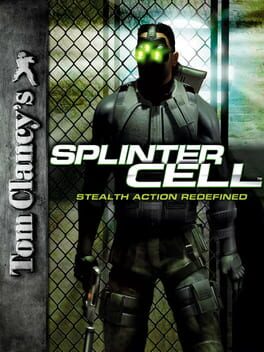
Splinter Cell is a stealth game from Ubi Soft Montreal, endorsed by Tom Clancy and inspired by Metal Gear and the Looking Glass Studios games. You play NSA black ops agent Sam Fisher, voiced by Michael Ironside. The game is built around light and darkness. A light meter shows how visible Sam is, and you can destroy lights to make more shadow. Ammunition is limited, so grabbing a guard from behind usually beats a shootout.
It started as an Xbox exclusive, then moved to Windows, PlayStation 2 and GameCube in 2003. Sales reached 6 million units by the end of March 2004. The Village Voice gave the PS2 version eight out of ten and wrote, "If this game were any more realistic, you'd have to hold in your farts." The Xbox version has run on Xbox One through backward compatibility since June 2019.
Classic Trilogy HD puts the first three games on PlayStation 3, remastered as part of Sony's Classics HD series. North America got it on September 27, 2011. The remasters are based on the PC ports, but this one does not include the downloadable bonus missions.


Tom Clancy's Splinter Cell for Game Boy Advance (2003)
Apr 24, 2003Jun 6, 2003Jun 4, 2003Dec 5, 2003Dec 10, 2003

Gameloft turned the first game into a side-scroller for mobile phones, Game Boy Advance and N-Gage, so this is a different game from the 3D original. The N-Gage version came out in Europe on December 5, 2003 with the subtitle Team Stealth Action.
The Cincinnati Enquirer gave the Game Boy Advance version all four stars, saying it "still captures the thrill of modern espionage" without the 3D lighting of the bigger versions. The GameCube version of the main game used the Game Boy Advance link cable to show a real-time overhead map. Gameloft also made a separate phone game called Extended Ops for keypad phones.


Tom Clancy's Splinter Cell: Pandora Tomorrow (2004)
Mar 26, 2004Mar 27, 2004Apr 2, 2004Jun 11, 2004Jun 16, 2004Jul 20, 2004Jul 30, 2004Jun 11, 2019
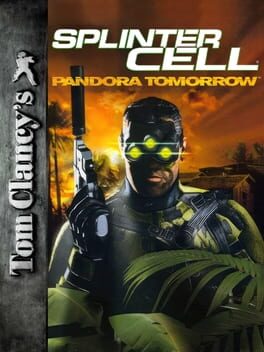
Ubisoft Shanghai and Ubisoft Milan took over for the sequel, and the single-player game is largely unchanged. Sam can now whistle to attract enemies, open doors while carrying a body and do a SWAT turn past doorways. An Indonesian terrorist group threatens to infect people with smallpox, and a rogue CIA agent goes by the code name Mortified Penguin, a name nobody at the NSA seems to find funny.
The big addition is multiplayer. In spies versus mercenaries, one team plays in third person as spies and the other in first person as mercenaries. Dennis Haysbert voices Irving Lambert here, the only time Don Jordan does not, and Lalo Schifrin wrote the theme music. Online play on the original Xbox shut down in 2010, and the replacement Insignia servers have brought it back. The PlayStation 3 remaster in Classic Trilogy HD has better graphical detail than the older console versions, though Pandora Tomorrow has no multiplayer modes there. The game reached Steam on October 14, 2025.


Tom Clancy's Splinter Cell: Pandora Tomorrow for Game Boy Advance (2004)
Mar 27, 2004Mar 26, 2004Apr 14, 2004
The second game got a side-scrolling adaptation too, for Game Boy Advance and mobile phones, and reviews were mixed. It came out on the same day as the Xbox game, with the phone version following on March 29, 2004.
Metacritic has the Game Boy Advance version at 68/100, a long way under the Xbox version's 93/100. GameSpot liked the phone version more and gave it 9/10.


Tom Clancy's Splinter Cell: Chaos Theory (2005)
Mar 29, 2005Apr 1, 2005 Apr 14, 2005Mar 29, 2005Apr 1, 2005

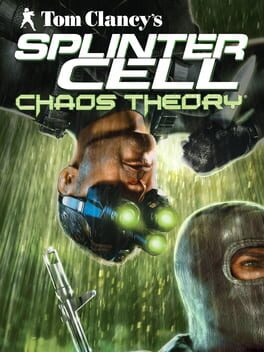
Ubisoft Montreal and Ubisoft Milan made the third game. It has a darker tone and more combat, and Sam can kill the people he interrogates. That made it the first Splinter Cell game with an M rating. A new sound meter sits beside the light bar, and Sam has to stay quieter than his surroundings. He also gets a combat knife.
Guards are smarter. They move furniture to create cover, light flares in dark rooms and can catch Sam's reflection in a mirror. Too many alarms no longer end the game automatically, and maps have multiple ways to reach the goal. It adds a cooperative multiplayer mode and a soundtrack by Amon Tobin. It sold 2.5 million units within a month, and the Xbox version sits at 94/100 on Metacritic.
Gameloft made a version for N-Gage, out on March 31, 2005, and keypad phones followed on April 7, 2005. Levi Buchanan of IGN gave the phone version 8.8 out of 10 and called it "definitely not a one-touch game". Sam's gadget list was always going to be a squeeze on a number pad. The Nintendo DS version came on June 28, 2005. Reviews were mixed. Metacritic has it at 50/100, the lowest score for Chaos Theory on any system, and the Sydney Morning Herald blamed a "choppy, stuttering frame rate". Splinter Cell 3D is a port of Chaos Theory for the Nintendo 3DS, out in North America on April 10, 2011, and Metacritic has it at 53/100.


Tom Clancy's Splinter Cell: Essentials (2006)
Mar 21, 2006Apr 6, 2006
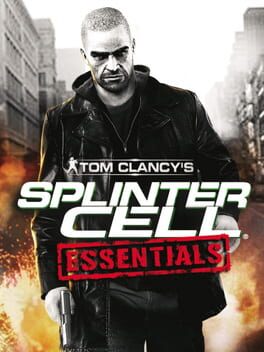
Essentials is a PSP stealth game from Ubisoft Montreal, running on a toned-down Unreal Engine 2. The story opens in January 2009 with Sam arrested at the grave of his daughter, Sarah. He is interrogated at NSA headquarters in Fort Meade, and you play the past events he remembers as flashback missions.
One goes back to Colombia in 1992, when Sam was a Navy SEAL rescuing his commanding officer, Douglas Shetland. Another returns to the oil rig from the first game. Critics liked it less than the earlier games, with complaints about the controls and the multiplayer mode, and Metacritic has it at 58/100.


Tom Clancy's Splinter Cell: Double Agent (2006)
Oct 19, 2006Oct 19, 2006Oct 20, 2006Feb 22, 2007Nov 7, 2006Nov 9, 2006Nov 10, 2006Mar 27, 2007Mar 29, 2007Mar 30, 2007
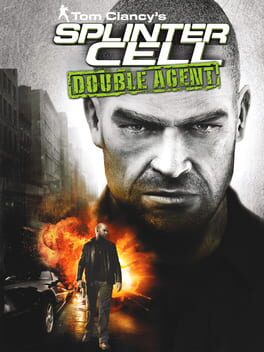
After Sarah dies, Sam goes undercover with a terror group called John Brown's Army. He has to earn its trust without losing the NSA's. A trust system puts moral choices in front of you. One mission asks whether to let a bomb go off to keep your cover. It is the first game in the series with a hub area between missions, and the only one with different endings, though only one counts as canon.
Double Agent has two separate versions. Ubisoft Milan and Ubisoft Shanghai made the one for Xbox 360, Windows and PlayStation 3 on a custom engine. The Windows version followed on November 7, 2006 and PlayStation 3 on March 27, 2007. Ubisoft Montreal made the one for GameCube, PlayStation 2 and Xbox, out on October 24, 2006, and it uses the technology of the earlier Splinter Cell games. The Wii got it on November 28, 2006.
The two share the same general plot, but the storylines, plot twists and levels are different. They do share the background music, a few cutscenes and all the voice actors. Two games with one name made it hard to tell a friend which one you meant. Gameloft made a separate phone game that came out first, in September 2006.


Tom Clancy's Splinter Cell: Conviction (2010)
Apr 13, 2010Feb 22, 2012Feb 8, 2018
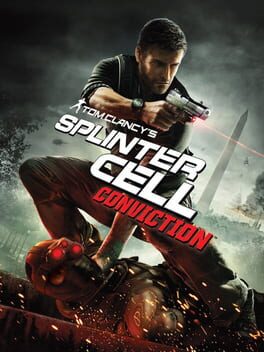
Conviction was due on November 16, 2007, then missed that date and was reported in May 2008 as "back to the drawing board". The version that shipped is faster and built around Mark and Execute, which lets you tag targets and shoot them in rapid succession. Last Known Position shows a silhouette where guards think Sam is, and the screen turns grayscale when he is hidden. After six years of whistling at guards, Sam finally gave it up, along with lock picking and hiding bodies.
Sam has left Third Echelon and is in Malta chasing the truth about Sarah's death. The game has a co-op mode and Deniable Ops, but no Spies vs Mercs. It sold 1.9 million units by July 2010 and reached Steam on March 28, 2011. Gameloft made an iOS version with an exclusive speed boat level on the Potomac River, and phones got a side-scrolling 2D version.


Splinter Cell: Blacklist Spider-Bot (2013)
Jun 10, 2013

Spider-Bot is a 2D puzzle game and a tie-in for Blacklist, released about two months before the main game.


Tom Clancy's Splinter Cell: Blacklist (2013)
Aug 20, 2013Aug 22, 2013Aug 20, 2013
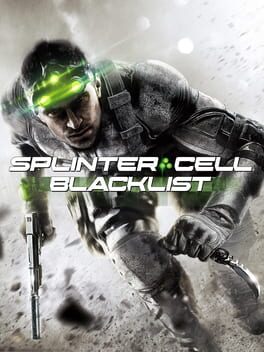
Blacklist is the first title from Ubisoft Toronto, a studio founded in 2009, and it tries to combine the action of Conviction with the stealth of the older games. Sam leads Fourth Echelon from an airship called the Paladin, chasing a terrorist group called the Engineers. The game scores your play as Ghost, Panther or Assault, and money buys upgrades for Sam's suit and the ship. Mark and Execute returns, and he gets a small drone called the Tri-Rotor.
Spies vs. Mercs is back after Conviction left it out. Eric Johnson replaced Michael Ironside as Sam, which some fans criticized. The game underperformed commercially, selling two million units within three months.
A remake of the first game has been in development since Ubisoft revealed it in December 2021. It is not out yet, so it is not on this list. A VR game for Oculus was cancelled on July 21, 2022.