All 17 Spyro games are here in US release order, from the 1998 PlayStation original to Skylanders: Spyro's Adventure in 2011. Spin-offs are marked.
Spyro the Dragon (1998)
 Sep 9, 1998
 Oct 23, 1998
 Oct 23, 1998
 Apr 1, 1999Oct 25, 2007Mar 12, 2008Dec 12, 2012Dec 12, 2012

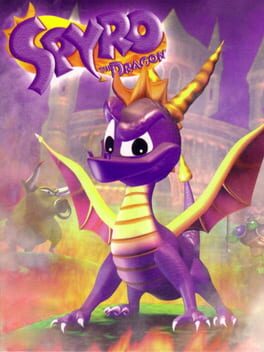
Insomniac Games made Spyro right after its debut, Disruptor, which sold poorly. Artist Craig Stitt suggested a game about a dragon, and the first pitch was a dark one called Lifespan, with a dragon defending its lair over thousands of years, US Civil War soldiers included. The finished game stars a young purple dragon who frees his crystal-trapped friends across large open levels, using fire breath, a charge and a glide. Stewart Copeland, the former drummer for the Police, composed the music, which makes Spyro the rare dragon with the Police on his side. Sales started slowly, then picked up over the 1998 holidays and reached nearly five million copies.
Toys for Bob remade the first three games in 2018 as Spyro Reignited Trilogy, with each level matching the size and layout of the original. Insomniac could not provide source code or original assets, so the team used an in-house tool called Spyro-scope to study the old levels. Tom Kenny re-recorded all of Spyro's lines, including the first game's. Stewart Copeland wrote a new theme, and you can choose between the original and arranged soundtracks. Switch and Windows versions followed on September 3, 2019. It has sold over 11 million units as of June 2026, making it the best-selling game in the series.


Spyro 2: Ripto's Rage! (1999)
Nov 2, 1999Nov 5, 1999Dec 17, 1999Mar 16, 2000Apr 17, 2008May 7, 2009Dec 12, 2012
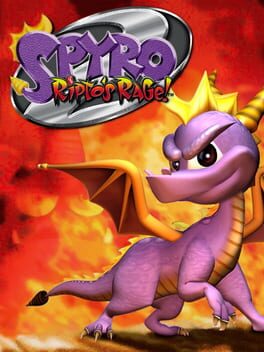
Spyro plans a vacation at Dragon Shores and lands in Avalar instead, where Elora the Faun, Hunter the Cheetah and the Professor have summoned him to deal with the sorcerer Ripto. The villain's name came from the Japanese katakana spelling of Spyro. Tom Kenny took over Spyro's voice from Carlos Alazraqui here. In PAL regions the game is called Spyro 2: Gateway to Glimmer.
This sequel added swimming, climbing and power-up gates that lend Spyro superflame or flight for a while. Levels gained side quests and mini-games, and you pay gems to Moneybags, a bear who charges for progress. It sold more than 3.4 million units.


Spyro: Year of the Dragon (2000)
Oct 10, 2000Nov 10, 2000Jun 8, 2001May 14, 2009Dec 12, 2012
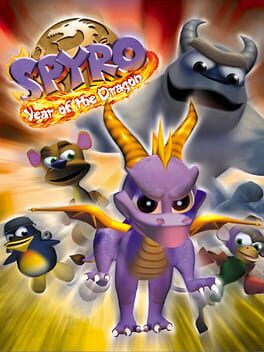
This was the last Spyro on the original PlayStation and the last from Insomniac. Development took about ten and a half months, and the name comes from the Chinese zodiac year it came out in. An evil sorceress steals the dragon eggs, and Spyro chases them across 37 levels. Crack protection held hackers off for two months, where Spyro 2 lasted a week.
New critters are playable in marked sections. Sheila the Kangaroo can double jump, and Sergeant Byrd is a penguin with rocket launchers who can fly, two things most penguins are still waiting for. Minigames include races and skateboarding. The game sold more than 3 million copies.


Spyro: Season of Ice (2001)
Nov 7, 2001Nov 16, 2001Dec 26, 2002
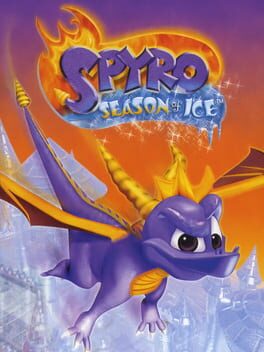
Season of Ice was the first Spyro not developed by Insomniac Games or released on a Sony console. Digital Eclipse made it for the Game Boy Advance, and in Japan it is known as Spyro Advance.
You free fairies from their ice prisons and work through four seasonal fairy realms before beating Grendor, a villain with an extra head. Some levels have you flying through hoops against a time limit. Reviews were mixed or average. TheGamer called it one of the hardest Spyro games because landings are difficult to line up in the isometric view.


Spyro 2: Season of Flame (2002)
Sep 24, 2002Oct 3, 2002

Rhynocs steal the fireflies of the Dragon Realms, and the dragons lose their fire breath. Spyro starts on ice breath alone, freezing fireflies in place to catch them. Rescue enough and his fire comes back, and the select button then swaps between the two. Ripto turns out to be behind the theft.
Digital Eclipse came back for this sequel, and special gates now power up Spyro's breath or let him breathe electricity. Sparx works as the health meter and changes color as you take hits. Many critics liked it more than Season of Ice, though the controls drew complaints.


Spyro: Enter the Dragonfly (2002)
Nov 5, 2002Nov 29, 2002Nov 19, 2002Nov 29, 2002
Insomniac had moved on to Ratchet & Clank, so Universal contracted Equinoxe Digital Entertainment and Check Six Studios to make the first mainline Spyro without the original team. Xbox and PC versions were planned but cancelled, and the GameCube version followed on November 19.
Spyro rescues magical dragonflies from Ripto and gains bubble, ice and electric breath. Reviews were negative, pointing at the short length, poor controls and sluggish performance. Bugs and glitches drew the most criticism, and some reviewers guessed the game had been rushed to hit its date. Stewart Copeland returned, and the soundtrack was praised.


Spyro (2003)
May 28, 2003May 28, 2003

This isometric phone game came from In-Fusio and Vivendi Games Mobile. Spyro's job here is fashion: he hunts down outfits and accessories for fairies.


Spyro: Attack of the Rhynocs (2003)
Oct 28, 2003Nov 20, 2003
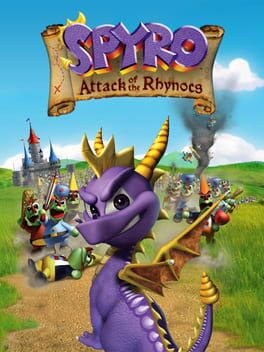
The third Game Boy Advance game, known in Europe as Spyro Adventure, leans further into role-playing than the first two. You still collect gems and warp between levels through portals.
The Professor builds a large mechanical bear called Butler and gives it no off switch, which tells you how his testing goes. His other invention tears a hole in space, and Spyro has to gather magical Hearts to close it while Ripto causes trouble. This was the final Spyro from Digital Eclipse, and the last under the Universal Interactive label.


Spyro Orange: The Cortex Conspiracy (2004)
Jun 1, 2004Jun 25, 2004
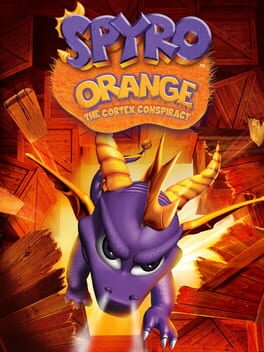
Spyro Orange came out alongside Crash Bandicoot Purple: Ripto's Rampage, and the pair brought Crash and Spyro together for the first time. Vivendi Universal proposed the crossover, and Vicarious Visions built both on 128-megabit cartridges, twice the size of typical Game Boy Advance games. Europe got it as Spyro: Fusion.
It is mostly minigames, with five hub worlds and a Party Mode for up to four players. The two games share 167 trading cards, which you can swap over a Game Link Cable. Critics saw Spyro Orange as the weaker of the two and aimed at younger players.


Spyro: A Hero's Tail (2004)
 Nov 2, 2004

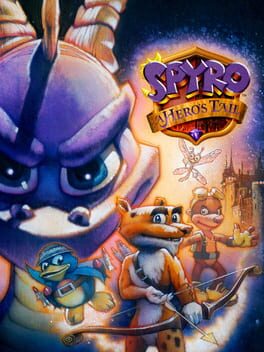
Eurocom took over the console games with the working title Spyro: The Dark Realms. Its producers knew how badly Enter the Dragonfly had gone, and they said the goal was "to create a game that was in keeping with the franchise."
Spyro hunts Dark Gems planted by Red, a banished dragon elder, and each one he destroys restores the land around it. Sparx, Hunter and Sgt. Byrd are playable in minigame stages, along with newcomer Blink the Mole. Moneybags now runs a shop. Reviews were generally mixed.


Spyro: Ripto Quest (2004)
Nov 12, 2004
Kaolink made this isometric Java phone game, in which Spyro collects four machine parts to stop Ripto. Levi Buchanan gave it a positive review at both IGN and GameSpy.
Spyro the Dragon (2005)
Aug 2005
This Java phone game shares its name with the 1998 original but is a different game, a sidescroller based on Shadow Legacy.
Spyro: Shadow Legacy (2005)
Oct 18, 2005
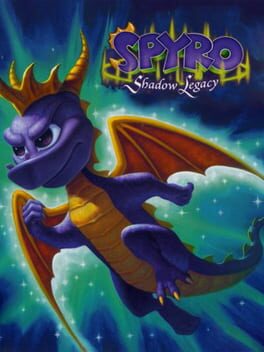
Amaze Entertainment made this action role-playing game for the Nintendo DS. A dark storm traps the Dragon Realms in the Shadow Realm, and Spyro sets out to rescue everyone and master dragon-kata. Red, the villain of A Hero's Tail, returns and then switches sides.
Beating enemies and finishing quests earns experience points. When you level up you go back to the Dragon Temple to learn two new skills. You cast spells by drawing symbols on the touchpad with the stylus. It scored 50/100 on Metacritic, and both Eurogamer and IGN gave it 4/10.


The Legend of Spyro: A New Beginning (2006)
Oct 10, 2006
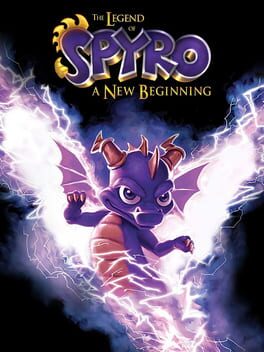
Krome Studios rebooted the series with a new story and a famous cast: Elijah Wood as Spyro, Gary Oldman as Ignitus, David Spade as Sparx and Cree Summer as Cynder. Spyro now hatches in a swamp and is raised by a family of dragonflies, with Sparx as his adopted brother.
The focus moved from platforming to combat. Spyro has fire, electricity, ice and earth breath, and there are fewer levels than before, running in a straight line to a boss. Reviews were mixed, with praise for the story and complaints about repetitive gameplay.

The Legend of Spyro: The Eternal Night (2007)
Oct 2, 2007Oct 18, 2007Oct 2, 2007

Krome Studios made the PlayStation 2 and Wii versions, and other studios made the handheld and phone games under the same title. The Wii version followed on October 18. Spyro tries to stop the Dark Master's return before a lunar alignment called the Night of Eternal Darkness.
Levels are still linear, with more puzzle-solving and exploration than the first game. Spyro learns "dragon time" from the Chronicler, which slows time down. Billy West and Mae Whitman took over as Sparx and Cynder. Critics were mixed again.
The Legend of Spyro: Dawn of the Dragon (2008)
Oct 21, 2008
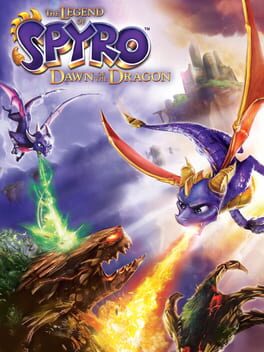
A phone version reached Europe first, on September 24, 2008. This game closes The Legend of Spyro and marks the tenth anniversary of the series. A producer later said they never planned to do a trilogy.
This is the first Spyro that lets you fly whenever you want. It also has co-op with Cynder, and the story keeps the two dragons chained together. Wayne Brady and Christina Ricci took over as Sparx and Cynder, and Mark Hamill plays the villain Malefor.
Skylanders: Spyro's Adventure (2011)
Oct 13, 2011Oct 14, 2011Oct 16, 2011Oct 13, 2011Oct 14, 2011Oct 16, 2011Jul 12, 2013Jul 12, 2013
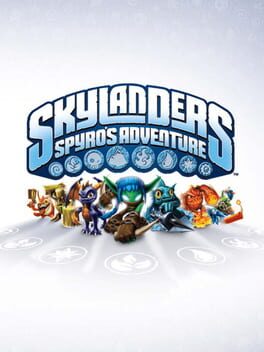
Toys for Bob was given the chance to revive a Vivendi series and picked Spyro. An early working title was Spyro's Kingdom, a darker and more mature game, but the team felt it did not feel like Spyro. They turned it into the first Skylanders game instead.
You put toy figures on a Portal of Power, and the game reads them through an NFC chip. The toys keep their stats, so you can take your character to a friend's copy. Spyro is one of 32 Skylanders here. Over 30 million Skylanders toys had sold by March 31, 2012, and he appears in all six mainline Skylanders games. Spyro: A Realm Beyond, a new game announced on June 7, 2026, is set for Spring 2027.