The 30 Zelda games are listed here in US release order, from The Legend of Zelda on the NES in 1987 to Hyrule Warriors: Age of Imprisonment in 2025. Spin-offs are marked, and remakes and remasters are named under the game they came from.
The Legend of Zelda (1987)
 Feb 21, 1986
 Aug 22, 1987
 Nov 15, 1987Feb 19, 1994Nov 19, 2006Dec 2, 2006
 Dec 7, 2006Dec 8, 2006
 Mar 31, 2009Dec 22, 2011Apr 12, 2012Jul 5, 2012Feb 3, 2016Aug 28, 2013Aug 29, 2013Aug 29, 2013

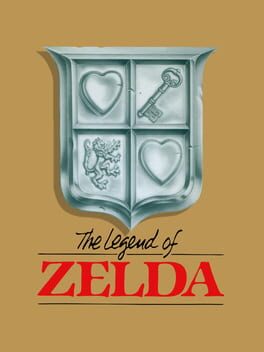
The Legend of Zelda was directed and designed by Shigeru Miyamoto and Takashi Tezuka. Nintendo converted it to a cartridge for the American release on the NES. That US version was one of the first games to include an internal battery for saving data, so you could stop and pick up your quest later. Koji Kondo composed the game's five music tracks.
It sold over 6.5 million copies and started the whole series. Japan got it on Famicom Disk System in 1986. It reached the Nintendo Classics service on September 18, 2018. On physical copies, the top-left quadrant of the shield is a cutout that shows the gold cartridge inside.


Zelda II: The Adventure of Link (1988)
Jan 14, 1987Sep 26, 1988Dec 1, 1988Jan 23, 2007Feb 9, 2007Feb 9, 2007Jun 4, 2007Jun 6, 2012Sep 13, 2012Nov 22, 2012May 4, 2016Sep 11, 2013Sep 12, 2013Sep 26, 2013
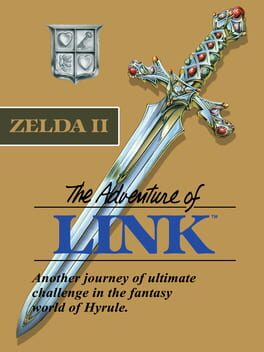
Zelda II is a direct sequel: Link sets out to save Princess Zelda, who has fallen under a sleeping spell. Given what Link has to get through to wake her, the nap seems like the better deal. Japan got it on Famicom Disk System in 1987.
It plays nothing like the first game. The world map is top-down, but towns, caves and fights switch to side-scrolling, and Link earns experience points to level up. Its role-playing parts, such as experience points and limited lives, never returned in the main series. Link's magic meter and the Dark Link fight did, and both turn up in many later Zelda games.


Zelda (Game & Watch) (1989)
Aug 26, 1989
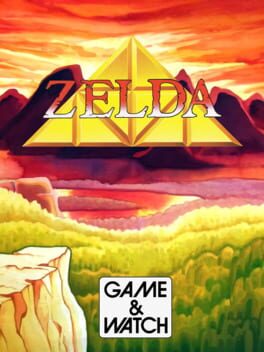
Zelda is a Game & Watch handheld developed by Gunpei Yokoi and Nintendo R&D1, and it is based on the original NES game. After defeating each dragon, Link gains one piece of the Triforce, and once he has all 4 pieces he wins.
It was Nintendo's penultimate Game & Watch before the Game Boy arrived, with Mario the Juggler as the very last. Nintendo hid a port as an unlockable extra in Game & Watch Gallery 4 for the Game Boy Advance in October 2002. Nelsonic Industries made a Legend of Zelda game watch the same year, a wristwatch game based on the NES original.


The Legend of Zelda: A Link to the Past (1992)
Nov 21, 1991Apr 13, 1992Sep 24, 19921992Mar 2, 1997Dec 2, 2006Jan 22, 2007Mar 23, 2007Mar 23, 2007Jun 10, 2008Dec 12, 2013Jan 30, 2014Feb 12, 2014Mar 4, 2016Mar 10, 2016Apr 14, 2016
A Link to the Past is set many years before the first two games, and it goes back to the top-down view of the original after the side-scrolling of Zelda II. Link can move diagonally now, where the first game kept him to four directions.
Portals take him from the Light World into the Dark World, a parallel version of it, and the two-world idea became a series staple along with the Master Sword. It reached Nintendo Classics in 2019. The Game Boy Advance port shares a cartridge with Four Swords, further down this list.


The Legend of Zelda: Link's Awakening (1993)
Jun 6, 1993Aug 6, 1993Nov 1, 1993
Link's Awakening was the first Zelda on a handheld, and it began as an after-hours effort by Nintendo staff to port A Link to the Past to the Game Boy. It is one of the few Zelda games set outside Hyrule, with no Princess Zelda and no Triforce. Link is stranded on Koholint Island and has to find eight instruments to wake the Wind Fish. Tezuka wanted the world to feel like the TV series Twin Peaks. A programmer also gave Link the ability to take a Chain Chomp for a walk, which is the most Twin Peaks thing in the game.
Nintendo re-released it in 1998 as Link's Awakening DX for the launch of the Game Boy Color, with color graphics and an optional dungeon with enemies and puzzles based on color. DX arrived on Nintendo Classics in 2023. Grezzo remade the game for Switch in 2019, and Dampé's shack there lets you rearrange existing rooms into Chamber Dungeons. The remake had sold over 6.46 million copies as of December 2022.


Link: The Faces of Evil (1993)
Oct 10, 19931993
Nintendo licensed its characters to Philips, and Animation Magic made this side-scrolling game for the CD-i. Link travels to the world of Koridai to defeat Ganon and rescue Princess Zelda. You pick levels from a map, starting with only three areas, and rupees are called rubies here.
Faces of Evil is not an official entry in the series. The CD-i was not designed as a dedicated game console, and that shows in the unresponsive controls, especially with the standard infrared controller. One later review called those controls "insufferable".


Zelda: The Wand of Gamelon (1993)
Oct 10, 19931993
The Wand of Gamelon came out the same day as Faces of Evil. The two were developed side by side, and they look and play alike because they use the same graphic engine. This one changes the roles: you play Zelda, who sets out to save Link and King Harkinian and defend her kingdom from Ganon.
A month passes without word from the king, so Zelda sends Link to find him, and soon she has to find Link as well. A search party of one was never going to work. Nintendo's own main series waited until Echoes of Wisdom to put Princess Zelda in the lead.


The Legend of Zelda: Ocarina of Time (1998)
Nov 21, 1998Nov 23, 1998 Dec 1998Dec 11, 1998Dec 18, 1998Feb 23, 2007Feb 23, 2007Feb 26, 2007Feb 27, 2007Jul 2, 2015Jul 2, 2015Jul 3, 2015Dec 23, 2015

Ocarina of Time was the first Zelda with 3D graphics, led by five directors including Eiji Aonuma and Yoshiaki Koizumi, with Miyamoto producing. Link travels through time to stop the evil king Ganondorf, and claiming the Master Sword moves him seven years into the future as an adult. He learns 12 melodies on the ocarina to solve puzzles and teleport. Your fairy Navi gives hints and advice, whether you asked or not.
The game introduced a target-lock system and context-sensitive buttons, and both became common in 3D adventure games. It set a record for video game pre-orders in the US and sold more than seven million copies. It reached Nintendo Classics in 2021.
Master Quest, with altered dungeons and a higher difficulty, came on a GameCube bonus disc with pre-orders of The Wind Waker. Grezzo's Ocarina of Time 3D followed on Nintendo 3DS on June 19, 2011 and sold over 6.44 million units as of December 2022. The Switch 2 remake came out on November 5, 2026. It keeps the gameplay and story of the original, cutscenes are now fully voiced, and you can perform ocarina songs with the Switch 2 microphone.


The Legend of Zelda: Majora's Mask (2000)
Apr 27, 2000Oct 26, 2000Nov 17, 2000Apr 3, 2009Apr 3, 2009Apr 7, 2009May 18, 2009Jun 23, 2016Nov 24, 2016
Majora's Mask reuses elements and character models from Ocarina of Time, a decision time constraints forced on the team. A few months after that game, Link arrives in the parallel world of Termina and has three days to stop the moon from crashing. The game runs on a repeating 72-hour cycle, about 54 minutes in real time, and people in town follow a set schedule.
Masks transform Link into different forms, and the Bomber's Notebook tracks who needs help and when. It was the first Zelda with Aonuma as the primary director, and it reached Nintendo Classics in 2022. Grezzo's remake, Majora's Mask 3D, came to Nintendo 3DS on February 13, 2015. The Song of Double Time there lets you skip to any hour of the day.


The Legend of Zelda: Oracle of Seasons (2001)
Feb 27, 2001May 14, 2001Oct 5, 2001Feb 27, 2013May 29, 2013May 30, 2013May 30, 2013Apr 20, 2016
Capcom's Flagship team made the two Oracle games after testing a port of the first Zelda on the Game Boy Color, and the supervisor was Yoshiki Okamoto. The graphics and play are close to Link's Awakening. Here the Triforce carries Link to the land of Holodrum, where he sees Onox kidnap Din, the Oracle of Seasons.
The Rod of Seasons lets you change the seasons, and the world changes with them. Both games came out on the 3DS Virtual Console in 2013 and on Nintendo Classics in 2023. Together, Seasons and Ages sold 3.99 million copies.


The Legend of Zelda: Oracle of Ages (2001)
Feb 27, 2001May 14, 2001Oct 5, 2001Feb 27, 2013May 30, 2013May 30, 2013May 30, 2013Apr 20, 2016
Oracle of Ages came out the same day as Seasons and uses time travel in place of seasons. The Triforce takes Link to Labrynna, where Veran possesses Nayru. A time portal sends him into the past to save the Maku Tree from Veran's orders.
The games talk to each other by passwords or a Game Link Cable. Finish one and you get a password for an alternative version of the other, with an extended ending in which Twinrova kidnaps Zelda. Nintendo and Capcom found a way to make one ending cost two cartridges.


The Legend of Zelda: Four Swords (2002)
Dec 3, 2002Dec 6, 2002Mar 14, 2003Mar 28, 2003
Four Swords came on one cartridge with a modified port of A Link to the Past. It is an original multiplayer-only game, the ninth installment in the series and the first Zelda with a multiplayer element. Nintendo designed it to force players to cooperate. You hold one item at a time and swap it at item pedestals. The sorcerer Vaati breaks free and captures Zelda to marry her.
The cartridge reached Nintendo Classics in 2024. Four Swords Anniversary Edition, a Grezzo remake, came out on DSiWare on September 28, 2011 for a limited time. It adds new dungeons based on classic Zelda games and a single-player mode, where you control two Links and switch between them.


The Legend of Zelda: The Wind Waker (2003)
Dec 13, 2002Mar 24, 2003Apr 16, 2003May 2, 2003May 7, 2003
The Wind Waker moved the series to a group of islands in the Great Sea, with Link out to save his younger sister and a talking sailboat, the King of Red Lions, for company. Eiji Aonuma directed it. His team jokingly suggested having Link shoot beams from his eyes, then settled on having him look at important objects as a hint to the player.
The cel-shaded art split players, and the game sold 4.6 million copies against 7.6 million for Ocarina of Time. Nintendo went more realistic for the next big Zelda as a result. It came to Nintendo Classics in 2025. The Wind Waker HD on Wii U took less than a year to remaster and added the Swift Sail, which makes sailing faster.


The Legend of Zelda: Four Swords Adventures (2004)
Jun 7, 2004Jan 7, 2005Apr 7, 2005
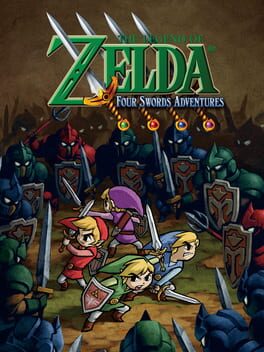
Four Swords Adventures sends Link and his three clones after Shadow Link, an evil counterpart of himself. The maps are fixed where Four Swords had random ones, the top-down view comes from A Link to the Past, and the effects come from The Wind Waker. You can move the four Links in formation or split one off to control him alone.
The multiplayer needs a Game Boy Advance for each player, used as a controller. When your Link walks off the main screen, the action moves to your GBA. That is a lot of cables for one game, and it sold 250,000 copies, plus 127,000 in Japan. Navi Trackers, an extra mode, appears only in the Japanese version.


The Legend of Zelda: The Minish Cap (2005)
Nov 4, 2004Nov 12, 2004Jan 10, 2005Apr 7, 2005Dec 16, 2011Dec 16, 2011Apr 30, 2014May 29, 2014May 29, 2014Jun 5, 2014
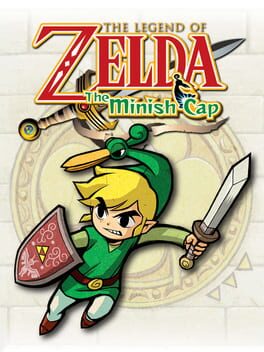
The Minish Cap comes from Capcom's Flagship, who began work in 2001 and paused it to help with Four Swords. It keeps the top-down style of A Link to the Past and adds a magical talking cap named Ezlo, who shrinks Link to the size of a Minish. A puddle Link would normally walk over is too deep at that size.
As a prequel to Four Swords, it tells the backstory of Vaati and the creation of the Four Sword. GameSpot picked it as the 2005 Game Boy Advance Game of the Year. It came to Nintendo Classics in February 2023.


The Legend of Zelda: Twilight Princess (2006)
Nov 19, 2006Dec 2, 2006Dec 8, 2006Dec 11, 2006Dec 19, 2006
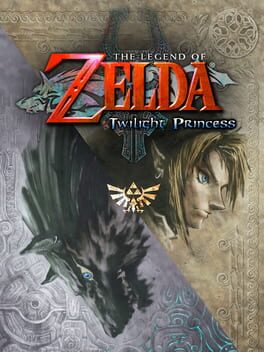
Twilight Princess was delayed so it could also be a Wii launch game. The GameCube version followed in December 2006 as the final first-party game for that console. The Wii version flips the whole world so that Link is right-handed. Link tries to stop Hyrule from being swallowed by the Twilight Realm, and he can turn into a wolf.
It was the first Zelda with a Teen rating. It sold 8.85 million copies by 2015, the best-selling Zelda game until Breath of the Wild. Twilight Princess HD, a Wii U remaster based on the GameCube version, came from Tantalus Media on March 4, 2016, with a Wii U-only dungeon called the Cave of Shadows.


The Legend of Zelda: Phantom Hourglass (2007)
Jun 23, 2007Oct 1, 2007Oct 11, 2007Oct 19, 2007Apr 3, 2008Nov 13, 2015Nov 13, 2015May 12, 2016Aug 3, 2016
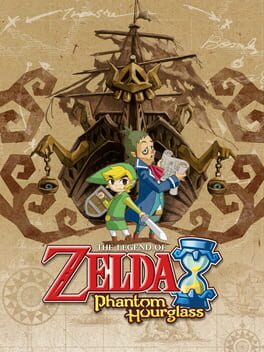
Phantom Hourglass is the direct sequel to The Wind Waker, with Link out to save his friend Tetra from Bellum, helped by Linebeck and his ship. It started life as Four Swords DS, made by the team behind Four Swords Adventures.
You control Link with the stylus: point to move him, point at foes to attack, and steer his boomerang on the touchscreen. Link goes back to the same Temple more than once, reaching deeper levels each time. It was the best-selling game in its first month in Japan with 302,887 copies sold.


Link's Crossbow Training (2007)
Nov 19, 2007Dec 7, 2007Apr 30, 2008
Link's Crossbow Training came bundled with the Wii Zapper and was the first game to use it. It borrows environments and enemies from Twilight Princess for a shooting game with 9 playable levels, each chasing the highest score within a time limit.
Miyamoto had wanted a first-person Zelda since Ocarina of Time, and this is what came of it. His list of "do nots" for the team said a player should be able to finish a stage within three minutes. It was the second Zelda game to get a T rating.


The Legend of Zelda: Spirit Tracks (2009)
Dec 7, 2009Dec 10, 2009Dec 11, 2009Dec 23, 2009Nov 13, 2015Aug 9, 2016Oct 20, 2016
Spirit Tracks is set a century after Phantom Hourglass in the land of New Hyrule. It keeps the stylus controls and swaps the boat for a train, with its own mechanics and puzzles. Zelda has a much bigger part this time: her spirit is taken from her body, and she joins Link as a possessed Phantom you can direct in several puzzles.
It was planned as a quick sequel in the style of Majora's Mask, but the new features stretched production to two years. It sold over 2.61 million copies by March 2010.


The Legend of Zelda: Skyward Sword (2011)
Nov 18, 2011Nov 20, 2011Nov 23, 2011Nov 24, 2011Nov 24, 2011Sep 1, 2016Sep 2, 2016Sep 2, 2016
Skyward Sword is the first game in the Zelda timeline, and it explains the origins of the Triforce and the Master Sword. Link lives in Skyloft, a floating town, and sets out to rescue his childhood friend Zelda after she is taken to the lands below the clouds.
Sword fighting relies on Wii MotionPlus, which leaves room on the controller for a Dash sprint. It was the first Zelda to use a live orchestra for most of its tracks. Critics and fans complained about the linearity, the backtracking and the motion controls. Tantalus Media made Skyward Sword HD for Switch, with updated graphics and a new control scheme, and it came out on July 16, 2021.


The Legend of Zelda: A Link Between Worlds (2013)
Nov 22, 2013Nov 22, 2013Nov 23, 2013Dec 26, 2013
A Link Between Worlds is a successor to A Link to the Past, set many years later, with a world based on that game. Link gets a magic bracelet that lets him merge into walls as a 2D painting, and he uses it to reach new areas and travel between Hyrule and Lorule.
You can clear most dungeons in any order, because you rent items from the merchant Ravio in place of finding them. If Link dies, the rented items go back to Ravio. The team considered charging fees if you returned them late, which would have made Link the first hero with an overdue bill. It sold over 4.26 million copies worldwide by 2022.


Hyrule Warriors (2014)
Aug 14, 2014Sep 19, 2014Sep 20, 2014Sep 26, 2014
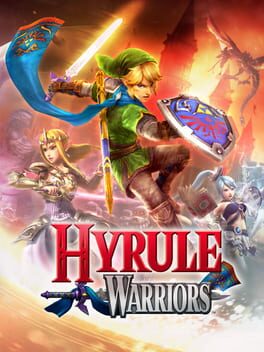
Hyrule Warriors mixes Zelda characters and settings with the gameplay of Koei Tecmo's Dynasty Warriors series. Koei Tecmo's studios developed it, with Aonuma as supervisor, and Zelda characters team up to stop the resurrection of Ganondorf. He described its story as connected to the timeline but outside the main canon.
An updated 3DS port, Hyrule Warriors Legends, followed in 2016 and added Linkle, a Cucco farmer. A Switch port, Hyrule Warriors: Definitive Edition, came out in 2018. Critics liked the mix of the two series and disliked how repetitive the fighting gets.


The Legend of Zelda: Tri Force Heroes (2015)
Oct 22, 2015Oct 23, 2015Oct 23, 2015Oct 24, 2015
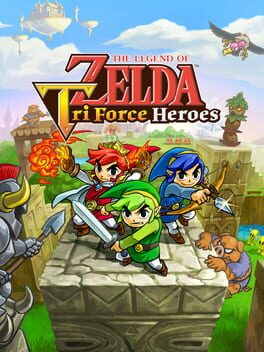
Tri Force Heroes is a co-op game for three players, each with a differently colored Link. The fashion-obsessed kingdom of Hytopia calls them in because its princess, Styla, has been cursed to wear a brown jumpsuit. Hyrule has faced worse, though the people of Hytopia would not agree.
Players share a heart meter and talk to each other with icons on the touch screen. It has local and online play, and one person can play with doll-like companions called Doppels. The main mode does not work for two players without a third, and reviewers criticized the single-player mode and the online matchmaking.


My Nintendo Picross: The Legend of Zelda: Twilight Princess (2016)
Mar 31, 2016Mar 31, 2016
This nonogram puzzle game was developed by Jupiter Corporation, makers of the Picross e series, and you could only get it as a reward through the My Nintendo service. The release matched the launch of that service and helped promote Twilight Princess HD.
You solve puzzles to create images inspired by Twilight Princess, with Midna walking you through the tutorial and hosting the game. Nintendo removed it from the service on March 25, 2023.


The Legend of Zelda: Breath of the Wild (2017)
 Mar 3, 2017

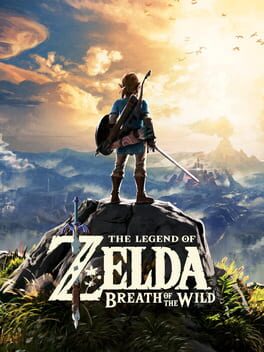
Breath of the Wild came out as the final Nintendo-published Wii U game and a launch game for the Switch. Led by director Hidemaro Fujibayashi and producer Eiji Aonuma, the team set out to rethink Zelda's conventions. Monolith Soft helped design the landscape, based on places around Kyoto.
Link sets out to save Princess Zelda and stop Calamity Ganon from destroying the world. A chemistry engine defines how objects interact with the player and with one another, so you can solve problems in different ways. It won Game of the Year at the 2017 Game Awards and became the bestselling Zelda game. The Nintendo Switch 2 Edition, a launch game for that console, added Zelda Notes on June 5, 2025.


Cadence of Hyrule: Crypt of the NecroDancer Featuring The Legend of Zelda (2019)
Jun 13, 2019

Cadence of Hyrule is a crossover between Crypt of the NecroDancer and Zelda, developed by Brace Yourself Games and directed by NecroDancer creator Ryan Clark. It has the longest title on this list, and you have to say it in time.
You play mostly as Link or Zelda, and when enemies are around you move and attack in time to the music. Places like Hyrule Castle and Death Mountain are all here, but their relative placement changes with each new save file. The villain Octavo uses a magical lute to put the king, Link and Zelda to sleep.


Hyrule Warriors: Age of Calamity (2020)
Nov 19, 2020Nov 20, 2020

Age of Calamity is set 100 years before Breath of the Wild, in the era that game only shows in flashbacks. Link and Princess Zelda gather allies across Hyrule to hold back Calamity Ganon. Between the large battles you can upgrade characters and cook, and you can control the gigantic Divine Beasts.
It became the best-selling game in the Warriors series in four days and sold 4 million units as of January 2022. In September 2026 Nintendo announced Hyrule Warriors: Age of Calamity Definitive Edition, an enhanced port for Nintendo Switch 2.


The Legend of Zelda: Tears of the Kingdom (2023)
May 12, 2023
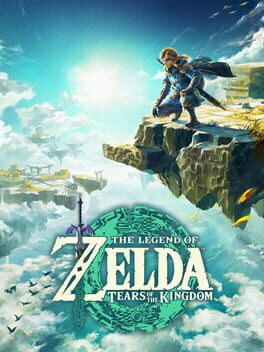
Tears of the Kingdom is the sequel to Breath of the Wild. It keeps the open world and adds islands floating in the sky and a vast underground area called the Depths. Link searches for Princess Zelda and fights to stop Ganondorf from destroying Hyrule.
The new idea is construction: you build devices for combat or exploration, and Fuse lets you combine materials with a shield or weapon. Gloom in the Depths temporarily reduces Link's maximum hearts. The game sold over 10 million copies within three days and 22.71 million by June 2026.


The Legend of Zelda: Echoes of Wisdom (2024)
Sep 26, 2024Jun 5, 2025
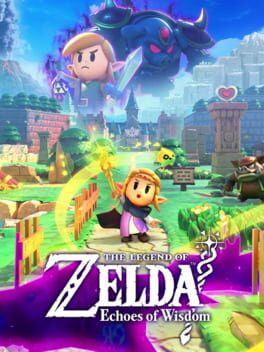
Echoes of Wisdom is the first mainline Zelda with Princess Zelda as the main playable character. She sets out to save Link and Hyrule with the Tri Rod, a magical artifact from the fairy Tri. Grezzo developed it with Nintendo, in a style similar to its 2019 remake of Link's Awakening.
The Tri Rod creates echoes, imitations of objects and monsters you can use freely. Zelda can also fight directly in a Swordfighter form that resembles Link. The idea grew from the dungeon editor in the Link's Awakening remake. The game had sold 4.09 million copies by March 2025.


Hyrule Warriors: Age of Imprisonment (2025)
Nov 6, 2025

Age of Imprisonment is the third Hyrule Warriors game, and its story takes place during the Imprisoning War from Tears of the Kingdom. Princess Zelda is sent back in time to the founding of Hyrule, where she helps Rauru and explores the Depths with Mineru.
She names a benign construct that resembles Link the Knight Construct. The fighting mixes groups of weak monsters with captains and bosses, each with a weak-point gauge. The game had shipped over one million copies worldwide by January 26, 2026.


Never released in the USA
- Zelda's Adventure (1996, Philips CD-i): Europe - Freshly-Picked Tingle's Rosy Rupeeland (2006, Nintendo DS): Japan and Europe
Never released in English
- Zelda no Densetsu: Kamigami no Triforce (1992, Barcode Battler II) - BS The Legend of Zelda (1995, Satellaview) - BS The Legend of Zelda: Ancient Stone Tablets (1997, Satellaview) - Tingle's Balloon Fight DS (2007, Nintendo DS) - Irozuki Tingle no Koi no Balloon Trip (2009, Nintendo DS) - Dekisugi Tingle Pack (2009, DSiWare)