On March 2, 1999, Sony revealed the first details of the PlayStation 2. The Dreamcast was still six months away from American shops. Sony estimated its new console could draw up to 16 million polygons per second, and it promised your old PlayStation games would still work. Sega had not sold one Dreamcast in America yet, and people already had a reason to keep their money.
Players who were there remember the line. Walk into a game shop with Dreamcast money and someone behind the counter would say "wait for the PS2". For the next year, that was the whole argument over Dreamcast vs PS2.
The PS2 sold 160 million consoles and the Dreamcast sold 9.13 million, more than seventeen to one. Dreamcast owners will tell you Sony beat them with a DVD drive and a promise. In this article we will find out who really won.
Sony beat the Dreamcast before the PS2 reached the shops

The Dreamcast started well. US sales passed 500,000 units within two weeks, and by Christmas Sega held 31 percent of the North American market. Then the talk about the PS2 got louder, and players remember a lot of people skipping the Dreamcast to wait for it.
Peter Moore, the president of Sega of America, said the Dreamcast needed 5 million US sales by the end of 2000. Sega reached about 3 million. Sony had trouble of its own, cutting its American launch shipment from one million units to about 500,000, and that should have helped. It didn't. Moore said the "PlayStation 2 lack of availability froze the marketplace". People would rather hunt for a console they couldn't find than buy the one on the shelf. Sony wins this round without turning up.
The PS2 was the cheapest DVD player in the house

Sega built its own disc, the GD-ROM, to avoid paying for DVD. It held 1 GB. Sony put a DVD drive in the PS2, and Ken Kutaragi used his standing inside Sony to overrule people worried about the company's own DVD players.
At launch the PS2 cost about the same as a standalone DVD player, and players remember it as the cheapest way to get one. Sega cut the Dreamcast to $149 against the PS2's $299, and it made little difference. Many players call the DVD drive the nail in the coffin. Dad had no interest in Soulcalibur, but he could be talked into a machine that played films. The PS2 wins this one.
Your PlayStation games still worked on the PS2

The PS2 could play almost all original PlayStation games. That covered for a thin launch, when a lack of new software pushed early interest toward DVDs. Ridge Racer V and Tekken Tag Tournament were fine, but a PlayStation owner also kept a whole shelf of games that still ran. Players say that was worth paying a little more for.
The Dreamcast had a strange answer. Bleemcast! was a PlayStation emulator on a boot disc, and it came out for Gran Turismo 2, Tekken 3 and Metal Gear Solid before Sony's lawyers wore the company down. Three games against an entire library is not a fair fight, and the PS2 wins it.
The Dreamcast was an arcade in your living room

The Dreamcast shared hardware with Sega's NAOMI arcade board, so arcade games came home almost untouched. Players still talk about it as having Sega's latest arcade hardware under the TV, and they say porting to it was easy. Soulcalibur even beat its arcade original, with higher-resolution textures and improved visual effects. It holds a 98 rating on Metacritic.
Crazy Taxi reached the Dreamcast in 2000 to critical acclaim. The PS2 port came later and got 80/100. Marvel vs. Capcom 2 was on the Dreamcast in 2000 and on the PS2 in 2002, where it scored 76/100. For arcade fans this round goes to Sega without much argument.
The Dreamcast put online play in the box

The Dreamcast was the first console with a built-in modem. You plugged it into the phone line and played Quake III Arena or Bomberman Online, and your mum shouted because she needed to make a call. Phantasy Star Online became the first successful online RPG on a console.
Even players who love the PS2 give the Dreamcast this one, because online play came out of the box. The early PS2 needed a network adaptor that you bought separately. Sony left online play to the publishers, who ran their own servers, so you often needed a separate login for each game. The Dreamcast wins easily.
The PS2 had more power and the Dreamcast had the cleaner picture

On the spec sheet the PS2 wins. Its Emotion Engine ran at 294.912 MHz against 200 MHz for the Dreamcast's Hitachi SH-4, and it had 32 MB of main memory against 16 MB. The Dreamcast did have the bigger video memory, at 8 MB against 4 MB.
Players are less sure about the rest. Many call the PS2 the weakest of its big rivals, and they say Dreamcast games still look clean today, with anti-aliasing the PS2 lacked. Owners recommend the VGA adapter for the best picture from a Dreamcast.
The PS2 was also hard to learn. Shinji Mikami called it the most challenging system he had worked on, and players say developers needed time to figure it out. The Dreamcast wins the first two years. Then Shadow of the Colossus and God of War turn up and the PS2 wins the rest.
Grand Theft Auto III started out on the Dreamcast

This is the round that hurts. The team began making Grand Theft Auto III for the Dreamcast and moved to the PS2 after four months. Technical director Obbe Vermeij said the hardware was not the problem. It had become clear the Dreamcast was not commercially viable.
The game came out on the PS2 in October 2001. It was the best-selling game of 2001, with over 11.6 million copies sold on the PS2. A Dreamcast owner reading that had every right to throw something. The PS2 wins the biggest game of the generation, and it won it from Sega's console.
Shenmue was Sega's big bet

Sega hoped Shenmue would be the Dreamcast's killer app. It became the most expensive game ever made at the time, with an estimated cost of $47 to $70 million, and it sold 1.2 million copies. That did not pay for it. Sega also made PS2 and Xbox ports that never came out.
Players don't care about the budget. Those who played it in 1999 remember how real it looked, and they call it the start of the modern open world. Grand Theft Auto III took the crown two years later, but Shenmue got there first. The Dreamcast takes this one on nerve.
The PS2 library was too big to fight

The PS2 got over 4,000 games, with 1.54 billion copies sold. The Dreamcast got over 600. Its best-selling game was Sonic Adventure at 2.5 million. San Andreas sold 17.33 million on the PS2, and Gran Turismo 3 sold over 14.8 million.
Time did most of the work. Sega discontinued the Dreamcast on March 31, 2001. The last PS2 game came out on November 8, 2013. Players who owned both still admit the PS2 had the deeper library, and plenty of those 4,000 games were forgettable, but you could shop for a decade and not run out of good ones. The PS2 wins this one by a mile.
EA left and Sega made a better football game
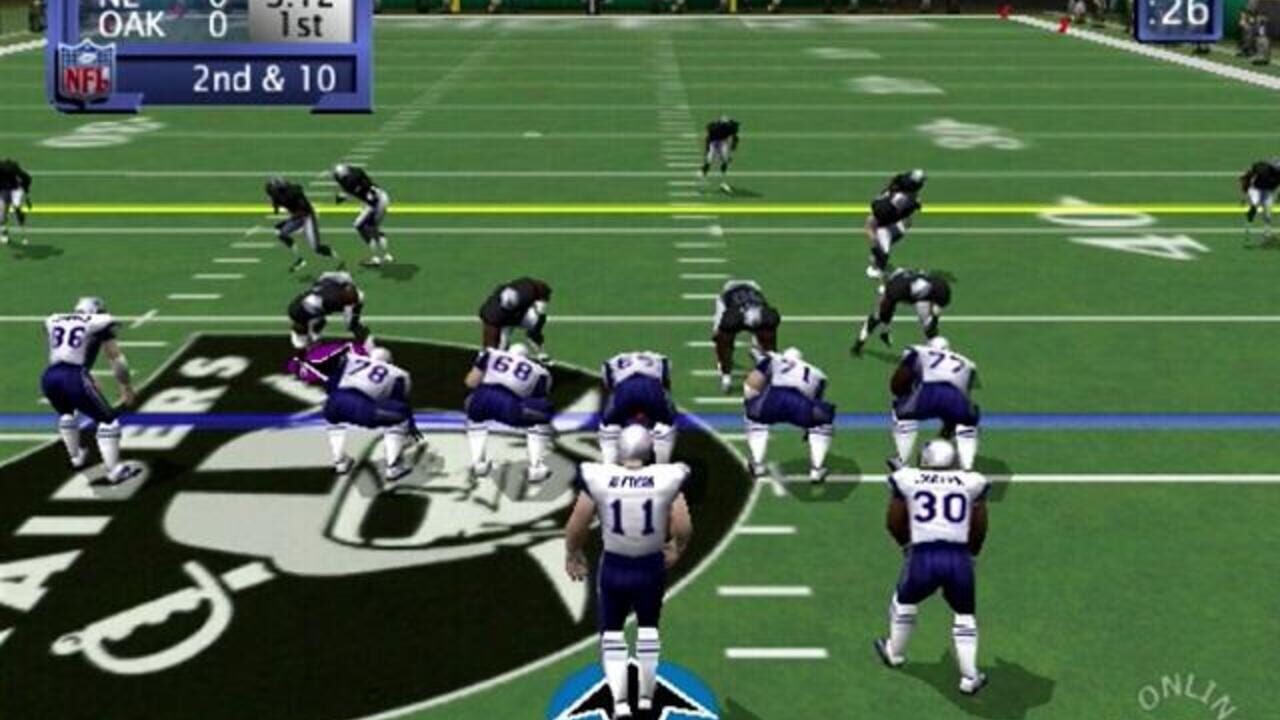
Before the Dreamcast launched, Electronic Arts said it would not make games for it. Bernie Stolar said EA wanted to be the only sports brand on the console, which he couldn't accept after Sega's $10 million purchase of Visual Concepts. So there was no Madden on the Dreamcast, and Sega built NFL 2K to fill the gap.
Players still rave about it. Many call it the best football game of its day and bought a Dreamcast just for it. Meanwhile Madden NFL 2001 was on the PS2.
The fight moved to the PS2 in the end. ESPN NFL 2K5 came out on the PS2 at $19.99 when Madden cost $49.99, and EA had to drop Madden to $29.95. Then EA signed an exclusive deal with the NFL in December 2004 and ended it. The Dreamcast wins on the field. The PS2 wins at the shop.
Square stayed away and the PS2 became the RPG console

The Dreamcast went without Squaresoft, the biggest third party in Japan. Final Fantasy X went to the PS2 instead, the first in the series with voice acting, and shipped over 8.5 million units.
Sega's answer was Skies of Arcadia, which is often called one of the best Dreamcast games and still underperformed. Dreamcast owners do have one comfort. Players say some games that moved over were better where they started, with Grandia II as the usual example. That is a nice thing to know while the PS2 takes the round.
The Dreamcast had the strangest games of the generation

Jet Set Radio was the first game to use a cel-shaded art style. Space Channel 5 was a dancing game with a Michael Jackson cameo. Seaman had you talking through a microphone to a fish-like creature, which is still hard to explain to anyone who wasn't there.
Players remember the Dreamcast as slick and unique in a way nothing else was, and that is why it has so much love for a console that lasted so briefly. The PS2 had Katamari Damacy and Ico, so it can fight back, but it had to wait a few years to get there. The Dreamcast wins for sheer personality.
Burned discs cost the Dreamcast sales it could not spare

The GD-ROM was supposed to stop copying. Players remember the opposite. The Dreamcast accepted burned CDs, most games fit on one, and anyone with a CD burner had a binder full of games. Plenty of them say this helped kill the console. A company fighting for its life needed those sales.
The PS2 was copied too, but it had 160 million consoles to spare. This is the one race the Dreamcast won that nobody at Sega wanted to win.
The Dreamcast had four ports and the PS2 had the better pad

The Dreamcast has four controller ports. The PS2 has two, reviewers criticised it for that, and you needed a multitap for four players. For a house full of friends the Dreamcast was ready to go.
The controller itself is another story. Critics gave it mostly negative reviews, with Edge calling it "an ugly evolution of Saturn's 3D controller". Players call it big and awkward. The saving grace was the VMU, a memory card with its own screen that also worked as a small handheld, and players remember carrying their virtual pets around in it. The PS2's DualShock 2 had 255 levels of pressure on its buttons, and nobody ever got a sore hand from it. Sega wins the ports and Sony wins the pad.
Dreamcast hits cost more and PS2 horror costs the most

The Dreamcast sold fewer copies, and collectors feel it. A loose Sonic Adventure 2 typically sells for $95, Skies of Arcadia for $85 and Marvel vs. Capcom 2 for $79. The same Marvel game goes for $61 on the PS2. The big PS2 hits are nearly free. Grand Theft Auto III is $5, Final Fantasy X is $7 and Shadow of the Colossus is $10.
The PS2 has an expensive corner, and it's a scary one. Kuon sells for $600, Rule of Rose for $488 and Haunting Ground for $419. The top Dreamcast game in our sold prices is Cannon Spike at $208. For a normal shelf of famous games the Dreamcast costs far more, so it wins on resale, unless you are the kind of person who owns Rule of Rose.
Dreamcast fans never stopped

After Sega shut down the official servers, hobbyists built private ones so people could keep playing Phantasy Star Online. Unlicensed Dreamcast games were still coming out in 2014, thirteen years after Sega gave up on it. Edge named it the tenth-best console of the last 20 years in 2013, and praised its voice chat, downloadable content and second-screen ideas.
Players still call it ahead of its time. Most consoles that sell 9.13 million get forgotten, and this one has fans who will fix a laser for it. The Dreamcast wins on loyalty.
Which one wins?
The scoreboard says the PS2. More consoles, more games, thirteen years in production, and nobody can argue with any of that. It doesn't change a thing. If a Dreamcast sat under your TV in 1999, you had Soulcalibur before anyone, and that console is yours for good. The numbers never made it special. The memories you made with it did, and Sega fans can claim one last prize: their old games cost more on the shelf today.