At Space World 2000, the show where Nintendo announced the GameCube, its Zelda team hastily made a brief clip of Link fighting Ganondorf. It looked like the grown-up Zelda everyone wanted next. A year later, at Space World 2001, Nintendo showed the real game, and it was a cartoon. Disappointed fans hit back, and critics called it "Celda".
The kids who grew up on Ocarina of Time took that cartoon Link personally. Their little brothers and sisters got Melee and never looked back. Both sides shared one TV, and the living room split over GameCube vs N64.
The N64 sold 32.93 million consoles to the GameCube's 21.74 million, about three for every two. GameCube fans will tell you that number proves nothing, because their console had the better pad and they never stopped playing Melee. In this article we will find out who really won.
The GameCube looked a whole generation ahead

Players who moved from one console to the other still call it a huge leap. Luigi's Mansion on a launch day GameCube made a late N64 game look ancient.
The gap got wider with time. Players say most N64 games have not aged well, with the blurry textures and blocky polygons to blame. They say GameCube games have held up much better, thanks to their art direction. The Wind Waker's cartoon look, the one that started all the shouting, is a big part of that, and the game is now considered one of the greatest video games ever made. The GameCube takes this round, and the people who said "Celda" should feel a little silly.
Discs finally gave Nintendo room
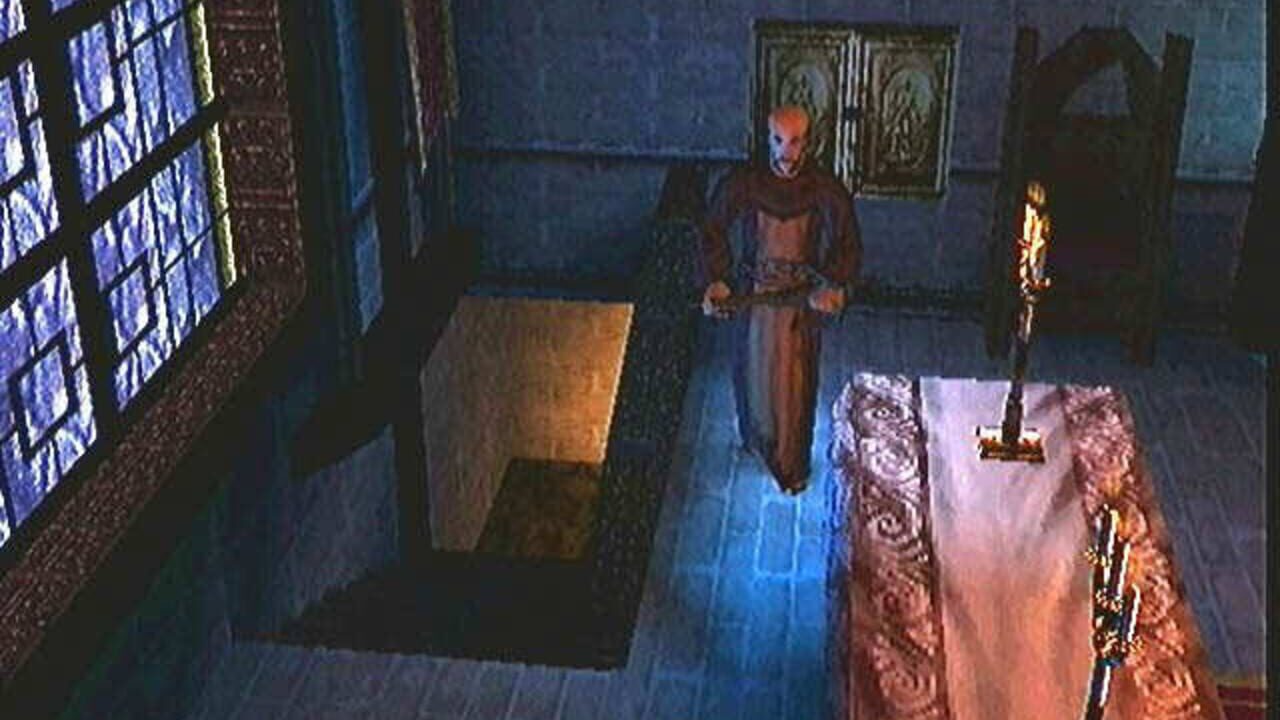
An N64 cartridge maxed out at 64 MB. A GameCube disc held 1.46 GB, more than twenty times as much, on a little 8 cm disc you could lose under a sofa cushion. The GameCube was the first Nintendo console to use optical discs instead of ROM cartridges.
Nintendo picked that small format to prevent copying, and to cut the cost of making games compared to N64 cartridges. Cost and storage limits were the two things that had pushed developers off the N64. The disc wins this fight with room to spare.
The N64 never made you wait

Cartridges had one trick left. Nintendo chose them for reduced loading times in the first place, and players still remember the N64 as instant.
Players also remember the GameCube's little discs loading fast, and they did. A short load is still a load, though. N64 cartridges could store their own saves as well, while the GameCube needed a memory card, so your first purchase after the console was somewhere to keep your game. The N64 wins this small round.
The GameCube pad beat the N64 pad

Give the N64 its credit first. Its controller was the first to include a thumbstick as a standard feature. It was also a strange thing to hold, and overuse of the stick could turn it loose.
The GameCube pad fixed all of that, with a large green A button right where your thumb sits. Most players who have used both pick the GameCube one. Nintendo clearly agrees, because it reissued the pad and made adapters for Super Smash Bros. for Wii U in 2014 and Super Smash Bros. Ultimate in 2018, long after the console had gone. A redesigned version came out for the Nintendo Switch 2. The WaveBird, released in 2002, cut the cable too, and it became the first modern wireless gaming controller. The GameCube wins this one by a mile.
Mario 64 and Ocarina of Time outsold the GameCube's answers

Super Mario 64 sold 11.91 million copies. Super Mario Sunshine sold over 5.5 million. Ocarina of Time sold 7.6 million and The Wind Waker sold 4.6 million. The N64 had more owners, but those gaps are wider than the gap between the consoles.
The reviews tell the same story. Metacritic and GameRankings both rank the N64 version of Ocarina of Time as the highest reviewed game of all time, with 99/100 on Metacritic. Super Mario 64 set many precedents for 3D platformers. The GameCube's Mario and Zelda games are great, but they followed the two games that showed everyone how 3D worked. The N64 takes this round.
Zelda still plays better on the N64

GameCube owners got to play the N64's best games anyway. Ocarina of Time was included in The Legend of Zelda: Collector's Edition in 2003, and the collection was included in GameCube bundles worldwide. Players say Majora's Mask came on the same disc.
It was a nice gift, but players who tried both say these versions feel off. They complain that the controls are more sensitive than on the N64, and that Majora's Mask runs worse. The carts win, and an N64 with a good pair of thumbs is still the place to play them.
Melee took over every living room

The N64 came with four controller ports, and it built the sleepover as we know it. Mario Kart 64 sold 9.87 million copies. GoldenEye 007 sold over eight million.
Super Smash Bros. Melee answered with 7.09 million copies on a console that had far fewer owners. It has been estimated that at one point 70% of all GameCube owners also owned Melee, which is a lot of households with a sore thumb. Competitive players never left, and Melee was hosted at Evo 2013 after a charity vote. Mario Kart: Double Dash sold around 7 million as well, and it supports LAN setups for up to sixteen players in eight pairs, if you knew someone with that many TVs. The N64 started the party and the GameCube wins it, just.
Rare made the N64 and the GameCube lost it

Rare had a great run on the N64, with GoldenEye 007, Perfect Dark and Banjo-Kazooie, and Nintendo's stake in the studio grew to 49%. Nobody else made an N64 feel so big.
The GameCube got one game from Rare. Star Fox Adventures started on the N64 as an original game called Dinosaur Planet, and Miyamoto convinced Rare to merge it with Star Fox. It was Rare's only GameCube game, as Microsoft bought the studio the day after its US release. The N64 wins this round, and N64 kids will remind you about it.
Metroid skipped the N64 completely

Nintendo did not develop a Metroid game for the N64. Miyamoto said it couldn't come up with concrete ideas. Co-creator Yoshio Sakamoto said he could not imagine how the N64 controller could be used to control Samus. Another company was offered the job and said no.
So Samus sat out a whole console, and then Metroid Prime arrived on the GameCube as the first Metroid game with 3D graphics and a first-person view. It has 97/100 on Metacritic and sold 2.84 million copies, and it was the best-selling Metroid game until Metroid Dread in 2021. The N64 has nothing to say here.
The GameCube got the games the N64 lost

The N64 library stopped at 388 games, and Nintendo had to lean on its own series. Players agree the GameCube saw much more third-party support, even if it was never a match for the PlayStation 2.
The Resident Evil remake is the best example. It was part of an exclusivity deal between Capcom and Nintendo, and Shinji Mikami rebuilt the original game for the GameCube. Sega showed up too. Its Amusement Vision studio made F-Zero GX, the first significant game collaboration between Nintendo and Sega, which would have sounded like a lie on a 1992 playground. The GameCube wins the shelf.
The Thousand-Year Door beat the first Paper Mario

Paper Mario on the N64 is lovely, and players tell you to play both. The sequel is still the one that wins. The Thousand-Year Door got 87/100 on Metacritic, sold 1.91 million copies and is considered by many to be the best game in the series. Nintendo remade it for the Nintendo Switch in 2024, a treat it has not given the N64 original. The GameCube takes the RPG round.
The GameCube played your Game Boy games

The Game Boy Player clips onto the bottom of the GameCube with screws, and it ran Game Boy games right up to the Game Boy Advance on your TV. A disc console with a whole handheld library attached under it is a hard extra to beat. The GameCube wins this one on the bonus points alone.
The N64 runs on a cheaper handheld

If you play these games on a retro handheld today, the N64 is the cheaper ticket. Players say a budget device can run most of the N64, while it only manages some GameCube games.
There is a catch. Players also say the N64 is hard to emulate well, even though it is the weaker console, so a few of your favourites may still glitch. The N64 wins this round, narrowly and with its fingers crossed.
The N64 wins on resale

Both are Nintendo consoles, so both hold their value, and the N64 carts hold it a bit better. A loose Paper Mario typically sells for $90 and The Thousand-Year Door for $36. Super Mario 64 goes for $39 and Super Mario Sunshine for $34. Metroid Prime is a bargain at $18. Conker's Bad Fur Day sells for $169 and Majora's Mask for $86.
The two Smash games are dead level at $50. The GameCube's expensive corner is its later games and third-party ports. Twilight Princess sells for $150, and Resident Evil 2 costs $100 on the GameCube against $47 on the N64, so here the disc beats the miracle cartridge.
Which one wins?
On paper the GameCube wins, with a stronger console and a better pad. It doesn't matter. If you first ran around a 3D castle on an N64, or spent every Friday night on Melee, that console is yours for life. What made it special was never the specs. It was the memories you made in front of it.