Sony and Nintendo started out as partners. The two were building a CD add-on for the Super Nintendo together, and Sony stood on a stage at CES to announce it. The next morning, Nintendo walked onto the same stage and said it was working with Philips instead. Japan's business world was shocked that Nintendo had dropped a Japanese partner for a foreign one. Sony was so angry it decided to build its own console, and that console became the PlayStation.
A few years later, every school playground was split down the middle over PS1 vs N64. You were a Crash kid or a Mario kid. Sleepovers were planned around whose house had which console, and nobody ever changed sides.
The PlayStation went on to outsell the N64 three to one. Ask anyone who grew up with an N64 and they will tell you that number means nothing. In this article we will find out who really won.
CDs gave the PlayStation room the N64 never had
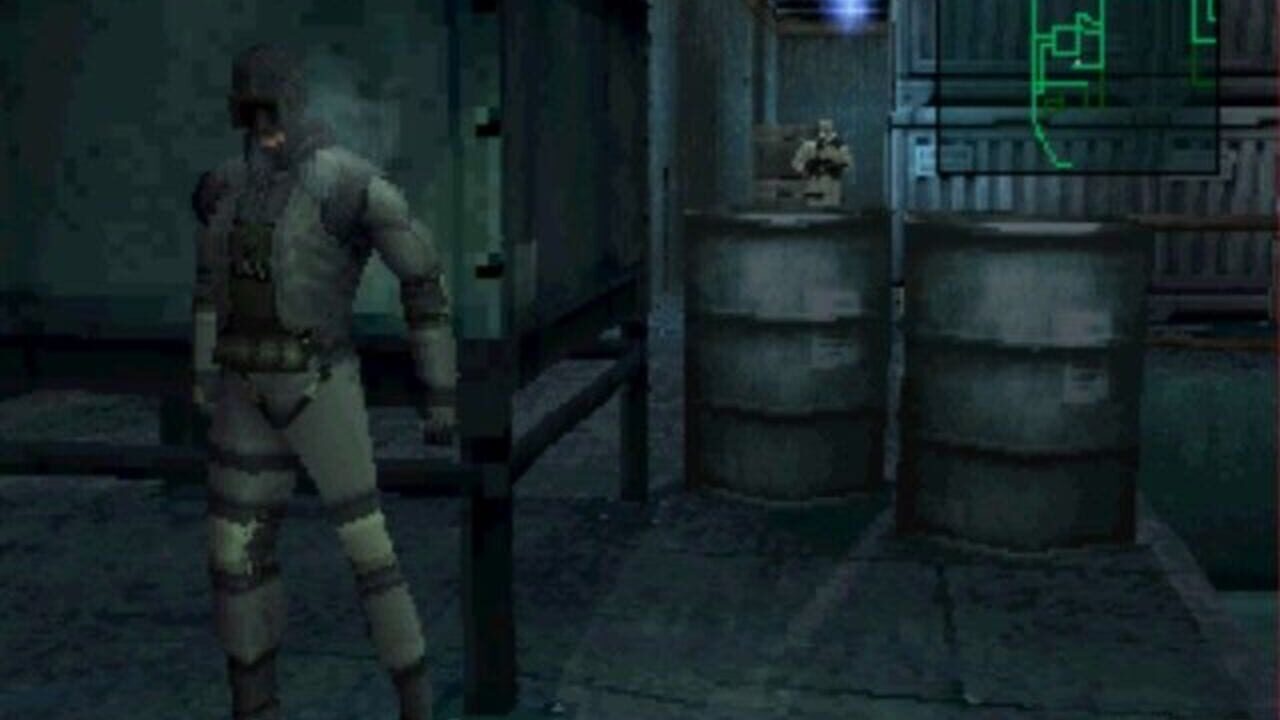
A CD held 650 MB. An N64 cartridge maxed out at 64 MB. Developers squeezed textures and cut audio to make games fit, and players still blame the cartridge for the missing voice acting and cutscenes. Nintendo picked cartridges for shorter loading times and to fight piracy, and the loading was fast, but it was a hard trade.
Price made it worse. Cartridges cost a lot more to make than discs, so N64 games sat near the top of the price range and PlayStation games sold for much less. A PlayStation kid owned more games.
Then came the stories. Metal Gear Solid has voice acting all the way through. The same game could have voiced cutscenes on PlayStation and silent slideshows on N64, and players who tried both never forgot it.
The N64 never made you wait

The cartridge gave Nintendo one win. Turn on Banjo-Kazooie and you are playing. Players remember the N64 as instant and the PlayStation as a console that loved a loading screen.
CDs were slow, and even Square felt it. Ken Narita, the lead programmer on Final Fantasy VII, said the CD-ROM's slower access speed delayed some actions in the game, and his team had to work around it. Cartridges were tougher too. An N64 cart could survive a fall down the stairs, a fate no PlayStation disc wanted to try.
Final Fantasy VII made the PlayStation the RPG console

Nintendo lost this one in a test lab. Square tried a Nintendo 64 version of Final Fantasy VII, and a single Behemoth monster of 2000 polygons was too much for the hardware. Square shifted the game and all its other planned projects to the PlayStation. It also cost Nintendo the big RPGs. Fans say Final Fantasy VII went to Sony because it could never have fit on a cartridge.
The game sold over two million copies in Japan within three days. Players still call the PlayStation years the peak of Japanese RPGs, and N64 owners had to watch from the other side of the playground. Paper Mario is lovely, but players agree the N64 had almost nothing else in the genre.
Resident Evil 2 on a cartridge was a miracle

The N64 gets its best technical win from a PlayStation game. Resident Evil 2 came on two CD-ROMs. Angel Studios put it on a single 64 MB cartridge, with a budget of $1 million and twelve months of work, and kept the full-motion video cutscenes that nobody expected to survive.
Fans who know the story call the port magic, and they are right. It didn't change the score. Resident Evil 2 sold 4.96 million copies on PlayStation, and the N64 version sold 326,397 in the United States. Still, the programmers win this round for pure nerve.
The PlayStation sounded better and played your music CDs

The disc won this one too. Players remember CD quality sound on the PlayStation and thinner music on the N64, where the cartridge had to fit everything else first. Castlevania: Symphony of the Night is the game to put on if you want to hear what a disc could do.
There was a bonus for the whole family. Players remember using the console as their music CD player, and for some it was the first CD player they owned. No N64 ever played your Spice Girls album.
Super Mario 64 showed everyone how 3D worked

Time named the N64 its Machine of the Year for 1996, and Super Mario 64 was the reason you wanted one. It sold more than two million copies in its first three months in North America, and it is the best-selling N64 game, with nearly twelve million sold by 2015. It is still called one of the most influential games ever made.
The PlayStation had a year's head start in America, going on sale on 9 September 1995 against 29 September 1996 for the N64. It didn't help here. Players say 3D felt far more capable on the N64 early on, and that PlayStation platformers needed clunky workarounds. Sony's answer was Crash Bandicoot, which sold over 6 million units. Naughty Dog's working name for it was the "Sonic's Ass Game", since you spend the whole time staring at the hero's back. Mario takes this round.
The N64 got the stick first and the DualShock finished the job

The N64 controller was the first to include a thumbstick as a standard feature. It also had an M shape that nobody had asked for, and players still argue about it. Plenty call it weird, uncomfortable or the worst pad ever made. Hard use could turn the stick loose, and spinning it in 1998's Mario Party reportedly gave some players friction injuries.
Sony answered in November 1997 with the DualShock, which had two analog sticks and two vibration motors. Nintendo's Rumble Pak had one motor and needed its own batteries. From 1998 the DualShock came in the box, and in 1999 Ape Escape became the first game to require both sticks. Most players who have held both say the PlayStation pad is the better one. Nintendo had the idea and Sony had the pad.
Ocarina of Time is the N64's trump card

Metacritic and GameRankings both rank the N64 version of Ocarina of Time as the highest reviewed game of all time, with 99/100 on Metacritic. It set a record for pre-orders in the US and sold more than seven million copies worldwide. Game Informer named it the greatest game of all time in 1999.
The PlayStation has answers. Metal Gear Solid sold more than seven million copies too, and Symphony of the Night has fans who will fight you in a car park. But even players who give the PlayStation the better library admit that the best N64 games are as good as anything from that era. When an N64 kid needs one game to end the argument, this is it.
Four controller ports made the N64 the sleepover console

The N64 had four controller ports in the box. PlayStation owners who wanted four players had to buy a multitap, and players agree the N64 was the better party machine. Nobody needed a second opinion on this at the time, because they were all sitting on the same floor.
Mario Kart 64 sold 9.87 million copies, the second best-selling game on the console. GoldenEye 007 sold over eight million and came third, with up to four players on a split screen. Its multiplayer mode was added roughly six months before release, mostly by one programmer in a room. Looking at your friend's corner of the screen was cheating, and everyone did it. The N64 wins this round easily.
Not much else on the N64 besides Nintendo's own games

More than 4,000 PlayStation games were released. The N64 got 388. Cartridges pushed away third-party developers, and Nintendo had to rely on Mario, Zelda and second-party studios like Rare, the makers of Perfect Dark.
Nintendo made it harder still. It controlled cartridge manufacturing and each run took at least two weeks, while cheap CDs were pressed at dozens of locations around the world. Even Namco, a longstanding Nintendo developer, put Ridge Racer on the PlayStation.
Players say that outside Nintendo and Rare it was slim pickings on the N64. PlayStation fans should stay humble, because plenty of them admit a big part of that huge library was junk. A pile of junk still beats an empty shelf on a rainy Saturday, so this one goes to Sony.
The PlayStation grew up with its players

Sony's executives reasoned that younger players look up to older ones, so its advertising went after teens and adults. By 1997 there were 52 nightclubs in the United Kingdom with dedicated PlayStation rooms, and Wipeout became part of club culture. Nobody ever put a Mario Party room in a nightclub.
It worked on the people who were there. Players remember Nintendo feeling like it was for kids and the PlayStation feeling made for teenagers. The best-selling game on the PlayStation was Gran Turismo, at 10.85 million copies, a driving simulator. The best-selling game on the N64 was a plumber in a castle. The PlayStation takes the cool round.
N64 fog against PlayStation wobble is a draw

Ask which one looked better and you will start a fight. The N64 was the first home console to use trilinear filtering to smooth textures, so its worlds look soft. Players will also tell you about the fog, which hid the short draw distance in game after game. Some fans love it anyway, and Turok's fog has its own admirers.
The PlayStation has the opposite problem. Its textures are sharper, but they warp and the whole 3D world shakes when you move. Players split on this. Some say the N64 was better at 3D and the PlayStation better at 2D, and others just pick the console they grew up with. The one thing both sides agree on is that this first 3D generation has aged badly.
Cheap copies spread the PlayStation around the world

Nintendo was right to worry about piracy. A CD could be copied, and a cartridge couldn't. Players who owned a PlayStation talk about mod chips and binders full of burned games, and in Latin America and Eastern Europe many say that was the whole reason to buy one. N64 kids paid full price for their carts and kept them for years. Nintendo won the argument about piracy and lost the console war anyway.
The N64 wins on resale

Nintendo games hold their value, and N64 carts are no exception. A loose copy of Conker's Bad Fur Day typically sells for $169, Paper Mario for $90 and Majora's Mask for $86. The most expensive N64 game in our sold prices is Super Bowling at $650, while the PlayStation's top game is The Misadventures of Tron Bonne at $235.
PlayStation prices have climbed too, and players complain about them. Silent Hill typically sells for $150 and Symphony of the Night for $89. The famous RPGs stay cheap. Final Fantasy Tactics goes for $15 and Legend of Mana for $19, which means the N64's best RPG costs six times as much as one of the PlayStation's.
Which one wins?
On paper the PlayStation wins: more consoles sold, more games and cheaper ones too. It doesn't matter. If the N64 was your console, nothing can take that away from you. What made it special was never the sales or the hardware. It was the memories you made with it, and Nintendo fans can add one last win: their old games are worth more on the shelf today.