Sonic the Hedgehog started life at Sega with the code name "Defeat Mario". Sega held a company-wide contest to find a rival for Nintendo's plumber, and a blue hedgehog with red shoes won. One early idea, a rabbit that grabbed things with its ears, was too complex for the Genesis hardware. Sega's president wanted a character as iconic as Mickey Mouse, which is a lot to ask of a hedgehog.
A few years later the fight reached the kids. If your parents picked the wrong box at Christmas, you spent January defending it. Friends had screaming matches about "blast processing" and Mode 7 with no clue what either one meant, and nobody could ride a school bus without picking a side in SNES vs Genesis.
The SNES sold 49.1 million consoles and the Genesis sold 30.75 million. Genesis fans say that gap is all Japan, where their console was a distant third, and they will remind you that Sega won four Christmases in a row in America. In this article we will find out who really won.
Sonic put the Genesis in the fight

The Genesis had a two-year lead and it was going nowhere. Sega of America was told to sell one million consoles in the first year and sold 500,000. Then Tom Kalinske took over, cut the price and replaced the bundled game Altered Beast with Sonic the Hedgehog. His own American marketing experts were sure Sonic would not catch on with American children.
A price cut to $149 made the Genesis cheaper than the SNES at $199, and Sonic did the rest. The Genesis outsold the SNES in the United States nearly two to one during the 1991 holiday season. By January 1992 Sega held 65% of the 16-bit market, the first time since 1985 that Nintendo was not the leader. Sonic sold over 15 million copies on the Genesis, and plenty of kids saw him as a faster and cooler Mario. Sega takes the first round.
Genesis does what Nintendon't won the ad war

Sega sold the Genesis as the cool console, with games for older players and ads that attacked the competition. The slogan "Genesis does what Nintendon't" came first. Then Sega coined "blast processing", the name of an obscure and unused graphics programming method. Nobody at school could explain it and everybody knew the Genesis had it.
Players remember Nintendo as the console for little kids and Sega as the one for teenagers. Sonic 2 got a $10 million marketing campaign and a launch on Tuesday, November 24, 1992, sold as "Sonic 2sday". That launch is credited with starting the street date, with a game on sale in all stores on the same day. Nintendo never came up with a word as good as blast processing. Sega wins this round.
Mortal Kombat on the Genesis had the blood

Mortal Kombat was the most controversial game of 1993, and the home versions came out on September 13, 1993, a date called "Mortal Monday". Nintendo replaced the blood with "sweat". Sega's version looked even tamer until you entered the code ABACABB, a nod to the album Abacab by the band Genesis. Then the blood and the uncensored Fatalities came back.
The SNES version looked and sounded closer to the arcade, and it made no difference. The Genesis version outsold it three or four to one and became the best-selling console game of the year in the United States. Players still bring up the sweat.
Sega paid for it. On December 9, 1993, a Senate committee held a hearing on violent games, with Mortal Kombat and the Sega CD game Night Trap at the center. Nintendo's Howard Lincoln testified that Night Trap would never appear on a Nintendo system. The hearing led to the ESRB. Sega still wins the round, with a telling off from the Senate as the prize.
The SNES won on looks

The SNES could show 256 colors from a palette of 32,768. The Genesis could show 64 on screen at once. Players give the SNES the win on color and say some Genesis ports look washed out next to it.
The SNES also had Mode 7, which simulated 3D perspective. F-Zero and Pilotwings showed it off at launch, and Nintendo's ads finally had something the Genesis couldn't do. The SNES came out two years later and it looks like it. Nintendo takes this one.
The Genesis had the faster processor

Genesis fans have their own number. The Motorola 68000 in the Genesis ran at 7.6 MHz, and the SNES CPU ran at 3.58 MHz. Players who know the hardware say the Genesis was about twice as fast and could push pixels more smoothly.
Programmers noticed. The team behind Gunstar Heroes quit Konami in 1992 and formed Treasure. They had come off programming for the SNES, and they felt the Genesis processor was more powerful and friendlier to experiments. It made multi-limbed bosses like Seven Force possible. The Genesis wins on speed, and blast processing finally had an honest argument behind it.
EA made the Genesis the sports console
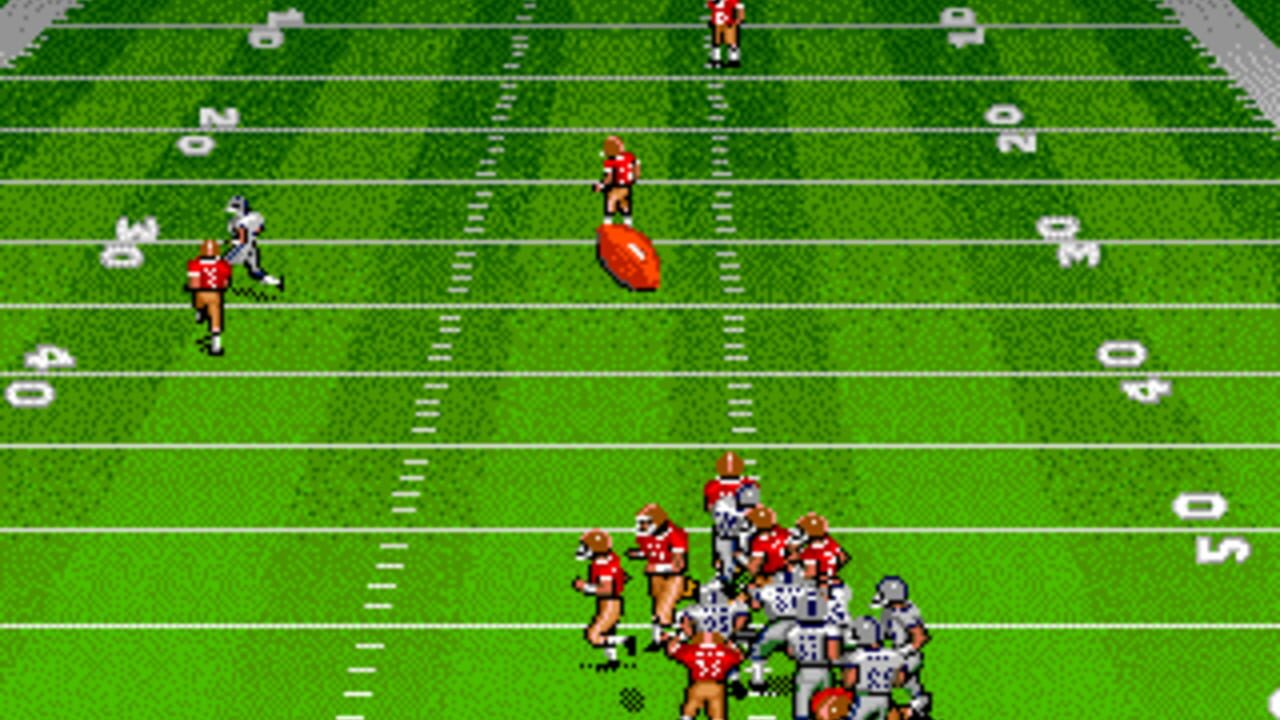
Electronic Arts wanted a better deal from Sega, so it reverse engineered the Genesis and showed it could make games without Sega's help. Sega gave in. The first Genesis John Madden Football arrived before the end of 1990. EA expected to sell about 75,000 copies and sold around 400,000. Sega's president even asked EA's Trip Hawkins to put Joe Montana's name on Madden's game, and Hawkins said no.
Kalinske pushed American developers to make games for American tastes, and the ads leaned on the sports library. Players still say the EA games ran smoother and faster on the Genesis, and that the SNES versions were worse. This was Sega's easiest win of the war.
The SNES had the better sound chip and the Genesis had Streets of Rage

The SNES sound chip came from Sony. Ken Kutaragi agreed to design it without telling his supervisors, who were enraged, and he was nearly fired. It gave the SNES eight-channel audio built on samples, and most players agree it is the stronger chip.
The Genesis used a Yamaha FM synthesizer chip, and plenty of fans prefer what it does. Yuzo Koshiro wrote the music for Streets of Rage 2 on outdated NEC PC-8801 hardware with his own programming language, and it came out sounding like house and techno. It is considered "revolutionary" today. The SNES takes this on points, but try telling that to anyone who played Streets of Rage 2 with the music up loud.
The SNES was the RPG console

Players agree on this one. Square and Enix focused on the SNES, and Sega was left to develop its own RPGs. Chrono Trigger came from a group Square called the "Dream Team", and it was meant for Nintendo's planned SNES-CD before Nintendo canceled the project. The SNES version had sold 2.5 million copies by 2006. Final Fantasy VI, EarthBound and Super Mario RPG are on the same console.
The Genesis had Phantasy Star IV, which a magazine of the day called the "best pure RPG for the Megadrive". In the United States it retailed for just under $100, a price that ended a lot of arguments with parents. The SNES wins this easily.
Street Fighter II needed six buttons and the SNES had them

Capcom gave the SNES the first console version of Street Fighter II, and the Genesis version took more than a year to arrive. More than 6.3 million SNES cartridges sold, the highest for any third-party game on the console. The SNES pad was ready for it, with A, B, X and Y in a diamond and two shoulder buttons. Several later controllers borrowed from it, including the PlayStation's.
The standard Genesis pad had three main buttons, and players will tell you it was terrible. Sega answered in 1993 with three more face buttons, made for games like Street Fighter II. Fighting game fans still swear by that six-button pad, and IGN called it "what some consider to be the greatest controller ever created". SNES owners had the right pad two years earlier, so Nintendo wins.
The Genesis was the arcade kid's console

The Genesis was adapted from Sega's System 16 arcade board, and you can feel it in the games. Players sum it up the same way: the SNES has the long games with stories, and the Genesis has short, replayable action with a wild energy of its own. Gunstar Heroes, Alien Soldier, Contra: Hard Corps and Castlevania: Bloodlines look like nothing on the SNES. If you only had twenty minutes before dinner, the Genesis was the better friend. Sega wins this round.
Star Fox and Donkey Kong Country kept the SNES going

Nintendo put extra power in the cartridge. The Super FX chip in Star Fox was the first 3D graphics accelerator in a consumer product, and the team joked that the SNES was just a box to hold the chip. Star Fox sold over four million copies. Sega's answer was Virtua Racing, the only Genesis cartridge with any enhancement chip. At $100 it is the most expensive Genesis cartridge ever produced.
Donkey Kong Country came late and hit hard. Rare invested its NES profit in Silicon Graphics workstations, and Nintendo backed the game with a $16 million campaign in America. It arrived in November 1994 and rivaled the look of games on the new 32-bit CD consoles. It sold 9.3 million copies, and after three holiday seasons behind Sega, Nintendo had the biggest game of the year. Nintendo wins the late game.
Sega's add-ons burned its own fans

The Sega CD launched in North America on October 15, 1992, at $299. Sega shipped it with Sewer Shark, an FMV game, and the novelty of FMV quickly wore off. It sold 2.24 million units.
The 32X followed in November 1994 at $159.99, the same month the Saturn was due out in Japan. The Saturn wouldn't support 32X games. The add-on got a library of 40 games, and the last ones cleared out of stores at $19.95.
Players say the Sega CD, the 32X and the Saturn burned out the fans. Nintendo tried a CD add-on with Sony and then Philips, and never sold one. The SNES wins this round by staying home.
Europe and Brazil picked the Genesis

The Mega Drive, as most of the world called the Genesis, was the highest-selling fourth-gen console in Europe. British players remember the Mega Drive being everywhere while hardly anyone they knew had a SNES. Woolworths sold Sonic 2 for it at £39.99.
In Brazil, Tectoy released the console in 1990 and made games just for that market, and it sold an estimated 3 million licensed versions. Japan is the one place the Genesis never won. Everywhere else it was a real fight, and in Europe and Brazil Sega takes it.
Nobody can agree who won America

Nintendo and Sega both went as far as deception with their numbers. Nintendo forecast 6 million consoles by the end of 1992, and its real U.S. install base was just over 4 million.
A 2004 study of NPD sales data said the Genesis kept its lead in America. A 2014 Wedbush report on revised NPD data said the SNES outsold the Genesis there by 1.5 million units. Super Mario World sold 20.61 million copies, the best seller on the SNES, and it was in the box like Sonic. Call this one a draw, the one result neither side will ever accept.
The SNES wins on resale

Nintendo's old games hold their value, and the SNES is no exception. A loose EarthBound cart typically sells for $400, Chrono Trigger for $260 and Super Metroid for $91. The most expensive SNES game in our sold prices is Aero Fighters at $1,826, and the Genesis top game is Crusader of Centy at $432.
Genesis fans can look at this the other way, since their console is the cheap one to collect. Sonic the Hedgehog 2 goes for $11, Streets of Rage 2 for $23 and Gunstar Heroes for $64. Zero the Kamikaze Squirrel came out on both and shows the gap: $229 on SNES and $165 on Genesis.
Which one wins?
The SNES takes it on paper, with more consoles sold and games worth more today. It makes no difference to anyone who grew up with a Genesis. That console was yours, and you stood up for it on the bus when you had nothing to go on but a word from an ad. What you kept from it was the memories, like the afternoons you spent trying to beat a friend at Streets of Rage or Street Fighter, and no sales chart can touch those.