The Game Boy Advance was born from a machine Nintendo had already given up on. In the early 1990s, Satoru Okada's team built a colour handheld prototype codenamed Project Atlantis, with a 32-bit processor designed by ARM, and shelved it by 1997. The Game Boy Color borrowed its screen. The successor, codenamed Advanced Game Boy, finally used its 32-bit power.
Then Nintendo turned the Game Boy sideways. The landscape shape, with the buttons on either side of the screen instead of below it, was the work of French designer Gwénaël Nicolas and his Tokyo studio, Curiosity Inc. Every kid understood the pitch without reading a single spec: this was a Super Nintendo in your hands.
A Super Nintendo at a PlayStation 2 party

Here is the strange part. By 2001 the SNES was already history. We had PlayStations under the television, and some houses had a PlayStation 2 spinning DVDs. Getting excited about pocket-sized SNES power in that year should have been impossible, like cheering for a really excellent horse at a car show.
We were ecstatic anyway, because handhelds had always lagged a full era behind the living room. The Game Boy had only ever felt like a portable NES. The Advance closed the gap to a single generation, with hardware performance comparable to the Super Nintendo, and it did not compete with the PlayStation. It competed with boredom, in cars and waiting rooms, and in that fight nothing else came close.
Under the hood sat an ARM7TDMI processor running at 16.776 MHz, a 240 by 160 screen and room for two AA batteries that lasted up to 15 hours. Tucked inside next to it was the old 8-bit Sharp chip, kept there purely so your Game Boy and Game Boy Color cartridges still worked.
Half a million in one week
The Game Boy Advance arrived in Japan on March 21, 2001, in North America on June 11 and in Europe on June 22. It cost $99.99 in the US, and Nintendo spent about $75 million marketing it there.
It worked. Within its first week in North America it sold 500,000 units, making it the fastest-selling video game console in the United States at the time. In the UK it sold 81,000 in its first week, crushing the PlayStation 2's previous record of 20,000.
Japan got 25 launch games and North America 17. One of them, Super Mario Advance, was an enhanced remake of Super Mario Bros. 2 in the style of Super Mario All-Stars. It was the first of the Super Mario Advance series, part of a wave of ports from 8-bit and 16-bit systems that turned the console into a greatest-hits tour.
The screen you couldn't see
Now the flaw. Unlike the original Game Boy's screen, which we didn't know was bad, this one we knew about. Oh, we knew.
The Game Boy Advance launched in the era of lit phone screens with a reflective display and no light in it at all. The screen didn't make brightness. It borrowed it, bouncing back whatever your room offered, minus a lot. Playing one was a constant physical negotiation, tilting and leaning until you had drifted across the room toward a window. Direct sun fixed the darkness and swapped it for glare, so the ideal spot was a fussy diagonal you held for as long as you could. Even a review that scored the console 8.0 out of 10 pointed at the missing backlight.
Fixes followed. Nyko's Worm Light was a small lamp on a bendy wire that plugged into the link cable socket, and the GBA version added a pass-through port so you could still link up with it attached. The serious option was the Afterburner, an internal front light from Triton Labs released in mid-2002. Installing it meant taking the console apart, shaving plastic out of the case and soldering two wires to the motherboard.
The masterpiece nobody could see
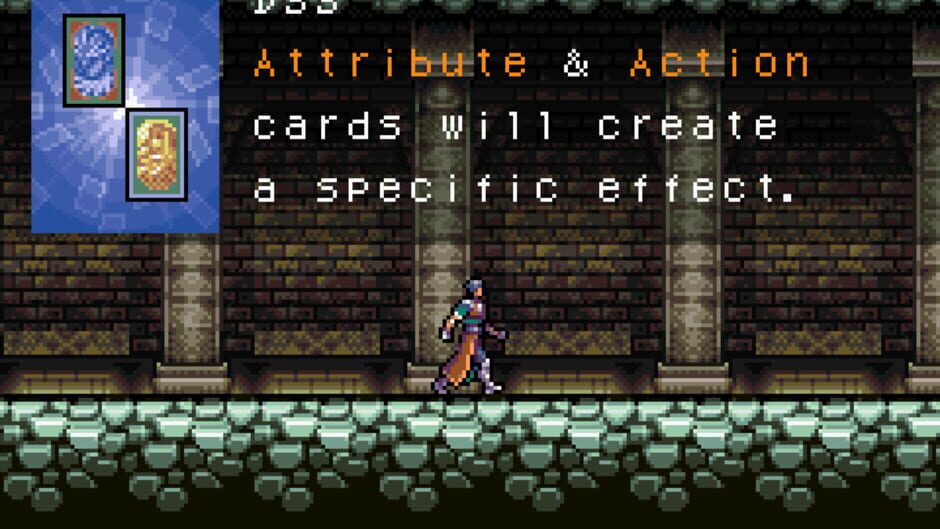
The perfect case study is a game whose whole reputation was decided by lighting: Castlevania: Circle of the Moon. It was a launch title, and the most ambitious thing on the system, a huge gothic castle that closely mirrored Symphony of the Night. It sold over 500,000 units by July 2001.
It was also drawn in a dark, moody palette on a screen that ate dark palettes for breakfast. Even a glowing review warned that the dark graphics made it difficult to see. We beat it more or less by sonar.
The darkness changed the series. Koji Igarashi, the Castlevania producer who had not worked on Circle of the Moon, later listed the dark look of its graphics on the Game Boy Advance among the flaws to fix. When his team made the next one, Harmony of Dissonance, the graphics were brightened. A missing light bulb steered the art direction of what came next.
And then someone turned on the light

When Okada first pitched a small, thin Game Boy Advance with a rechargeable battery, Nintendo's leaders said no almost to a person. So he told one of his engineers to build a model as small and thin as possible, without worrying about whether it could be manufactured. The result folded shut like a tiny laptop, and the same group that had rejected the idea was quickly won over.
The Game Boy Advance SP came out in Japan on February 14, 2003, and in North America on March 23. It had a front light you could switch on and off, and a rechargeable battery that gave 10 hours with the light on and 18 hours with it off. It also had no headphone jack, the first Game Boy without one, so music needed a special adapter.
Then came one of the strangest moments of that generation: seeing your own library for the first time. Games you had finished turned out to have backgrounds. Circle of the Moon turned out to be beautiful. Half of us felt a little robbed, and all of us bought the SP anyway. On September 19, 2005, Nintendo went one better with the AGS-101 model and its brighter backlit screen.
The last golden age of 2D
The Game Boy Advance family went on to sell 81.51 million units by June 2010, and the SP alone shipped 43.57 million. Pokémon Ruby and Sapphire sold over 16.22 million copies, more than any other Game Boy Advance game. The first two Golden Sun games sold over a million in the United States and Japan, proof that a big console-style RPG could live on a cartridge. I remember that golden age from the back seat of the family car.
That's the Game Boy Advance: the wrong generation's power at exactly the right moment, and a whole crowd of players who loved games we could barely see, tilting toward windows like houseplants. The SP outlasted the Game Boy Micro by two years, and when it was discontinued by the end of 2010, the Game Boy line ended with it.