The man who invented the Game Boy ended up building its rival. Gunpei Yokoi left Nintendo in 1996 after the Virtual Boy flopped, and in October 1997 news broke that he was making a new handheld for Bandai, the WonderSwan. His exit had already rattled investors so badly that trading in Nintendo stock was briefly halted on the Tokyo Stock Exchange. Yokoi was killed in a roadside accident in 1997, before his last machine came out.
Nintendo needed an answer fast, and it found one in a drawer. In the early 1990s a team led by Satoru Okada had built a colour prototype codenamed Project Atlantis, with a powerful 32-bit chip, and shelved it. Okada pulled it back out, dropped the 32-bit chip for a faster version of the old 8-bit one so it could launch sooner and still play every Game Boy cartridge, and the result was the Game Boy Color.
A new console in the old one's clothes

It looked like another cute revision, in funky colours, taking the same cartridges. The colours even had names, and the five letters of the COLOR logo were painted in them: Berry (C), Grape (O), Kiwi (L), Dandelion (O) and Teal (R). Next to them on the shelf sat Atomic Purple, made of see-through purple plastic.
It arrived in Japan on October 21, 1998, then North America on November 18 and Europe on November 23, right in time for Christmas. In the US it cost US$79.95.
Under the costume it was a different machine. Games written only for it could switch the processor into a dual-speed mode, doubling it from 4.194304 MHz to 8.388608 MHz. It had more memory and, finally, the thing in its name: up to 56 colours on screen at once, picked from a palette of 32,768. After nine years of four shades of green, that was the whole sales pitch, and it was enough.
The colours were amazing
There is no clever way to put this. The colours were amazing, and no amount of adult vocabulary improves on what a nine-year-old would have told you.
You still had to sit near a lamp to see them, because the screen was passively reflective and there was still no backlight. Two AA batteries gave you up to 10 hours, which was a step down from the old brick, and nobody cared.
Programmers then found a way past the 56-colour limit. A trick called "high color mode" swapped palettes fast enough to put over 2,000 colours on screen at once, and Alone in the Dark: The New Nightmare used it to make a Game Boy look like it was showing photographs.
The day Koholint Island got painted
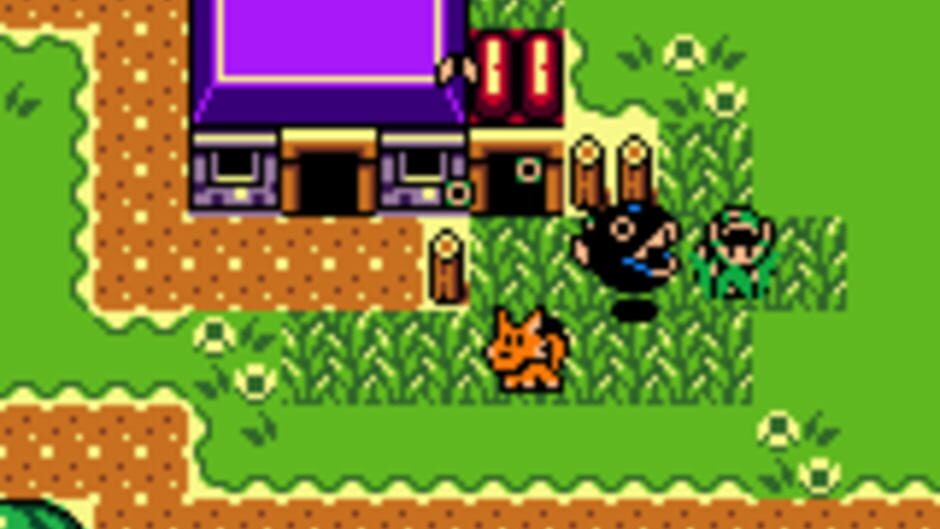
For me, and for a lot of players, the moment was Link's Awakening DX. We had already played Link's Awakening in black and white and loved it without knowing what we were missing. Then the DX version came out for the Game Boy Color in 1998, and Koholint Island was suddenly green fields and blue water, with Link in an actual green tunic. It gave me a feeling I can only compare to the scene where Dorothy opens the door out of Kansas.
DX did not just repaint the island. It added an exclusive colour-based dungeon, and finishing it let you pick a red tunic for more attack or a blue one for more defence. A camera shop owner started popping up around the island, and the twelve photos he took could be printed on the Game Boy Printer. We hadn't been missing the colour. We didn't know it was gone, and DX told us, after the fact, what nine years of pea soup had been holding back.
Mario stopped being "NES-ish"
Every kid holding a Game Boy had always understood that it was sort of an NES. Super Mario Bros. Deluxe in 1999 took the sort of out of the sentence. This was the actual Super Mario Bros., complete and in colour, in your hands, with the 1986 Japanese sequel, The Lost Levels, waiting as an unlock once you scored 300,000 points.
It sold 2.8 million units in the United States alone, and it was the twelfth best-selling game on any platform in the US in 1999. Japan never got a normal boxed release. Players there copied it onto a memory cartridge at Nintendo Power kiosks in Lawson convenience stores.
Console games, shrunk in the wash
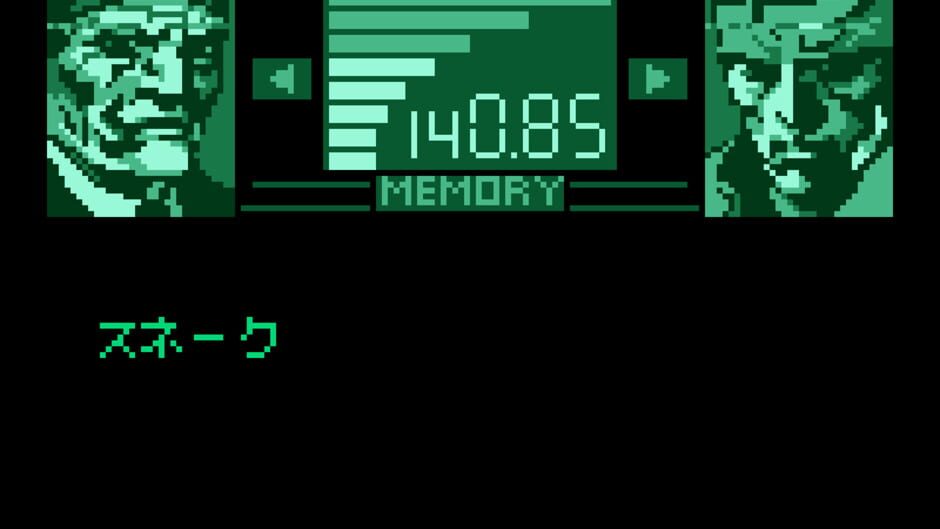
Then the industry started cramming whole console series onto it, like ships in bottles. Metal Gear Solid arrived in North America on May 2, 2000, and it was not a cut-down port of the PlayStation game. Known in Japan as Metal Gear: Ghost Babel, it told its own story in an alternative continuity, set after Metal Gear 2: Solid Snake. Seeing Solid Snake sneak past guards on a Game Boy is a feeling we can't fully send you.
Perfect Dark went further. Its 32 megabit cartridge had rumble built in and played full motion video for the cutscenes. Plugging it into the Nintendo 64 through the Transfer Pak unlocked cheats in the big console game. Core Design made a Tomb Raider for it in 2000. Crawfish Interactive even squeezed Street Fighter Alpha onto it in 1999 with downscaled graphics and sound, single-player only, and it was still the arcade fighting game, running on a handheld that also played Tetris.
The cartridge knew what time it was
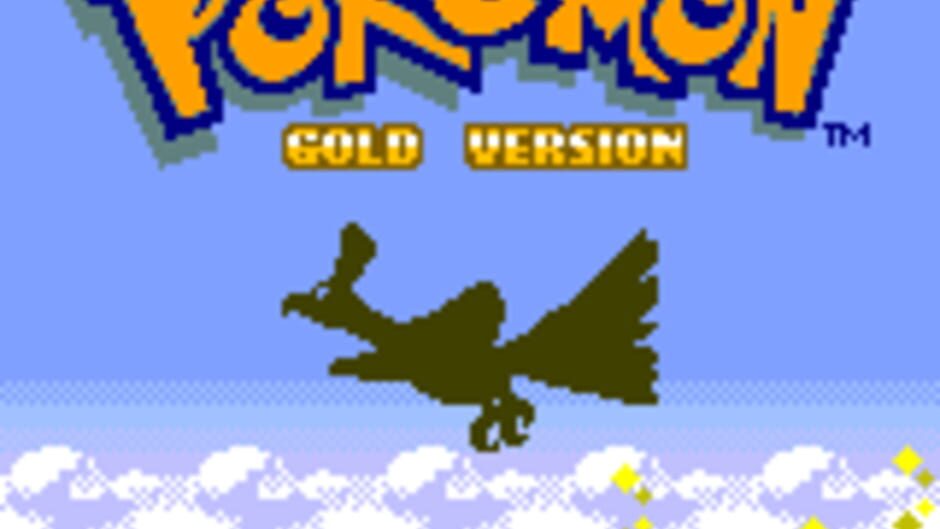
Pokémon Gold and Silver came out in Japan on November 21, 1999, and in North America on October 15, 2000. They had a real-time clock inside the cartridge that kept track of the time and the day of the week, and some Pokémon only showed up at certain times. The game was dark when your evening was dark. The cartridge. Knew. I remember my kid brain rejecting it as impossible for the first week.
Then, after you beat the Elite Four, the game let you travel back to Kanto, the whole region from Red and Blue, three years later. A second world was hiding behind the credits. Getting all that onto a cartridge was a squeeze: only four programmers worked on it, which is part of why it took three and a half years, and Satoru Iwata, then president of HAL Laboratory and later Nintendo's CEO, wrote new tools to compress the Pokémon graphics. Gold and Silver went on to sell over 23 million units, more than any other Game Boy Color games.
Your whole library came with you
The quiet genius of the machine was that it played every old Game Boy cartridge. More than 90 older games got their own colour palettes automatically. For the rest, holding a button combination at startup picked one of 12 palettes, including one that copied the old Game Boy's grayscale, for anyone who missed the soup.
You could tell the new cartridges by their plastic. Black Dual Mode cartridges held two versions of the game and booted the right one for whatever console they were in. Clear cartridges were made for the Game Boy Color alone. There was even an infrared port on top for wireless data, but so few games used it that Nintendo left it off the Game Boy Advance.
A door out of Kansas
The Game Boy Color ultimately outsold the WonderSwan, and together with the original Game Boy it reached 118.69 million units. When it was discontinued in 2003, the Game Boy family was the best-selling game console of all time. Its own life was short, about two and a half years before the Game Boy Advance arrived in 2001, and the successor finally brought the 32-bit power Project Atlantis had aimed for.
It never felt like buying a new console. It felt like your old friend came back from summer break transformed. That is the thing you have no frame of reference for: a leap that big, handed to a kid whose whole portable world had been four shades of green, with nothing in between to soften it.