The Game Boy was cancelled before anyone outside Nintendo ever saw it. In the summer of 1988, company president Hiroshi Yamauchi looked at a prototype, decided the screen was too hard to see and killed the project on the spot. Some of the people building it already had a nickname for it: DameGame, from the Japanese word for hopeless.
Gunpei Yokoi, the man running the team, kept working on it anyway. He cornered a Sharp board member, got them to admit they had a new kind of screen in development and put it inside a Game Boy. That gray brick went on to sell 118.69 million units together with its colour sibling.
If you grew up with a phone in your pocket, the Game Boy looks like a joke with a pea soup screen. In 1989 it felt like the future.
An NES you could take outside

Let me hand it to you first. It measures 90 by 148 mm and stands 32 mm thick, with a cross pad, two burgundy buttons and a screen the colour of old peas. Your phone beats it at everything. That was never the point. Inside the team, assistant director Satoru Okada had pushed for a more powerful system with swappable cartridges, which is to say a portable NES, and that is exactly how it felt in a kid's hands.
The NES belonged to the television, and the television belonged to the family. The Game Boy cut that cord. Real games with worlds and endings could now ride in the back of the car or under the covers after lights out. Mine also went to school, where I played it in the back row of a classroom, angled behind a textbook, which I mention purely as a hypothetical.
It launched in Japan on April 21, 1989, and sold out its first 300,000 units within two weeks. North America got it on July 31, 1989, at US$89.95, where 40,000 sold on the first day and a million within weeks. Nintendo of America spent US$20 million to make it the must-have, hard-to-find holiday toy. Europe waited until September 28, 1990, and paid £69.99.
Yamauchi also had a trick for the box. He packed headphones and four AA batteries in with every console, which cost Nintendo very little and made the whole thing look like a better deal.
Four shades of pea soup, and nobody minded
Here is the part that newcomers can't process. The screen was 160 by 144 pixels with no backlight, and the special Sharp screen Yokoi found had a green tint. Early in development the team had tested Sharp's dot-matrix screens and thrown them out for severe ghosting, and some of that smear survived into the real thing. Playing at night meant hunting for a lamp or buying an add-on.
The add-ons got ambitious. The Handy Boy wrapped two amplified speakers and a lit magnifier around the screen, a thumb joystick clipped onto the pad, and the whole rig folded up for travel.
We didn't know the screen was bad, because bad compared to what? Nintendo's own Game & Watch handhelds used segmented screens, so each one could only ever play a single game. Against that, a screen that could draw anything was a portal, ghost trails and all.
Some critics never made peace with it. When the slimmer Game Boy Pocket came out, one magazine panel gave the system 7.5, 7.0, 8.0 and 2.0. The man with the 2.0 hated the monochrome display and the motion blur. His three colleagues praised the long battery life and the games.
Tetris was the pack-in, and that changed who played
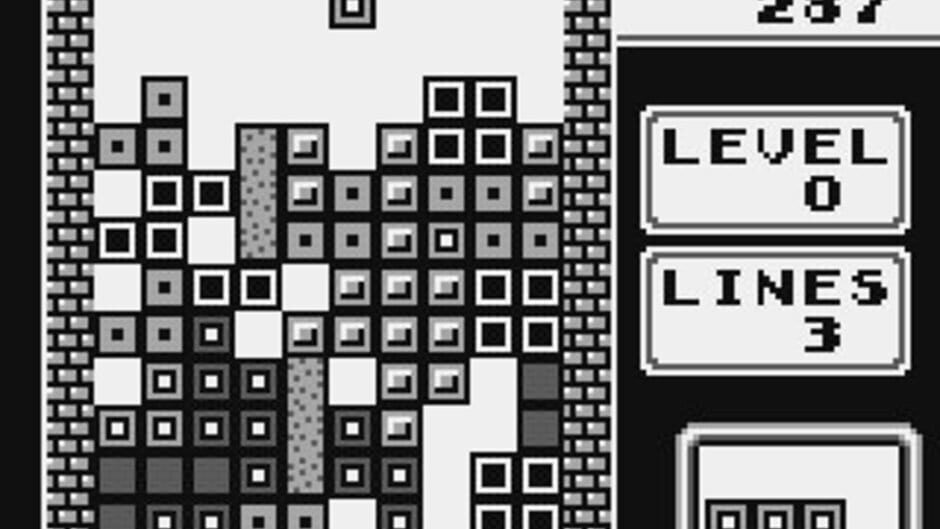
In Japan the Game Boy launched with Alleyway, Baseball, Super Mario Land and Yakuman, a mahjong game. Tetris wasn't ready in time. By the North American launch it was, and Henk Rogers, who held the rights, talked Nintendo of America president Minoru Arakawa into packing it in with every console instead of Mario. His argument: Mario appealed to young boys, but Tetris would appeal to everyone.
He was right in a way the sales charts still show. The Game Boy version of Tetris sold over 35 million copies, more than any other version of the game. By 1995 Nintendo of America reported that 46% of Game Boy players were female, against 29% for the NES and 14% for the Super Nintendo.
Tetris even left the planet. In 1993 cosmonaut Aleksandr Serebrov flew a Game Boy and a copy of Tetris up to the Mir space station, where it spent 196 days and orbited the Earth over 3000 times. A note he wrote went with it to auction: "During flight, in rare minutes of leisure, I enjoyed playing Game Boy."
The genius was choosing worse
Yokoi had a name for his approach: lateral thinking with withered technology. Skip the cutting edge and find new uses for mature parts that are cheap and reliable. While the rivals chased colour, he shipped pea soup on purpose.
The rivals show why. The Atari Lynx launched at US$179.99 and ran 4-5 hours on a set of batteries. Sega's Game Gear (US$149.99) and NEC's TurboExpress (US$249.99) each wanted six AA batteries, and the Game Gear ran three to five hours on them while the TurboExpress managed about three. The Game Boy ran up to 30 hours on four AA batteries, which in allowance terms is the difference between owning a console and renting one from the corner shop.
It worked. By 1995, 16 million Game Boy units had been sold, while the Lynx and the Game Gear together had sold fewer than 7 million.
There is a petty footnote here too. Before Sharp won the screen deal, Nintendo had signed with Citizen, then dropped it the moment Sharp walked in. To soften the blow, the team invented a story about wanting colour screens the following year and even drafted fake project documents. Citizen later supplied colour screens for the Game Gear, whose design closely resembled Nintendo's fake project.
It survived a war

Durability was part of the design, and one console proved it the hard way. Stephan Scoggins, a U.S. Army registered nurse, took his Game Boy to the Persian Gulf and later called it his "comforter, playmate and rejuvenator." During the Gulf War an explosive hit the barracks where it was stored and started a fire that destroyed everything around it.
The front came out charred and blistered. Somebody slotted in Tetris and flipped the switch anyway, and it worked perfectly, apart from the A and B buttons, which had melted. Nintendo replaced it as a "Desert Storm courtesy" and put the burnt one on display at the Nintendo Store in New York City, where it was still working perfectly, even 30 years later.
Pokémon arrived when it should have been over

By the mid-1990s the Game Boy should have been finished. Instead Nintendo kept refreshing it. On March 20, 1995, the "Play It Loud!" cases arrived in red, yellow, green, blue, black, white and transparent. In 1996 the Game Boy Pocket slimmed it down to two AAA batteries for US$69.99, with a sharper screen that mostly fixed the ghosting and showed true black and white instead of green.
The timing was luck. The Pocket's launch landed right on top of Pokémon. Pocket Monsters Red and Green came out in Japan on February 27, 1996, and Pokémon Red and Blue reached North America on September 28, 1998, after Nintendo reportedly spent over 50 million dollars promoting them.
The game held 151 creatures, and you could not catch them all alone. Some only evolved when traded, and each version had its own exclusives, so the Game Link Cable became the most important wire in the schoolyard. Trading a Pokémon felt the way I imagine teleportation will feel. Two kids, two bricks, one cable, dead silence, and then screaming. Then there was Mew, an extra Pokémon that Shigeki Morimoto added as an internal prank and never meant players to see. Tajiri revealed it anyway to create more interest, and the rumours did the rest.
That's what you were holding
Go back to the object from the start: same gray brick, same pea soup. Nothing about it has changed. What has changed is what you know it carried. An original 1989 Game Boy now sits in the Smithsonian's National Museum of American History, and in 2009 the console was inducted into the National Toy Hall of Fame. Musicians still use it as an instrument, writing chiptune on programs like Little Sound DJ.
Every handheld since, the phone you are reading this on included, comes from a designer who chose worse parts so a kid could afford the batteries, and a boss who said no and got ignored. You had to be there. This is as close as it gets.