In February 2004, with the GameCube selling lukewarm and the Nintendo DS still in development, Nintendo's former president Hiroshi Yamauchi summed up the stakes in one sentence: "If the DS succeeds, we will rise to heaven, but if it fails we will sink to hell." No pressure, then.
It had been his idea in the first place. Around mid-2002, as he stepped down into an advisory role, Yamauchi proposed that Nintendo explore a system built around two screens. His successor, Satoru Iwata, wanted something that people who didn't play games would pick up anyway. What they built looked like a mistake on purpose, and it went on to sell 154.02 million units.
A third pillar with a code name

On January 20, 2004, Nintendo announced a dual-screen device and called it an experimental "third pillar" next to the Game Boy Advance and GameCube, not a replacement for either. That sounded like a company hedging its bets, and it was. In March a leaked document gave away the internal name "Nitro" and the detail that one of the two screens would be touch sensitive.
The thing itself recalled the old two-screen Game & Watch handhelds, folded shut like a Game Boy Advance SP. It had two 3-inch screens at 256 × 192, a resistive touchscreen on the bottom, a stylus in a holder, and a microphone below the lower screen for games that wanted you to blow or shout into it. Grown adults on buses, blowing on their handhelds. That was the future.
Black Friday, before Japan
On September 20, 2004, Nintendo announced the DS would launch in North America on November 21, 2004, for US$149.99, followed by Japan on December 2 for ¥15,000 and Europe on March 11, 2005, for €149.99 or £99.99. It was the first time Nintendo had launched hardware in North America ahead of Japan, a move made to catch the US holiday season and Black Friday.
The American launch got a midnight event in Los Angeles. The Japanese launch was quieter, reportedly in part because of the winter weather.
Demand ran way ahead of the plan. There were more than three million preorders across North America and Japan, and Nintendo raised the US shipment from a planned 300,000 to 550,000. Just over 500,000 sold in the first week. The DS reached a million sold in the United States by December 21, 2004, and some commentators compared the craze to Tickle Me Elmo in 1996, which tells you exactly what the toy aisle looked like that December.
What came in the box
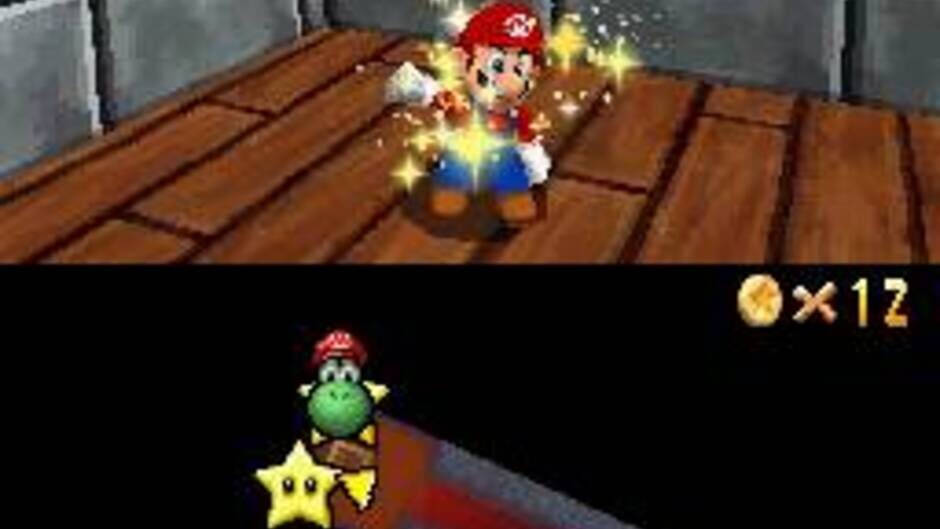
The launch list leaned on one very familiar face. Super Mario 64 DS was a remake of the Nintendo 64 launch game, and it started you off as Yoshi, of all people, and made you earn Mario. It also hid 36 touchscreen minigames, opened up by catching rabbits in the main game. It sold over 11.06 million copies by 2018.
The other launch surprise was free. The DS came with Metroid Prime Hunters: First Hunt, a demo of a first-person Metroid you aimed by dragging the stylus across the touchscreen. The full game did not arrive in North America until March 20, 2006. The demo was enough to keep a lot of us busy until then, wrists permitting.
Banned from the classroom
No launch game mattered as much as the chat program built into the console. PictoChat let you type or draw messages to other DS owners within about 10 metres. It had four chat rooms, A to D, each holding sixteen people, and a special sound and message when someone joined on their birthday.
The press saw where this was going. IGN's Craig Harris said it was "made for people in a classroom, or a plane." Hyper magazine called it "riotously good fun" and predicted it would get the system banned from classrooms within months of release. We will not be discussing what most of the drawings were of.
People did more than doodle. Draw a picture, send it, copy it, change it slightly, send it again, and you could scroll back through the frames as a flip book. In 2009 Nintendo turned that habit into a free animation app for the DSi called Flipnote Studio.
Touching is good
Nintendo's slogans used the word "Touch" in almost every country. In North America it was "Touching is good." Somebody approved that, and it ran.
On August 21, 2005, the price dropped to US$129.99, one day before Nintendogs came out. Nintendogs used the touchscreen to pet your dog and the microphone to call it by the name you gave it, and in Japan its first week of sales pushed DS sales up more than four times, from 22,000 to 95,000. All versions of it reached 23.96 million copies by March 31, 2016.
Then Brain Age turned the DS into a book. You held it sideways and answered puzzles by writing on the touchscreen or speaking into the microphone, and the game gave you a "brain age" between 20 and 80, where 20 was the best possible score. It stayed among Japan's best sellers for 34 weeks, minus three, and sold 19.01 million copies worldwide. In Europe the series' ads starred Nicole Kidman and Patrick Stewart. Your parents had a DS now. Your grandparents might have had a DS now.
By 2006, Nintendo reported that 44% of DS owners were female, and that most people playing Nintendogs were women.
The DS Lite sold out everywhere
The DS Lite arrived in Japan on March 2, 2006, slimmer and brighter, with a longer stylus. Demand was so heavy that some Japanese retailers sold it above list price. Nintendo shipped 550,000 in March and another 700,000 in April, and the shops were sold out again by late May.
It reached North America on June 11, 2006, and by the next day most major US retailers had sold out. During the European launch, a shipment of consoles and games worth HK$18 million was stolen in Hong Kong on its way to Europe. The DS Lite alone went on to sell 93.08 million units, which is most of the family's total.
The machine that warmed us up for the iPhone
Looking back, the DS was the dress rehearsal for the phone in your pocket. Nintendo Life's Damien McFerran wrote that it was "the first encounter many people had with touch-based tech, and it left an indelible impression." Writing for Polygon, Jeremy Parish said it "had basically primed the entire world for" the iPhone, which arrived in January 2007 and later caused the DS market to implode.
Yamauchi got his answer. Nintendo did not sink to hell. It handed a stylus to everyone from schoolkids to grandparents and made them all poke the same little screen.