The PlayStation started out as a Nintendo product. On the first day of the Consumer Electronics Show, Sony announced its partnership with Nintendo and a new console, the Play Station. At 9 am on the next day, Nintendo's Howard Lincoln walked onto the stage and revealed that Nintendo was now allied with Philips and would abandon its work with Sony.
The man behind the chip, Ken Kutaragi, had already been nearly fired for working with Nintendo without Sony's knowledge. Older Sony executives saw Nintendo and Sega as "toy" manufacturers and wanted nothing to do with them. Sony built its own console anyway, and the toy went on to sell 102.49 million units.
If you grew up with a PS5, the original looks like a gray lunchbox full of wobbly polygons. In the mid-nineties it was the coolest object in the house, and it was cool on purpose.
Black discs in a gray box
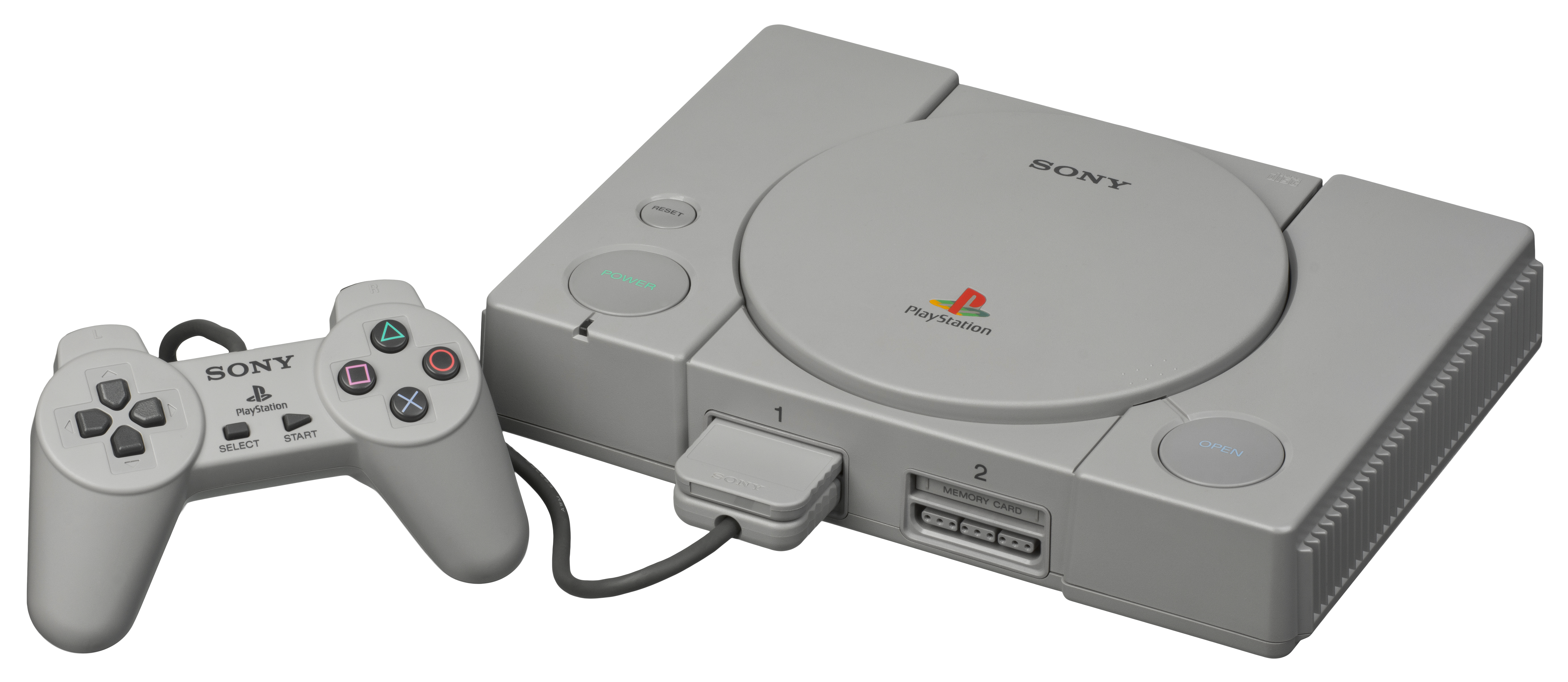
Japan got it first, on December 3, 1994, a week after the Sega Saturn, at ¥39,800. Sales began with long queues in shops, and the PlayStation sold 100,000 units on the first day. Sony's president Norio Ohga said he realised how important it had become when friends and relatives begged him for consoles for their children.
It was not a clean win at first. The Saturn outsold it in the first few weeks thanks to Virtua Fighter, and by the end of 1994 Japan had bought 300,000 PlayStations against 500,000 Saturns. Then the PlayStation reached two million units within six months, and the race stopped being close.
The reason to own one on day one was Ridge Racer, one of the most popular arcade games at the time. It had been confirmed behind closed doors as the PlayStation's first game, and it looked like the arcade cabinet had been folded up and posted to your living room.

Then there were the discs. Licensed PlayStation games came on CDs with glossy black undersides, and everybody at school had a theory. Many thought it was a form of copy protection. In truth, it just looked cool.
The shortest speech in E3 history
America saw the price fight happen live. On the first day of E3 1995, Sega's boss Tom Kalinske revealed the Saturn's price of US$399 and announced that Sega had already shipped 30,000 Saturns to stores for immediate release. The surprise launch upset many retailers who were not told in time, and KB Toys responded by dropping the Saturn entirely.
Then it was Sony's turn. Steve Race, the man bringing the PlayStation to the United States, came on stage and made a single, brief statement: "$299". The audience cheered as he walked away from the lectern. Sega had spent a whole keynote. Sony needed one number.
The PlayStation went on sale in North America on September 9, 1995. Over 100,000 pre-orders were placed, and 17 games were on the market at launch, against the Saturn's six. It sold more units within two days than the Saturn had in five months, and shops across the country ran out of consoles and accessories. By the end of the year it was Sony 800,000, Sega 400,000.
Europe got it on September 29, 1995, at £299. By November it had outsold the Saturn by three to one in the United Kingdom, where Sony spent £20 million on Christmas marketing against Sega's £4 million.
U R NOT E
Sony sold the PlayStation to people who thought they had outgrown Nintendo. Its executives reasoned that younger players looked up to older ones, so advertising aimed at teens and adults would pull the kids in too. Sony also found that adults reacted best to ads aimed at teenagers. Lee Clow's theory was that grown-ups regressed and became "17 again" when they played video games.
The first American teaser was a riddle. It ended on a red E and the words NOS Lives. The E meant ready, and NOS stood for the ninth of September, launch day. After the release the campaign turned into "U R NOT E", which you were meant to read as you are not ready. Another slogan spelled out Live in Your World, Play in Ours with the controller's button shapes standing in for some of the letters.
Sony's American office also built a mascot called Polygon Man and ran him in print ads before E3. Ken Kutaragi saw the character at E3 1995 and rejected him. According to former Sony executive Phil Harrison, Kutaragi's main objection wasn't how unwelcoming the mascot looked. It was that he had been designed with flat shading instead of Gouraud shading. Only the father of the PlayStation would fire a mascot over its lighting. Polygon Man made a return as the final boss in 2012's PlayStation All-Stars Battle Royale, which is a long time to hold a grudge.
Wipeout in the chill-out room

In Britain, Sony skipped the playground and went to the club. Marketing manager Geoff Glendenning noticed how much underground clubbing and rave culture shaped young people, and Sony partnered with nightclub owners such as Ministry of Sound to set up PlayStation areas where people could try games. There was a PlayStation kiosk at London's Ministry of Sound, and 'chill out' rooms with the console in clubs throughout the UK. By 1997, there were 52 nightclubs in the United Kingdom with dedicated PlayStation rooms. Glendenning later recalled quietly spending at least £100,000 a year in slush fund money on impromptu marketing.
Wipeout was the game in those rooms. The Designers Republic in Sheffield made its packaging and promotional art for a club-going, music-buying audience, and the PlayStation version carried tracks by Leftfield and The Chemical Brothers. The Prodigy were asked for an original track and declined. In the film Hackers, both leads play a mock-up of the game in a nightclub, which is about as nineties as a sentence can get.
Cheaper games, and more of them
The real weapon was the disc. A CD could be pressed in about a week, against two to three months for a cartridge, and each copy cost far less to make. That let Sony sell games for about 40% less than cartridge games and still make the same money. In 1996 dollars, a Nintendo 64 game could cost upwards of $80, against $40 or $50 for a PlayStation game.
Demand outran the factories. In 1996 Sony expanded its CD plants in the United States from 4 million discs a month to 6.5 million, because PlayStation sales were running at twice the rate of Saturn sales.
Saving was the catch. Your progress lived on a memory card sold separately, and the first run of PlayStation memory cards were one megabyte, which equated to fifteen save game blocks. You learned to delete things. You learned which friend could be trusted to borrow your card.
Crash drove to Nintendo's parking lot

Polygon Man was gone, and Sony still had no mascot. That gap is part of why Naughty Dog chose the PlayStation for its next game, paying $35,000 for a development unit. The team's working joke for a 3D platformer with the camera behind the hero was "Sonic's Ass Game".
The result was Crash Bandicoot, and the American ad is the one everybody remembers. A man in a bright orange furry costume drove an old pickup truck into a parking lot outside an office building with a Nintendo logo sign on the side and yelled through a bullhorn. It aired in prime time and during NFL games. In Japan, Crash got a dance instead, created by Sony Japan's marketing manager Megumi Hosoya.
The same year Tomb Raider contributed substantially to the console's success, with Lara Croft becoming an early gaming icon and getting unprecedented media promotion. The PlayStation now had faces, just not one in a red cap.
Upside down and still working
The early hardware had a flaw every owner learned about eventually. The early models ran hot, and the laser mount sat too close to the power supply, so the laser drifted out of alignment. Full motion video started to judder, and in the end games stopped loading at all.
The fix was pure folklore with a real reason behind it. You put the PlayStation up onto its side or perched it upside down, and these tricks often worked surprisingly well. A console balanced on its lid in front of the TV meant one thing: somebody in that house refused to stop playing.
That's what you were holding
Go back to that gray box from the top. Within its first year in America it had secured over 20% of the entire video game market. Sony finally discontinued it on 23 March 2006, over eleven years after its release and less than a year before the PlayStation 3.
The executives who called it a toy were right about one thing. It was a toy, just one that teenagers and adults were happy to be seen with. Every console since has been sold the same way, with ads aimed a few years older than the people buying it. You had to be there to see a gray box with black discs make games feel grown up.