Sony told you up front that the PS3 would cost you. Back in July 2005, Ken Kutaragi said he hoped gamers would "work more hours" to buy one. When the price was finally announced, he called it "too cheap" for what you were getting, and the first wave of ridicule was practically immediate.
He meant it, too. Kutaragi saw the console as a supercomputer for the living room, built around a custom chip co-developed with IBM and Toshiba. Plenty of people laughed, and the PS3 still went on to sell 87.4 million units.
If you came in with the PS4, the PS3 is the glossy black box that somebody's dad still uses for Blu-rays. In 2006 it was the dream nobody could afford, and it took years to become the console people remember fondly.
A supercomputer for the living room

Work on the PS3 began on March 9, 2001, when Kutaragi announced a partnership with Toshiba and IBM to build the Cell microprocessor. The console itself appeared on May 16, 2005, at E3, next to a prototype controller with a boomerang-shaped design. It looked like a prop from a film about the future that got the future wrong. The boomerang never shipped.
The 2005 prototype was greedy, too, with two HDMI ports and six USB ports. By E3 2006 those had been cut to one HDMI and four USB ports to save money. That was the first sign of a theme.
The trailer that was a video
No working hardware was present at E3 2005. What Sony had was footage, and the footage was ridiculous. A Killzone 2 trailer showed soldiers landing in a war zone looking better than anything on a console had any right to. SCEA's Jack Tretton insisted it "is real gameplay everybody's seeing out there". Several days later, Phil Harrison said all the PS3 footage at the show had been "running off video" that was "done to PS3 spec". It turned out the trailer was a target render, made to show what the game was supposed to look like.
Sony also showed a tech demo of Final Fantasy VII, which did nothing to calm anybody down. A whole generation took that clip as a promise and then waited.
The year of the giant enemy crab
E3 2006 is the one people still quote. Sony announced two launch models, a 20 GB version at US$499.99 and a 60 GB version at US$599.99, or ¥60,000, or €599.99. Then came the demos.
Producer Bill Ritch introduced Genji: Days of the Blade by saying its battles were based on "famous battles which actually took place in ancient Japan". About two minutes later, the footage showed a boss fight against, in his words, a "giant enemy crab". He added that "you attack its weak point for massive damage", which was not a new idea in 2006 or in any year. A meme was born on stage.
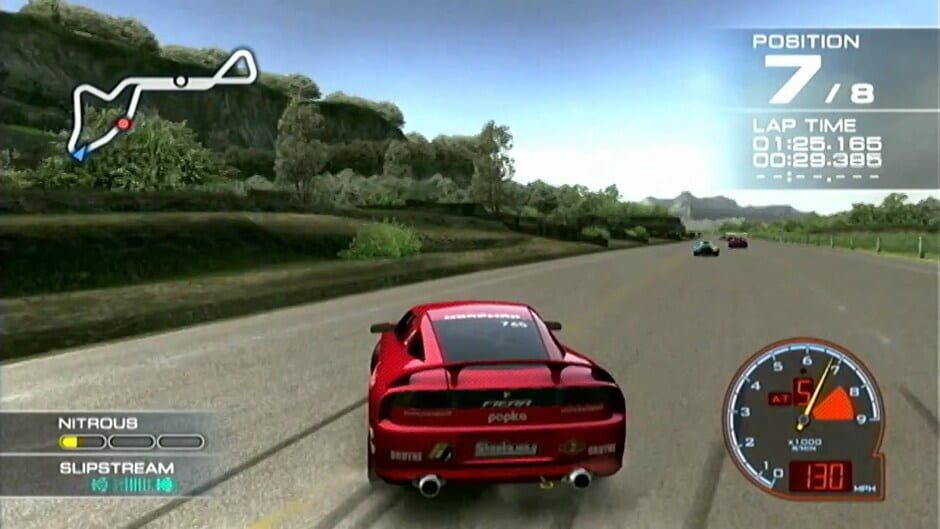
Kaz Hirai had his own moment. During a demonstration he passionately shouted "Riiiiidge Racer!", and in Japan he is still affectionately called Ridge Hirai. He knows, and he even mentions it in his autobiography.
Sold at a loss, then sold out
The joke was that even US$599.99 was not enough. The 20 GB model was estimated to cost US$805.85 to make, about US$307 more than its retail price, with the Blu-ray drive alone estimated at US$125. Sony later acknowledged cumulative losses of about US$3.3 billion on the PS3 hardware through mid-2008.
Supply was a mess on top of that. On September 6, 2006, Sony delayed Europe to March 2007 because of a shortage of Blu-ray drive components. The Japanese allocation dropped from 100,000 consoles to 80,000, and some American stores were getting as few as 5 consoles.
The PS3 launched in Japan on November 11, 2006, and sold over 81,000 units within 24 hours. It reached North America on November 17, where demand was high and incidents of violence were reported at retail locations. Sony had built a console people were willing to fight over.
The launch games were thin but had one star. North America got 14 titles, and Resistance: Fall of Man was the top seller and later named PS3 Game of the Year by both GameSpot and IGN. In Japan, Ridge Racer 7 led launch sales, because of course it did.
Europe finally got it on March 23, 2007, and sold 600,000 units in its first two days. In the UK, 165,000 sold, making it the region's fastest-selling home console at the time. The launch line-up there had 24 titles, and MotorStorm topped the PlayStation 3 charts in every region where the console had launched.

A controller that forgot to shake
Pick up a launch PS3 pad and something feels wrong. The Sixaxis had a built-in accelerometer that sensed motion across six axes, hence the name, but it lacked vibration. In late 2007, Sony released the DualShock 3 and the rumble came back.
The quieter cut came later. On October 10, 2007, Europe got a 40 GB PS3 at €399 or £299 that could no longer play PlayStation 2 games, which Sony explained as a "reduced emphasis" on the feature among later buyers. If you still had a shelf of PS2 discs, that model was not for you.
Your PS3 had a side job in science
Here is the part nobody believed at school. Sony and Stanford University launched a Folding@home client, so PS3 owners could lend processing power to study protein folding for disease research. On September 16, 2007, due in large part to the participation of PlayStation 3 consoles, Folding@home passed one native petaFLOPS, becoming the first computing system of any kind to do so. You went to bed, and your console helped with medical research while you slept.
The military noticed. In 2010, the Air Force Research Laboratory built the Condor Cluster from 1,760 PS3 consoles, achieving 500 trillion floating-point operations per second. At the time, it was the 33rd most powerful supercomputer in the world, and it analysed high-resolution satellite imagery. The consoles had cost about $400 each, and the whole thing came in at about 5-10% of the cost of an equivalent system. Kutaragi's living-room supercomputer was real. It just lived in an Air Force lab.
Down for 23 days
Then there was the spring nobody could play online. On April 20, 2011, Sony shut down the PlayStation Network, and later revealed that the personal information of 77 million users might have been taken. Services came back after 23 days of downtime, and Sony announced a "Welcome Back" program for affected customers. A generation of players remembered where they were when the PSN went dark, mostly because they were offline.
That's what you were holding
Go back to the glossy black box from E3. The format war it was built for ended on 19 February 2008, when Toshiba formally announced it was ceasing production of HD DVD players and recorders. The PS3 had helped Sony make Blu-ray the dominant standard over HD DVD, and in Japan the console was not discontinued until May 29, 2017.
It started as the punchline of an entire E3. It finished as the Blu-ray player that won a format war, and the home of games people still argue about. You had to be there to watch a giant enemy crab turn into a console everybody kept.