The most famous PS4 video of 2013 had no games in it. It showed Shuhei Yoshida simply handing a game to Adam Boyes, and that was the whole thing. Sony called it the "Official PlayStation Used Game Instructional Video", and it went up on YouTube the same day as Sony's E3 conference.
Everybody understood the joke. Microsoft's Xbox One was going to restrict how people could share game media, and Sony had just won a console war with a disc and a handshake. The PS4 went on to sell 117 million units.
If you grew up with the PS5, the PS4 looks like the same thing with a smaller number. In 2013 it felt like Sony had finally listened, after a whole generation of being told to work more hours.
A console announced without the console

Sony announced the PS4 at an event in New York City on February 20, 2013. It revealed details about the hardware and showed real-time footage of games in development. What it did not show was the box. The design of the console was only unveiled in June at E3 2013, so for four months people argued about a machine nobody had seen.
The lesson behind it was the PS3. According to lead architect Mark Cerny, work on the PS4 began as early as 2008, and Sony's European boss Jim Ryan said the company wanted to avoid repeating the PS3's mistakes. Sony even asked Bungie for input on the controller and how to make it better for shooting games. Cerny said porting a game engine from the PC took "weeks, not months", which was music to anyone who had wrestled with the PS3.
The E3 that ended early
At E3 2013 Sony gave the price: $399 in North America, or £349 in the UK. The Xbox One was $499 in North America. Then Jack Tretton said there would be "no restrictions" on the resale and trading of PS4 games on physical media, and Sony had its headline.
Microsoft folded within days. On June 19, 2013, it announced that Xbox One owners would not have to check in to the internet every 24 hours, and used games would work as they did on the Xbox 360. Sony had won the summer with a policy, not a game.
There was one catch nobody cheered. Unlike PS3, a PlayStation Plus membership was required to play most games online. The free online play that had been the PS3's best argument was gone, and most of us paid anyway.
A million in a day
The PS4 launched in the United States and Canada on November 15, 2013, at $399. Several stores opened their doors at midnight, and Sony threw a launch event in New York City at The Standard, High Line Hotel, where it sold 444 additional consoles. Spike TV streamed it, which tells you exactly how much of a television event a console launch had become.
Sony said 1 million units sold through in the first 24 hours. Europe, South America and Australia got it on November 29, 2013, and in the UK the PS4 topped 250,000 units in 48 hours, a record for a launch console there. After the European launch, global sales passed 2.1 million, and by the end of 2013, 4.2 million PS4s had been sold.
Japan, home of the PlayStation, waited until February 22, 2014, and paid ¥39,980. Launch buyers there got Knack for free, and it sold 322,083 units in two days. The PS3 had managed 88,443 in its first two days.

Launch games you could count on one controller
The launch line-up was thin in the usual way. Killzone Shadow Fall was the big one, and by January 2014 it had sold over 2.1 million copies, the first PS4 game to pass a million.
The surprise was Resogun, an arcade shooter that came free with PlayStation Plus. Each level was built from nearly 200 million voxels, and the developers were still polishing it mere days before its release in North America. You paid nothing, and it was the game you put on to show your friends what the new console could do.

The button that changed how we watched
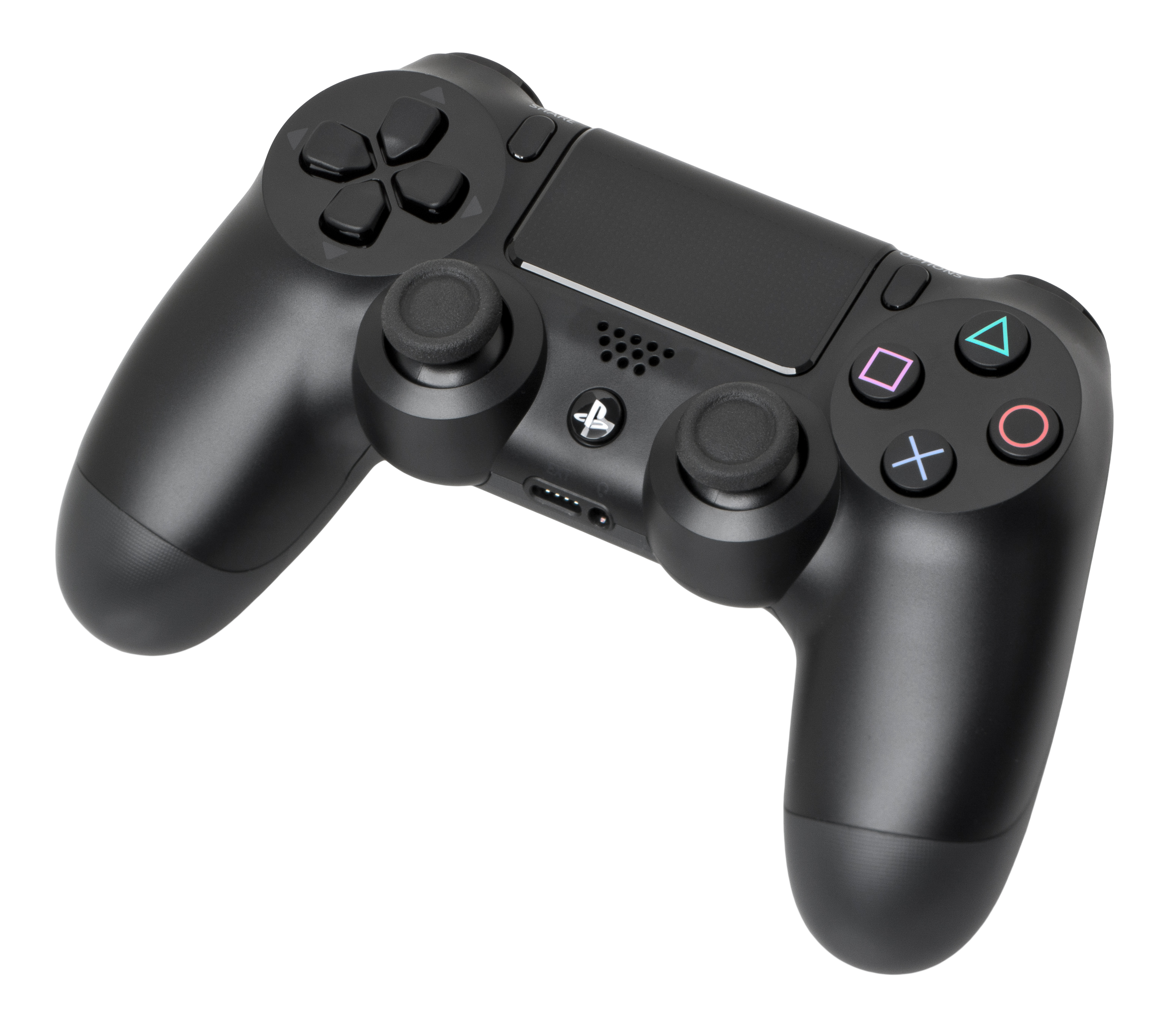
The DualShock 4 finally killed Start and Select, swapping them for Options and Share. The Share button opened the console's social features, from video recording to screenshots, and you could broadcast your own gameplay live on Twitch or Ustream. There was also a touchpad on the front and an LED light bar, meant for the camera to track, which mostly lit up your face in the dark.
People used that button right away. By April 2014 Sony said PS4 sales had passed 7 million worldwide, and players had already pressed Share over 135 million times. Before the PS4, recording a clip of your game meant a capture card and a lot of cables. After it, everyone was a streamer for at least one evening.
Every console also came with The Playroom preinstalled, a game built to show off the controller and the PlayStation Camera. The camera was sold separately, and without it The Playroom just showed you a trailer for The Playroom. It was the most honest advert Sony ever made.
The other trick was Remote Play. Shuhei Yoshida confirmed that all PS4 games would run on the PlayStation Vita, unless the game required specific hardware like the camera. The Vita had struggled to find a reason to exist, and for a while it became a very expensive way to play Killzone in bed.
That's what you were holding
Go back to that disc in Yoshida's hand. By October 2019 the PS4 had sold 102.8 million, which made it the second best-selling PlayStation console of all time, behind the PlayStation 2. As of June 2015 it held a market share of at least 70% in every European country, and Sony discontinued it in Japan on March 28, 2024.
The PS3 had asked you to work more hours. The PS4 was cheaper than the competition and let you hand a game to a friend. You had to be there to see a console war decided by somebody handing over a disc.