The Wii was first shown to the world without the one thing that made it the Wii. Under its codename, Revolution, Nintendo presented the console at E3 in May 2005, but the motion controller was not finished, so it was left out. Satoru Iwata simply held the console above his head with one hand to show how small it was. He had reportedly used a stack of three DVD cases as a reference for its size. The prototype on stage was black. The real one only ever came in white, and people kept comparing it to Apple's iPod.
The controller came four months later. At the Tokyo Game Show in September 2005, Iwata showed a prototype that already looked like the final Wii Remote and Nunchuk, and a video had developers like Hideo Kojima and Yuji Horii saying people would be drawn in by it. A TV remote you waved at the screen. We had no idea what to think.
The name everybody laughed at
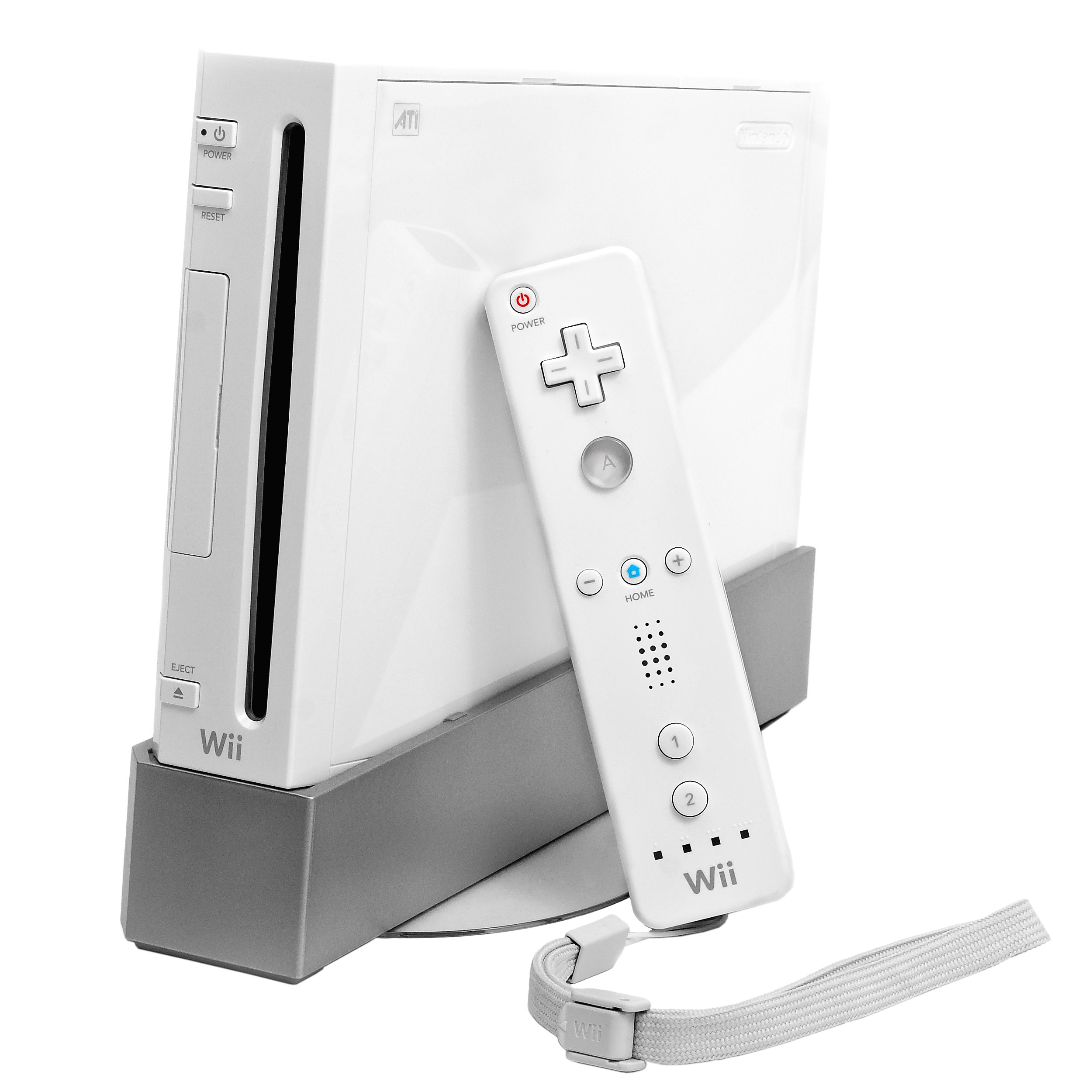
Then Nintendo named it. The two lowercase i's were meant to look like two people standing side by side, and like the Wii Remote next to the Nunchuk. Nintendo's explanation was earnest: "Wii sounds like 'we', which emphasizes that the console is for everyone."
The internet did not take it that way. The name drew widespread mockery, and the day after the announcement BBC News reported that "a long list of puerile jokes, based on the name," had appeared online. Forbes reported that Nintendo fans were worried it would make Nintendo look like it made consoles for children. Some developers and journalists said they preferred Revolution. We all had a joke ready, and most of them were about toilets.
$249.99 and a free bowling alley
The Wii launched in the US on November 19, 2006, for $249.99. Japan got it on December 2 for ¥25,000, and the UK on December 8 for £179.99, with most of Europe paying €249.99. In most of the world Wii Sports came in the box. Japan and South Korea were the exceptions.
There were 21 games announced for launch day in the Americas, and the big one was The Legend of Zelda: Twilight Princess. It had a secret. Once the team moved sword swings onto the Wii Remote, a right-handed swing was controlling a left-handed Link, and there was no time left to rework his character model. So they flipped the entire game into a mirror image. On the Wii, Link was suddenly right-handed.

The adverts were a different kind of strange. Nintendo hired Academy Award winner Stephen Gaghan to direct its TV ads in North America, and the slogan online was "Wii would like to play." The campaign had a budget of more than $200 million for its first year, and it was later named the most effective marketing effort at the Effie Awards.
In London, the Wii went on sale at midnight with two huge queues on Oxford Street. At Nintendo's launch event in HMV, Pat Cash beat Nell McAndrew two games to nothing at Wii Tennis, and ex-footballer Ian Wright beat the boxer Ricky Hatton at Wii Boxing. The first person in line had been camping in an alley outside the store for two days.
In the US, more than 1.1 million Wiis sold between launch day and the end of 2006. That was nearly double the roughly 687,300 PlayStation 3s sold after their November 17 launch. The cheap white box with the silly name had won Christmas.
Flying remotes
Nintendo strongly encouraged everyone to wear the wrist strap, in case the remote slipped out of their hands. It slipped. The thin cords broke, sending remotes flying out of sweaty hands into expensive electronics and the occasional innocent bystander, and Nintendo faced legal challenges from players who reported damage to their homes. In December 2006 it recalled the original straps, about 3.2 million of them worldwide, and replaced them with straps almost twice as thick. In October 2007 it added a silicone Wii Remote Jacket to every box, free for existing owners too.

A week after launch, the Wall Street Journal reported the first cases of what people called "Wii Elbow". A 12-year-old from Kentucky reported numbness in her right arm after bowling and boxing in Wii Sports, and a man in Indiana said he was "soaking wet with sweat, head to toe" after Wii Boxing. Nintendo's vice president of marketing, Perrin Kaplan, said the Wii "was not meant to be a Jenny Craig supplement."
Our favourite piece of Wii trivia is the sensor bar. It did not sense anything. The remote did the looking, and the bar was just ten infrared LEDs, five at each end. That is why candles in the room could confuse the pointer, and why some clever people replaced the bar with a pair of candles.
Bowling with grandma
Wii Sports was five simple sports made to show off the remote, and it became the best-selling Nintendo video game ever, with 82 million copies. Along with Wii Fit, it was credited with bringing in casual players, especially women and older people. Residents of senior centres and retirement homes formed their own Wii Sports bowling leagues.
Schools noticed too. In 2008, five schools in Worcestershire ran lunchtime Wii Sports sessions, and kids who had spent years dodging games lessons queued up to play. Heart rate monitors showed they got fitter, and the scheme won an award for getting children active.
Your bowler was a Mii, a little cartoon version of you or anyone you liked. Miyamoto later said the idea went back to a demo planned for the Famicom Disk System, where you would draw a face onto an avatar. It could not be turned into a game back then, so it was thrown away until the Wii.
Then came the games that came with extra plastic. Wii Play shipped with a second Wii Remote and went on to sell 28.02 million copies, mostly because of that remote. Wii Fit put a Balance Board under your feet in 2007 and sold 22.67 million copies, the third best-selling console game ever that was not packed in with a console.
Sold out for a year
The Wii was hard to find for a long time. Nintendo shipped nearly 3.2 million by the end of 2006, worked to raise production to 17.5 million through 2007, and still warned that there would be shortages all year. Wii sales passed the Xbox 360 by September 2007. In 2008 Nintendo raised production from 1.6 million to around 2.4 million a month.
Nintendo stopped making the Wii in October 2013 after selling more than 100 million, and the final count reached 101.63 million. That's the Wii: a console whose name started a thousand toilet jokes and got grandparents bowling in their living rooms, and the strap was there for a reason.