Some links on this page are affiliate links.
The TRIMUI Brick is a 3.2 inch 4:3 Linux handheld that plays everything up to Dreamcast well. It came out in November 2024 at $70. Inside is the Allwinner A133 Plus with 1 GB of RAM.
Who it's for
Buy it if
- You want to play everything up to Dreamcast, plus some PSP.
- You want it in a jeans pocket: the front is 73.2 x 109.9 mm.
Skip it if
- You want PSP games: it scores 50 out of 100, so many games struggle.
- You want N64 and 3D PS1 games on analog sticks: it has none.
TRIMUI Brick videos
What it plays
Plays up to: Dreamcast. Chip: Allwinner A133 Plus.
Scores out of 100. 100 means the system runs at full speed with no known issues on this device. 80 or more plays well (green), 50 to 79 plays partly (yellow).
What owners say
“I've got the Trimui Brick, it was great as a small, sometimes one handed device for me to use on my commute, and has a good sleep/resume function.”
“I have a Trimui Brick and really like it but the screen is just on the edge of too small.”
“I have been having a blast bringing my TrimUI brick with me everywhere since the update launched”
What the specs mean
4:3 screen
NES to PS2 era home consoles were 4:3, so they fill it. GBA and PSP games show bars above and below.
Based on: Display math: native screen shapes of each system
DS, one screen at exactly 4x
256 x 192 times 4 is the screen's own 1024 x 768, so DS, one screen pixels stay perfectly even with no filter and no bars.
Based on: Display math: native resolution x whole-number scale = screen resolution
Same chip as 8 other handhelds
The Allwinner A133 Plus also powers the Mini Zero 28, TRIMUI Brick Hammer, TRIMUI Brick Pro, TRIMUI Smart Pro and more. The same chip means similar speed, though memory and cooling can differ.
Based on: Our handheld database (chip field)
Shoulder buttons in a row
L1 and L2 sit side by side along the top edge instead of stacked. PS2 games that need L1 and L2 together mean sliding one finger between them.
Based on: Layout data (shoulder button layout)
No analog sticks
N64 games and later PS1 games were made for a stick. Here they run on the d-pad, which works for some and ruins others.
Based on: Layout data; N64 and PS1 DualShock games use analog control
DS without touch
There is no touch screen, so DS games that need the stylus use a pointer moved by a stick.
Based on: Layout data: no touch screen
Rating
How we score: what it plays 30%, how many players own and recommend it 20%, screen 15%, price compared with handhelds that play as much 10%, controls 10%, size and weight 10%, battery size for its chip 5%.
Good
- Plays everything up to Dreamcast well
- Low price
Not so good
- No analog sticks
- Not built for PS2 games
- No video out
Screen fit
Screen: 3.2 inch, IPS, 4:3, 1024 x 768.
| System | Original | Sharpest scale | Screen filled |
|---|---|---|---|
| Game Boy | 160 x 144 | 5x (800 x 720) | 73% |
| GBA | 240 x 160 | 4x (960 x 640) | 78% |
| NES and SNES | 256 x 224 | 3x (768 x 672) | 66% |
| Genesis | 320 x 224 | 3x (960 x 672) | 82% |
| PS1 and N64 | 320 x 240 | 3x (960 x 720) | 88% |
| DS, one screen | 256 x 192 | 4x (1024 x 768) | 100% |
| PSP | 480 x 272 | 2x (960 x 544) | 66% |
Whole-number scales keep every pixel the same size. Bold rows fill the screen with a perfect fit. Screen 1024 x 768.
Size
73.2 x 109.9 x 11.8 - 19.9 mm, 159 g. Fits a jeans pocket
- TRIMUI Brick (73.2 x 109.9 mm)
- iPhone 15 (71.6 x 147.6 mm)
True scale, front view. Jeans pocket = front no bigger than an iPhone 15 Pro Max in a case (160 x 82 mm).
Specs
| Performance | |
|---|---|
| Chip | Allwinner A133 Plus |
| CPU | Cortex-A53 |
| Cores | 4 |
| Clock speed | 1.8 GHz - 2.0 GHz |
| GPU | PowerVR GE8300 |
| RAM | 1 GB LPDDR3 |
| Cooling | No |
| Screen | |
| Size | 3.2" |
| Type | IPS |
| Resolution | 1024 x 768 |
| Refresh rate | 60 Hz |
| Pixel density | 400 ppi |
| Aspect ratio | 4:3 |
| Dual screen | No |
| Controls | |
| D-pad | Cross, Upper placement |
| Analog sticks | No |
| Stick layout | No Thumbsticks |
| Shoulder buttons | Side By Side |
| Rumble | Yes |
| Connectivity | |
| Storage | 8 GB eMMC |
| SD card | Yes |
| Wi-Fi | Yes (4) |
| Bluetooth | Yes (2.1) |
| USB-C | Yes |
| Video out | No |
| Headphone jack | Yes |
| Build | |
| Form factor | Vertical |
| Dimensions | 73.2 x 109.9 x 11.8 - 19.9 mm |
| Weight | 159 g |
| Battery | 3000 mAh |
| Shell | Plastic |
| Speakers | Front |
| Software | |
| Operating system | Linux |
| Custom firmware | SpruceOS, NextUI, MinUI, GammaOSNext, muOS, KNULLI |
| PortMaster | Yes |
Questions
Can the TRIMUI Brick play PS2 games?
Not well. PS2 scores 0 out of 100. It plays everything up to Dreamcast well.
Can it play GameCube games?
Partly. GameCube scores 10 out of 100.
Is the TRIMUI Brick good for GBA?
GBA runs at full speed. At 4x it fills 78% of the screen with even pixels.
Does it have a headphone jack?
Yes.
How big is the battery?
3,000 mAh. The middle Linux and other handheld in our database has 3,000 mAh.
Can it connect to a TV?
No, it has no video out.
How much does the TRIMUI Brick cost?
It launched at about $70 in Nov 2024. Prices on the used market change, so check current listings.
Price and newer models
$70 at launch $60 to $120
Newer in the same line: the TRIMUI Brick Pro (Jun 2026). Compare before you buy this one new.
Compared with
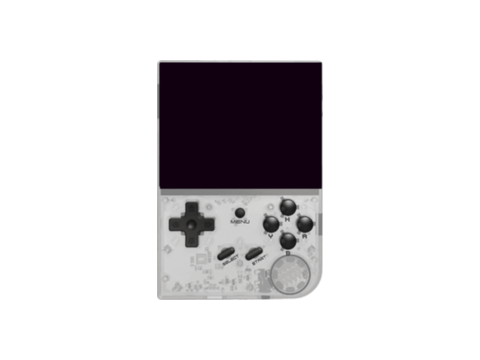
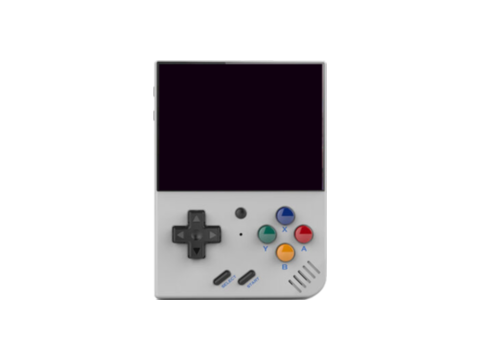
Similar handhelds
Specs and emulation scores from the retrocatalog.com handheld database. The score out of 10 is our own.