The Game Boy Color had a relatively brief lifespan. It came out in Japan in October 1998 and was succeeded by the Game Boy Advance after less than three years on the market, yet it still amassed more than 900 titles of its own.
That short life explains most of what follows. The early hits sold in enormous numbers and cost very little today, while the games that arrived after the Advance had already taken over are the ones that cost real money.
One Game Boy Color plays both libraries
The Game Boy Color is backward compatible with all original Game Boy games, so one console opens up its own 900 titles plus the original Game Boy's catalogue of over 1,000 games. Grey Game Boy carts even get a little colour: the system's startup ROM has default palettes for more than 90 titles, and for the rest you can choose from 12 palettes by holding a button combination at startup, including one that copies the old greyscale look.
That makes the Color a good single machine for anyone collecting both. It is also the end of the line in one direction, because the Game Boy Advance plays Game Boy Color games too, but nothing older than the Color plays the clear carts.
Buy the shell you like

Nintendo had seen colored Game Boys sell, so the Color came in several case variations from day one. The logo spells out the word "COLOR" in the five original shell colours, Berry, Grape, Kiwi, Dandelion and Teal, and Atomic Purple, made of a translucent purple plastic, came out at the same time. Other colours were sold as limited editions or in specific countries.
Loose Atomic Purple units sold for a typical $80 in spring 2026, and boxed ones went for a typical $230 earlier that year. The Pokémon edition, with a yellow and blue shell decorated with Pikachu, Jigglypuff and Pichu, arrived in 1999 at the height of the Pokémon craze, and many ended up in toy boxes with cracked screens. Check the screen lens on any of them, since scratched lenses and faded shells lower the price.
Bear in mind that the screen is a reflective TFT panel, so it has no light of its own. You need a lamp or a window to play, just like on the original.
Black carts run anywhere, clear carts need a Color

The Color's own games came on two kinds of carts, and they behave differently. Black Dual Mode carts hold both a Game Boy version and a Game Boy Color version and boot whichever suits the hardware. Clear carts were designed specifically for the Game Boy Color, and because of that reliance on newer hardware they are incompatible with the older monochrome models.
So if you also own an original Game Boy or a Pocket, the black carts are the ones that work on both. The clear ones also give a quick fake check: real Game Boy Color games carry "Game Boy Color" where the grey carts say "Nintendo GAME BOY TM", and a cart that just says "GAME" is a fake.
Expect a dead battery in Gold, Silver and Crystal
Pokémon Gold and Silver introduced a real-time internal clock that keeps track of the time and the day of the week, and that, along with the save, runs on a battery soldered inside the cart. One repairer who bought a lot of Gold, Silver and Crystal carts found that 99% of them had depleted batteries. Without a working battery the game simply cannot hold any save data.
The fix is a new custom CR2025 cell soldered to the board. So treat a Gen 2 Pokémon cart with a dead battery as normal rather than broken, and price it that way.
Tilt the label to find the factory stamp
Real Nintendo carts have a two-digit factory code stamped into the front label, usually on the right side over the artwork. It is not printed with ink; it is an indentation you can catch in the light. The vast majority of reproduction carts lack it entirely, because their manufacturing process skips that extra step.
Be fair to old carts, though. The stamp can be incredibly faint, and on a heavily played cart it can be worn almost flat or filled with decades of dirt. Flash a light on the cart and tilt it at different angles before you decide.
Open the shell when the price is high
The fastest outside check is the screw. An official cart has it at the bottom of the shell and needs a 3.8mm GameBit screwdriver, while many reproductions use a different screw in a different spot. The words "Made in Japan" are often missing from the back of a reproduction, too.
Inside, a reproduction often uses a very different and cheaper board, so the bottom of the shell is frequently cut out to make room for its chips. The indentation mark and number on the inside of the front shell are a sign of an original. For a cart that costs hundreds, ask the seller to open it or to send a photo of the board.
The big games are cheap
The Color's best-known games are also its cheapest. Loose Tetris DX carts sold for a typical $32 in January 2026, and Super Mario Bros. Deluxe went for a typical $30 loose a month later. The Legend of Zelda: Link's Awakening DX sold for a typical $50 loose in December 2025.
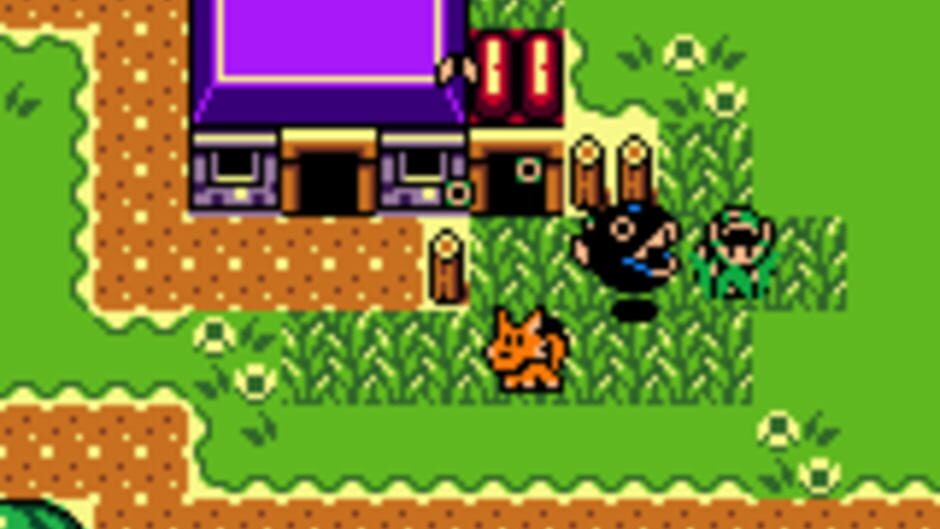
Even the role-playing games are easy on the wallet. Dragon Warrior III went for a typical $50 loose in early 2026, and the Dragon Warrior I & II cart sold for a typical $41 over the same winter. A loose shelf of the Color's famous games costs less than one of its late oddities.
Pokémon sets its own price
Pokémon Gold and Silver shipped 23 million units, and they are still not cheap. Loose Pokémon Gold sold for a typical $60 in September 2026, and boxed copies went for a typical $295 that summer. Crystal costs much more: a typical $175 loose and $795 boxed in early 2026.
So the boxed Pokémon games behave like a separate market from the rest of the library. If you only want to play them, buy the loose cart and budget for the battery.
The expensive shelf arrived after the Game Boy Advance
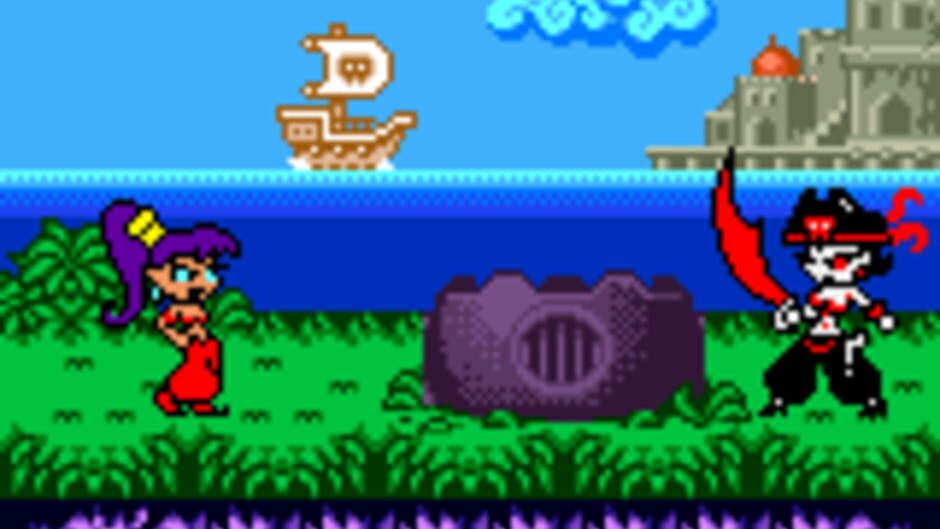
The Game Boy Advance came out in Japan in March 2001 and in other regions that June, and the Color games released around and after it are the costly ones. Shantae is the clearest case. Capcom held it for months, during which the Game Boy Advance was released, and it is rumoured that the game had only one run of 20,000 to 25,000 copies. Loose carts sold for a typical $530 from 2025 into early 2026.
It isn't alone. Wendy: Every Witch Way, released in 2001, went for a typical $135 loose in 2025, Resident Evil Gaiden sold for a typical $212 loose from December 2025 into early 2026, and Survival Kids, made when there weren't many survival games on the handheld, went for a typical $150 loose in the second half of 2025. The scarcest carts come from very short late-cycle North American print runs and Japan-only releases.
Shantae at least has a cheaper door. Limited Run Games produced a brief run of new Shantae cartridges for the Game Boy Color, and a Switch port came out on April 22, 2021, so you can play it without paying for the original.
Japan got more games, and they all play here
Region locking does not apply to Game Boy Color hardware, so any Japanese cart boots on a North American or European handheld. That matters because Japan got a lot. One collector in Japan spent two years completing the full set of Japanese Game Boy games, 1,244 official titles.
The strangest of them shows how far the format went. Jaguar Sewing Machine Embroidery-Only Software: Mario Family connected the handheld to Jaguar's JN-100 sewing machine, which could then copy any of the 32 Nintendo patterns on the cart. In 2021 the cart alone fetched 50,000 yen ($454) in Japan, and 100,000 yen ($909) with the box and manual (more than most of us have ever spent on a sewing machine).