The last factory making UMDs, the PSP's little game discs, closed in Japan in late 2016. The PSP's own storefront shut down that same year, so the discs already out there are all the system will ever have. Luckily there are plenty of them: nearly 2,000 games, from a handheld that sold over 80 million units.
Most of those games are cheap, which is the good news. The catch is the hardware. It first went on sale in Japan in 2004, and it has had a long time to go wrong in a few very specific places.
The screen is what really separates the PSP models
Sony released five PSP models: the PSP-1000, PSP-2000, PSP-3000, PSP Go and PSP Street. The first three share a 4.3-inch screen at 480 × 272, so on paper they look alike. The real difference is the panel. The PSP-3000 has noticeably more vibrant colours and a better anti-glare coating, yet its new display also brought a scanline-like effect that some players find distracting.
As a result, the 2000 against the 3000 is a matter of taste rather than a clear upgrade. If you can, try a 3000 with a game running before you buy one, because a photo of the system menu won't show you the effect. Condition matters more than the model number anyway: a fully working PSP-2000 with a good screen and buttons can be a better buy than a heavily worn 3000.
The PSP-1000 is the best-built model and the slowest loader
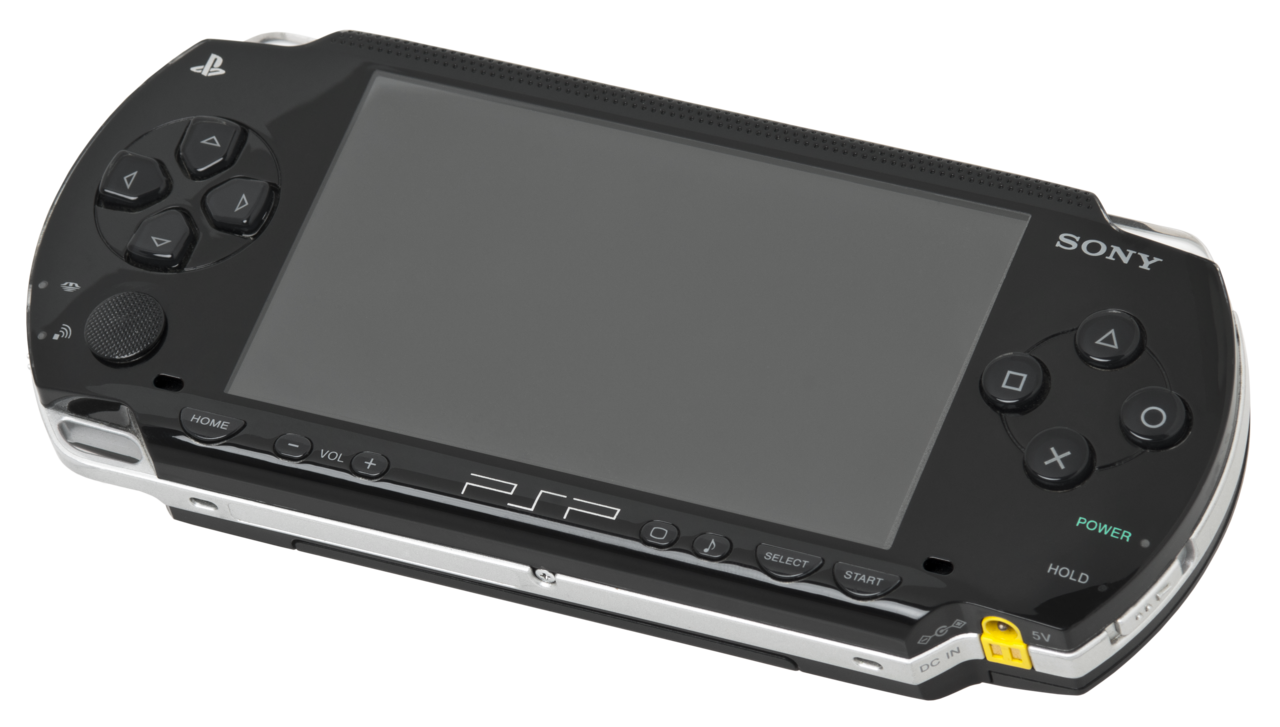
The original PSP-1000 weighs about 280 grams, against 189 for the 2000 and 3000, and it feels like the model Sony built with the better materials. It is also the only one with an infrared port, and to this day nobody knows why it was included. On top of that, it has the biggest battery of the family, rated at 1800 mAh.
The trade-off is memory. The 1000 has 32 MB of RAM, and Sony doubled it to 64 MB on the PSP-2000 to fix the poor loading times of UMD games on the original. The 2000 also added TV output, which the 1000 never had. Even so, the 1000 is easy to get into: as of August 2026, working ones sell for between $50 and $120 on eBay and Vinted, depending on wear and how many accessories come with them. A broken one goes for about $30, and one person who rescues them reckons 80 percent of the PSPs they have fixed up needed no soldering iron at all.
The PSP Go and the PSP Street are side roads

The PSP Go arrived in 2009 as a slider small enough for a jeans pocket, and its screen is vibrant like the 3000's without the scanline effect. It also has no UMD drive at all. Instead it plays downloads from 16 GB of built-in storage and takes the smaller Memory Stick Micro (M2) cards rather than the Memory Stick PRO Duo the other models use. So a Go can't touch the disc shelf, and if you have large hands, its controls may feel cramped.
The PSP Street (E1000) was Sony's last revision, a budget model sold only in Europe from October 2011 at €99.99. It keeps the UMD drive, but Wi-Fi is gone and the stereo speakers were replaced by a single mono one. Its battery is internal rather than easy to swap, too. In short, it is only worth considering when it is clearly cheaper than a 2000 or 3000.
Open the battery cover before you pay

Old lithium-ion batteries swell with age, and after two decades of storage many original PSP-1000 batteries have swollen and been thrown out. Owners who dug a PSP out of a drawer have found the battery bulging so badly that it warped the battery cover or popped the lid right off. The hobby has a name for these: spicy pillows. So take the cover off any used PSP before money changes hands, and if the cell looks puffy, it goes to recycling rather than on the charger.
Replacements are the next trap. The PSP-1000 battery is rated at 1800 mAh, the slimmer 2000 dropped to 1200 mAh and the Go has 930 mAh, which means a cheap replacement promising 3600 mAh is a fake. A decent cell should give you about 4 to 6 hours of play. Even then, finding a genuinely good one is not always easy.
Test the UMD drive, then spare it

A UMD holds about 900 MB on a single layer and up to 1.8 GB on two, which was a lot for a handheld in its day. Reading it is slow, though, and the drive is a moving part in a machine that is now twenty years old. So when you buy a used PSP, load a real game from the drive and check the screen for dead pixels while it runs.
The 1000's drive is the fancier one: press eject and it opens and lifts the disc slightly. The 2000 simplified that mechanism. Either way, a game loaded from a memory card avoids the constant disc access and long loading times, and that is where custom firmware comes in.
Every PSP game plays on every PSP
PSP games are region-free. A Japanese or European disc runs on an American PSP with no tricks, which makes importing easy. The thing to check is the language of the print: a cheap Japanese copy of Metal Gear Solid: Portable Ops plays fine, as long as you read Japanese.

Movies are a different story. Most UMD movies and music carry DVD region codes, so a film from another region may refuse to play.
Most of the library costs a few dollars
The widely printed PSP games start at a couple of bucks. Boxed copies of Lumines sold for a typical $8 across 29 eBay sales in early 2025. Grand Theft Auto: Liberty City Stories, the best-selling PSP game at 8 million copies, went for a typical $23 boxed and $14 loose in late 2025 (eight million copies have to go somewhere).
Job lots on eBay are the cheapest way to fill a shelf, while GameStop still stocks some classics at a higher markup. Either way, the big hits are the cheapest part of the hobby.
The expensive shelf is small-print RPGs
The PSP games that cost real money are mostly not the famous ones. They are niche RPGs printed in small numbers, very often by Atlus, a publisher well known for small print runs.

Hexyz Force is the clearest case. Atlus published it in small quantities, and then a pre-order problem at GameStop meant many customers who pre-ordered never received the game. Boxed copies sold for a typical $146 across 30 sales in 2025. Monster Kingdom: Jewel Summoner, another Atlus RPG that was hard to find in shops, went for a typical $58 boxed in the same year. Crimson Gem Saga and Riviera: The Promised Land came from the same publisher with the same limited printing.
The pattern holds outside Atlus too. A Legend of Heroes game was printed in small quantities because the series was not popular outside Japan. So on the PSP, the price follows the print run rather than the fame, and a game that sold millions is the cheap one.
Custom firmware is part of the hobby now
Custom firmware lets a PSP run unsigned code: homebrew, emulators for other consoles, backups of your own UMDs and PlayStation games converted to PSP format. PRO and ARK-4 are among the most used versions today, and an exploit called Infinity keeps the firmware running after a restart.
For a disc collector, the useful part is simple. Run your own game from the memory card and it loads faster, while the disc stays on the shelf and the drive gets a rest. Every model except the Go takes Memory Stick PRO Duo cards. Homebrew is also where the 1000's smaller RAM matters more, since some homebrew apps were never fully optimized for it.
UMD movies are a shelf of their own
The format also carried films, somewhere between 1,000 and 1,500 of them. They need a PSP with a UMD drive, so a Go can't play them. Early on they sold well, with two Sony Pictures titles passing 100,000 units within two months of the launch.
The decline came fast. Major studios like Universal and Paramount pulled their support, and a year after Sony announced in 2007 that it would stop supporting movie releases on UMD, it cut their prices to as low as $10 to $15. So the films were already cheap before the format ended. Check the region code on every case, though, because unlike the games, the films usually have one.