The Wii came out in North America on November 19, 2006, and was discontinued in October 2013. In between, Nintendo shipped 101.63 million of them, and Wii Sports alone, the pack-in, reached 82.9 million. Numbers like that make the Wii the easiest console of its era to collect: there are simply a lot of them, and a lot of games.
The interesting part is the edges. The model you buy decides whether GameCube games work, the online shop is gone, and a handful of late role-playing and horror games cost several times what the hits do.
There are three Wiis, and only the first plays GameCube games

Early Wiis are backward compatible with GameCube games and accessories. Nintendo later released cheaper versions: the RVL-101 from 2011, without GameCube compatibility, and the Wii Mini, which removed features such as online connectivity and SD card storage.
So if you want one machine for both libraries, you need an original model, and the model number on the label tells you which one you have. Check it before you pay.
The Wii Mini is a curiosity, not a player

The Wii Mini, model RVL-201, is a smaller Wii with a top-loading disc drive. As well as lacking GameCube support, it removes Wi-Fi and online connectivity and the SD card slot, and it dropped 480p and component video output too. Nintendo stripped those features out to bring the price down.
That makes it a fun object for a shelf and a poor machine for a modern TV. If you only want one Wii, buy a full-size one.
A Wii U plays your Wii discs too
The Wii U is backward compatible with Wii software and accessories, so the discs you buy for a Wii work on its successor as well. That is worth knowing if you already have a Wii U under the television.
It does not replace an original Wii completely, though. The GameCube ports are what made the first Wii two consoles in one, and the Wii U doesn't have them.
Dual-layer discs test the laser
Super Smash Bros. Brawl uses a double-layer disc with a large memory capacity, and Nintendo said a very small percentage of Wii consoles may have trouble reading it consistently if there is contamination on the lens of the drive. In North America, Nintendo even repaired affected consoles free of charge at the time.
So bring a dual-layer game when you test a used Wii. A console that reads Wii Sports but chokes on Brawl has a lens problem, and that is worth knowing before you hand over money rather than after.
The Wii Shop is closed, so discs are the library
The Wii Shop Channel closed in January 2019, and from March 2018 users could no longer add Wii Points to their accounts. After the closure it became impossible to buy titles from the channel on either the Wii or the Wii U.
People who already bought WiiWare or Virtual Console titles can still download them again. Anything you didn't buy is gone, so the discs on the shelf are now the whole Wii you can still purchase.
The discs didn't stop when the shop did, either. Shakedown: Hawaii and Retro City Rampage DX are the most recent Wii games, released on July 9, 2020, more than 13 years after the console launched. In June 2023 the UK retailer CEX would pay £29 for Retro City Rampage DX, so the late stragglers are worth looking out for.
Check the region before you buy an import
The Wii supports regional lockout: software available in a region can only be played on that region's hardware. In Europe, game boxes have a triangle at the bottom corner of the paper insert, colour-coded to show the region and which manual languages are included.
So an import needs a console from its own region. Check the box in the listing photos rather than finding out at home.
The hits cost less than lunch
Wii games were printed in enormous numbers, and the prices show it. Loose Wii Play sold for a typical $6 in summer 2025. Super Mario Galaxy went for a typical $15 and Super Smash Bros. Brawl for a typical $15 in April 2026, and New Super Mario Bros. Wii for a typical $22 in September 2026.
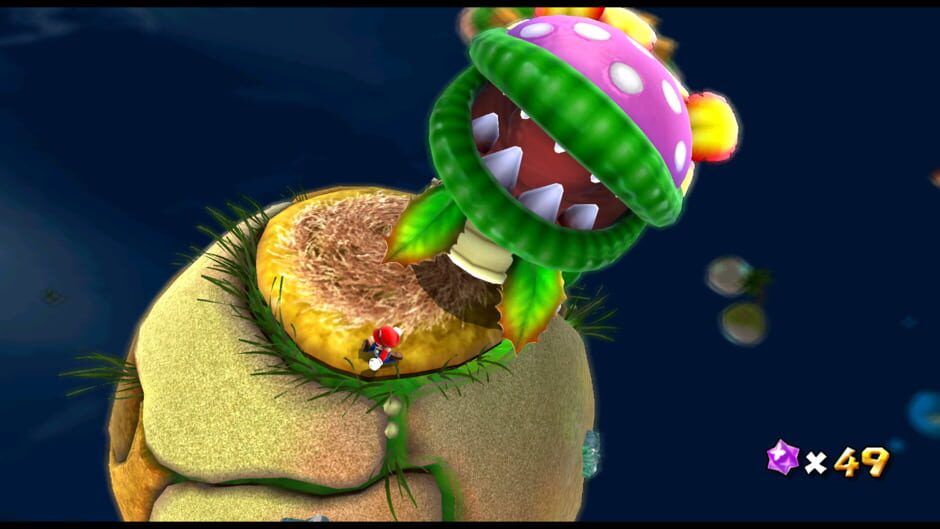
Boxed copies barely cost more, since Wii games came in plastic cases. A boxed Super Mario Galaxy sold for a typical $18 in April 2026. Mario Kart Wii was a little pricier at a typical $29 loose in June 2026, and so was Wii Sports, at a typical $29 loose in September 2026, oddly enough for the most common game on the system.
Accessory games are the exception to the rule. Band Hero and the Guitar Hero games are worth a bit of cash, but only if you have the instruments, so a bare disc in a pile is worth very little and a boxed set with its guitar is a different purchase entirely.
The role-playing games fans fought for are not priced alike
In 2011 a fan campaign called Operation Rainfall pushed for the North American release of three late Wii role-playing games: Xenoblade Chronicles, The Last Story and Pandora's Tower. All three were eventually released there, Xenoblade by Nintendo and the other two by Xseed Games.

They didn't end up priced alike. Loose Xenoblade Chronicles sold for a typical $18 from late 2025 into mid 2026, while Pandora's Tower went for a typical $70 loose in 2025, almost four times as much.
Nintendo's niche games cost more than its hits
The first-party games that cost real money are the niche ones. Fire Emblem: Radiant Dawn sold for a typical $85 loose from late 2025 into early 2026, and $121 boxed. Metroid Prime Trilogy went for a typical $92 loose over the same months.
That is several times a Super Mario Galaxy, which tells you how many more copies of Galaxy are out there. Quality has very little to do with it.
Horror games are a small expensive shelf
A cluster of horror games sits well above the hits. Silent Hill: Shattered Memories sold for a typical $80 loose in 2025, and Ju-On: The Grudge for a typical $73 loose that year, with boxed copies of Ju-On at a typical $100.
In the UK the oddities stand out even more. In June 2023, the retailer CEX would pay £84 for Legend of Sayuki and £55 for Dokapon Kingdom, more than it offered for Fire Emblem: Radiant Dawn at £45. The rule on the Wii is simple: the more people bought a game, the less it costs now.