The Nintendo DS sold 154 million units, and its best-selling game, New Super Mario Bros., sold 30.80 million on its own. Numbers like that keep most of the library cheap, which is the first thing to love about collecting it.
The second thing is less lovable. The DS family stayed in production from 2004 to 2014, it comes in four models that don't all play the same carts, and its most popular games have been copied on an industrial scale.
The DS Lite is the one to have, if the hinges hold

The DS Lite arrived in 2006 as a slimmer model with brighter screens and improved battery life, and it weighs 218 grams against 275 for the original. Its weak spot is the hinge. When the screen puts enough pressure on the left hinge, it cracks, starting as a hairline separation and growing over time, and in an unofficial poll 14% of participants had DS Lites with cracked hinges.
So open and close any DS Lite you are about to buy, and look hard at both hinges. A hairline crack doesn't stop the hinge from working at first, but it is a common problem with the Lite, and one owner had it happen while opening the system normally, with no force at all.
Only the first two models play Game Boy Advance carts

The original DS and the DS Lite have a second slot for Game Boy Advance games. The DSi, released on November 1, 2008, dropped it to improve portability, and the DSi XL, with its 4.2-inch screens, kept that design. The only DS games a DSi can't run are the ones that needed the Advance slot.
In return the DSi added two cameras and an online shop. For a collector who also owns Advance carts, though, an original DS or a Lite is two systems in one, and a DSi is only one.
The DSi locks some carts to their region
Ordinary DS games are region-free, so a Japanese or European card works on an American handheld. The DSi changed that. It is Nintendo's first region-locked handheld, and it blocks certain software released for another region.
The catch applies to a small group. DSi-enhanced cards add DSi features but still work on earlier models, while DSi-exclusive cards don't, and only six DSi-exclusive cards were ever released. If you import, a DS Lite avoids the question entirely. Most games also can't switch language, so make sure you can read the one you buy.
Read the code at the bottom of the label
Every DS card has a code at the bottom of its label. It starts with NTR, for Nitro, the DS's code name during development, followed by a four-character game code and a region: USA, EUR or JPN. A genuine North American Pokémon HeartGold should always read NTR-IPKE-USA.
Then turn the card over. On a legitimate game, the serial code on the back always matches that game code on the front. A North American code with no ESRB rating on the label is a fake, and so is a mismatch between front and back. American cards have an oval Nintendo seal on the bottom right and European ones a round seal on the bottom left, so know which you are looking at.
Pokémon fakes are an industry
The DS Pokémon games still fetch high prices, and that has led to an entire industry of bootleg cartridges sold on sites like eBay. The fourth generation games, Diamond, Pearl, Platinum, HeartGold and SoulSilver, are arguably the most faked Pokémon games on the market.
The prices give the game away sometimes. Copies of HeartGold listed as new sold for a typical $100 from late 2025 into early 2026, while a loose, used cart went for a typical $162 in March 2026. A sealed Pokémon game cheaper than a used one deserves the full check above, and a few questions besides.
Most of the library costs less than lunch
The famous games were made in such numbers that they are almost free. Loose Mario Kart DS sold for a typical $13 in September 2026, New Super Mario Bros. for a typical $15 the same month, and Brain Age for a typical $4 in 2025.
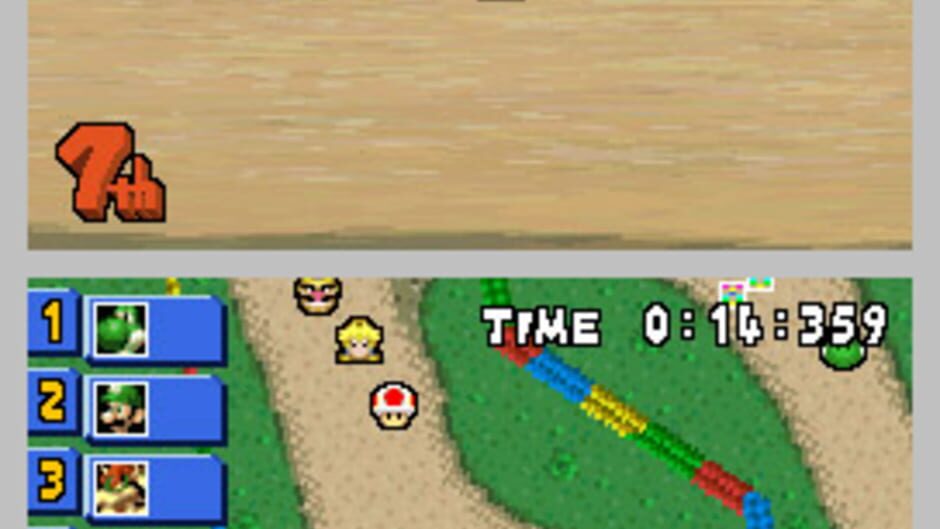
Even the later Zelda is easy to own: The Legend of Zelda: Spirit Tracks went for a typical $49 loose in April 2026. Boxed copies of the hits cost very little more: a boxed Mario Kart DS sold for a typical $17 in September 2026, four dollars more than the cart alone.
Pokémon is a tier of its own
The main Pokémon games are the exception to everything above. Loose HeartGold sold for a typical $162 in March 2026 and SoulSilver for a typical $147 in August. Platinum went for a typical $130 loose that summer, Black 2 for a typical $140 in June 2026, and White 2 for a typical $150 in August 2025.
None of them are scarce. HeartGold and SoulSilver alone sold 12.72 million copies. They are simply wanted by more people than there are carts, which is exactly the situation fakes are made for.
The Pokéwalker box is the one to keep whole
HeartGold and SoulSilver came with a pedometer called the Pokéwalker in every copy. You transfer a Pokémon from the game into the device and walk around with it, earning watts. That makes the big box a set rather than a game in a case.

Complete, it costs real money. Boxed HeartGold with its Pokéwalker sold for a typical $475 from July to September 2026, about double the $233 a boxed HeartGold went for that March. So if you buy one, check that the Pokéwalker is actually in the box.
Late releases are the expensive shelf
By 2010 publishers had moved their attention to the 3DS, so games released after that often shipped 10,000 to 25,000 North American copies and never got reprinted. Solatorobo: Red the Hunter is the best-known example: loose copies sold for a typical $200 from 2025 into early 2026, and boxed ones for a typical $308.
A late game can also jump without warning. Okamiden sold for between $15 and $30 for over a decade, then averaged $94 in early 2025, right after Capcom revealed it was working on a new Okami game. So a series coming back can move the price of an old spin-off almost overnight.
Japan's collectors are buying their own games back
The DS is region-free, so Japanese games are open to everyone. Before Japan's travel ban, tourists were buying retro games that didn't require much Japanese reading, and during the pandemic the market recalibrated to collectors in Japan, so games with more text started getting more expensive. By 2021, Kouenji Joshi Soccer 2 had gone from under 1,000 yen ($9) to north of 10,000 yen ($90), and Ivy the Kiwi? reached as much as 15,000 yen ($135).
Nintendo's own hits stayed cheap because they were released in such large numbers. So if you want Japanese DS games, the first-party ones are still the easy part, and the small text-heavy releases are not.