Sony has never published exact Vita sales figures, and estimates sit around 15 to 16 million units, a fraction of what the 3DS and DS managed. It is regarded as a commercial failure, and it was discontinued on March 1, 2019.
For a collector, that failure is the whole story. Few consoles means few copies of each game, a lot of the library was only ever sold as downloads, and the shop that sells those downloads is about to close.
The OLED model has the screen, the slim one has the comfort

There are two models. The original PCH-1000 has a 5-inch OLED screen and weighs 260 grams in its Wi-Fi version. The PCH-2000, released across 2013 and 2014, has the same features in a slightly smaller body with an LCD panel instead, weighs 219 grams, and adds 1 GB of built-in storage. It also lasts a little longer, at about 4 to 6 hours of play against 3 to 5.
Game compatibility is the same, so the choice is about the screen. Pick the PCH-1000 if the screen matters most, and the PCH-2000 if you want something lighter with battery life to spare.
Budget for a memory card

The Vita uses a proprietary memory card, in 4, 8, 16, 32 or 64 GB sizes, and the high price of those cards was widely criticized. A 16 GB card cost $69.99 at launch, when a 32 GB card for ordinary devices cost about $21. With the average Vita game running 1 to 2.5 GB, the card was effectively mandatory for anyone buying digitally.
So check whether a used Vita comes with one, and how big it is. The PCH-2000's built-in gigabyte helps a little, but saves and downloads add up fast.
The Vita doesn't play your PSP discs
The Vita dropped the PSP's UMD disc format for small game cards. It is backward compatible with most PSP games, but only those released digitally on the PlayStation Store, never physical PSP games or films. The same goes for the PS one Classics, which it plays only as downloads.
So a shelf of UMDs needs a PSP, and a Vita that plays PSP games has them on its memory card. That matters more than ever because of the next point.
The store closes in July 2027
Sony has announced that the PS3 and Vita stores cannot support updated payment standards, so new purchases will stop country by country. The last countries close for both PS3 and Vita in July 2027. Players will still be able to download what they already bought for the foreseeable future, and "the foreseeable future" is not a date.
Physical cards are unaffected. Anything sold only as a download, including the PSP and PS one games above, should be bought before your region closes, and kept on a card you own.
Every Vita plays every region
Sony's handhelds are region-free, so if you import for the PSP or the Vita, you are good to go. That has made Asia an important source of Vita games, because some only had a physical release there.
The trap is the language. Asian English versions contain English language support, which is why they are worth more than Japanese ones, and they are different products. Sword Art Online: Hollow Fragment, for example, was a digital-only release in North America, while the Asian version, not the Japanese one, came on a card with subtitles in both Chinese and English. Before you buy an import, check which version the listing is for.
The PlayStation TV is a Vita for the television

Sony also sold the Vita as a small box called the PlayStation TV, which launched in North America at $99 in October 2014 and was discontinued in the US and Europe in 2015. It plays many Vita games from cards or downloads, but not all of them, since the Vita's gyroscope and microphone are missing.
It has 1 GB of internal storage and takes the same proprietary memory cards. For a collector, it is a cheap way to see Vita games on a big screen, as long as the game you want is on its compatible list.
The famous games are cheap
The Vita's best-known games cost very little. Loose Soul Sacrifice sold for a typical $14 from late 2025 into 2026, Tearaway for a typical $19 in 2026 and Persona 4 Golden for a typical $24 in spring 2026. Uncharted: Golden Abyss went for a typical $25 loose in spring 2025, and Gravity Rush for a typical $33 in the first half of 2026.

The role-playing games the Vita became known for in the West cost a little more. The Legend of Heroes: Trails of Cold Steel sold for a typical $32 loose and Danganronpa V3 for a typical $45 loose from 2025 into 2026. Boxed copies barely add anything, so buy them complete.
Limited Run made the expensive shelf
Most of the scarcest Vita games were printed but barely sold, and Limited Run Games and Nicalis are the prime culprits. Limited Run Games started with Breach & Clear: only around 1,500 copies were printed, and they sold out online within two hours.
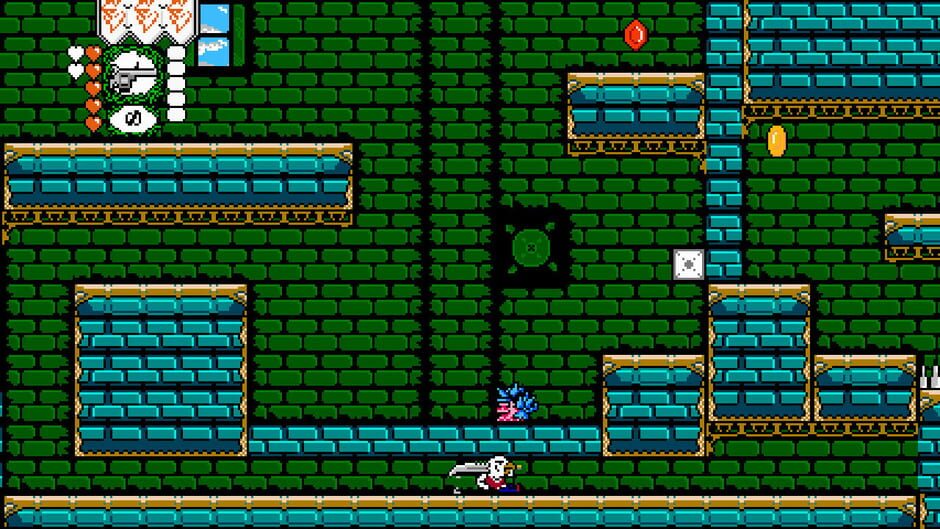
Revenge of the Bird King went further. It was meant to be the final Limited Run Vita release, a completion bonus for anyone who bought the entire Limited Run Vita library. The plan was cancelled, but a batch of copies had already been printed, and some ended up out in the wild at outrageous prices.
Some of the priciest games never came out
Nicalis planned physical Vita releases of VVVVVV, 1001 Spikes and The Binding of Isaac: Rebirth that were never officially released. The copies that exist were promo copies sent to people at Sony, who then resold them, and the hole-punched back cover gives a promo copy away.
The Binding of Isaac: Rebirth is so scarce that collectors didn't know for sure it existed until a copy was found. So if you want a complete Vita set, decide early whether these count (most people sensibly say no).
A modded Vita is a project, not a shortcut
Hackers extended the Vita's life well past Sony's. A modded Vita with an SD2Vita adapter can take a microSD card of up to 256 GB, which neatly undoes the memory card problem. RetroArch handles SNES, N64, Genesis and GBA games, the Adrenaline app adds filters and savestates to PSP and PS1 games, and there are fan ports of games such as GTA: San Andreas and Max Payne.
Kernel-level tinkering solves one problem and creates a small pile of new ones, so this route is for people who enjoy a project. If a used Vita is listed as modified, ask what was installed, and decide which kind you want before you pay.