The GameCube sold 21.74 million units, and Nintendo discontinued it in February 2007. It was the first Nintendo console to use optical discs instead of cartridges, on its own MiniDVD-based format of up to 1.5 GB.
Small sales mean small print runs, and that is the whole story of GameCube prices. Nintendo's own hits are still easy to find. The third-party oddities that nobody bought at the time are the ones that cost real money now.
Buy the DOL-001 if you want a sharp picture

Early GameCubes have a digital video output. Nintendo found that less than one percent of users used it, so it removed the port starting with model DOL-101 in May 2004. That port is what component cables and today's HDMI adapters plug into, so the original DOL-001 is the one to buy for a modern TV.
Official Nintendo component cables now sell for $200 or more, and adapters such as the Carby or GCHD Mk-II give digital output from the DOL-001 port for a fraction of that. Check the model number on the bottom before you pay a premium for it.
A launch Wii plays your GameCube games too
The original Wii is backward compatible with GameCube controllers, memory cards and games. It can't use the Game Boy Player or anything else that needs the GameCube's expansion slot, since the Wii doesn't have one.
Later Wiis dropped it entirely. The Family Edition from 2011 and the Wii Mini from 2012 don't support any GameCube hardware or software, so check which Wii you are looking at if this is your plan.
The Game Boy Player needs its boot disc

The Game Boy Player attaches to the GameCube with screws and plays Game Boy Advance, Game Boy and Game Boy Color carts on a television. A boot disc is required to start it, and that is the part that goes missing.
The unit itself is region free, but the boot discs are region locked and must match the region of the GameCube. So a Game Boy Player without a disc of the right region is a very nice paperweight.
Buy Nintendo's memory cards and controllers
Nintendo released three memory cards: the grey Memory Card 59, the black 251 and the white 1019. Official Nintendo 1019-block cards are reliable, while third-party cards from the era are notoriously failure-prone, so don't store long role-playing game saves on unbranded hardware.
Controllers have their own weak spot. Stickboxes wear out, so buy from sellers who show close-up photos of the stick and the C-stick, and first-party Nintendo controllers are still the best option.
Look at the disc before the case
GameCube games come on small discs, and a disc is only as good as its surface. Resurfacing can fix ordinary scratches, but it will not fix chipped, pocked or gouged discs, deep scratches, disc rot or cracks.
So ask for a photo of the shiny side of any expensive disc. A beautiful case around a gouged disc is still a gouged disc.
Black labels and Player's Choice are not always the same game
When a GameCube game passed a sales milestone, typically over 250,000 copies in North America, it was reprinted under the Player's Choice brand with a yellow banner on the cover. Many collectors prefer the original black label releases on the shelf because of that banner.
The discs can differ, too. The Player's Choice Super Smash Bros. Melee contains bug fixes and slight balancing changes, and the Player's Choice Metroid Prime unlocks the Fusion Suit through a menu option instead of a link cable to Metroid Fusion. If a particular version matters to you, check which one you are buying.
Nintendo's hits are cheap
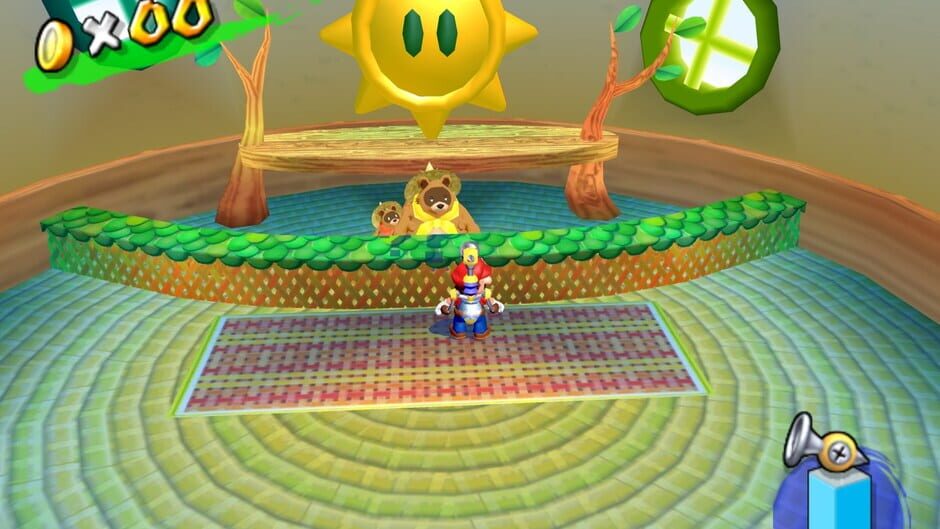
The famous games are the easy part. Loose Metroid Prime sold for a typical $18 in December 2025, Super Mario Sunshine for a typical $34 in September 2026, and Luigi's Mansion for a typical $46 in autumn 2026. Super Smash Bros. Melee, the best-selling game on the system at 7.09 million copies, went for a typical $50 loose in late summer 2026.
A modern version can keep a price down. Paper Mario: The Thousand-Year Door sold for a typical $36 loose in summer 2026, and its Switch remake likely contributed to that relatively low price. The Legend of Zelda: The Wind Waker went for a typical $60 loose in May 2026, and Mario Kart: Double Dash!! for a typical $65 in December 2025.
The expensive shelf is the games nobody bought
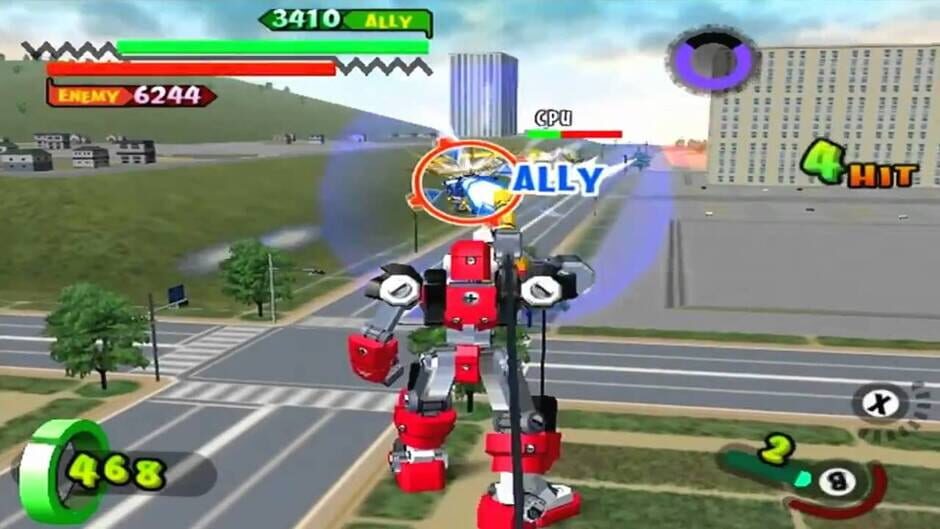
The costly GameCube games are mostly odd third-party releases. Gotcha Force sold for a typical $222 loose from 2025 into early 2026, and $427 boxed. Cubivore: Survival of the Fittest went for a typical $260 loose and $540 boxed over the same stretch, and Go! Go! Hypergrind for a typical $280 loose in 2025.
Then there is the special case. Pokémon Box: Ruby and Sapphire, a storage tool for the Game Boy Advance Pokémon games, was released in North America only through the New York Pokémon Center and its online store. It came bundled with a GameCube to Game Boy Advance link cable and a Memory Card 59, so a complete one is a box of parts as well as a disc, and every missing piece lowers the price.
The other Pokémon games on the system hold their value too. In July 2026, Pokémon Colosseum and Pokémon XD: Gale of Darkness were often going for $150 or more apiece. Fire Emblem: Path of Radiance sits lower, at a typical $142 loose in late summer 2026, but still far above the hits.
Japanese copies cost a fraction
Nintendo's home consoles are region locked, so a Japanese disc needs a Japanese GameCube, a modified console or an adapter such as the Datel Freeloader. It is worth knowing about, because the price gaps are enormous.
PriceCharting figures collected on August 30, 2026 put a complete Pokémon Box at $2,400 in the US against $52 in Japan, a complete Cubivore at $640 against $28, and a complete Gotcha Force at $474 against $69. Games that aren't text-heavy are the easy imports; role-playing games are a different matter unless you read Japanese.
Japan also got a GameCube that plays DVDs

The GameCube couldn't play DVDs, so Nintendo let Panasonic build one that could. The Panasonic Q came out in December 2001, only in Japan, for ¥41,000, and it played DVDs, audio CDs and MP3 CDs as well as GameCube games.
It lasted only two years due to underwhelming sales, and fewer than 100,000 units are believed to have been sold. The original version was region-locked to Japan, so it plays Japanese games only. For most of us it is a picture on a wall rather than a console in the cabinet, and that is fine.