The PlayStation sold 102.49 million units, and more than 4,000 games were released for it. Sony kept making it until March 2006, more than eleven years after launch and in the same year the PlayStation 3 arrived.
Numbers like that make the PS1 a cheap place to start. The cost comes from two directions: a small set of horror games and role-playing games that print runs never caught up with, and the hunt for the right version of a game you already own.
The PS one is the small one, the early models have more outputs

In 2000 Sony released a smaller and cheaper model, the PS one, which plays the same discs. Every PlayStation outputs composite, S-Video or RGB through its AV Multi connector, and the older models also have separate RCA connectors for composite video.

So the choice is mostly about size and condition. Pick the one that reads discs reliably.
Copy protection keeps fakes scarce
Sony knew CDs were easy to copy, so genuine PlayStation discs were printed with a small section of deliberate irregular data, and the console won't boot a disc without that signal. Burned copies therefore won't start on an unmodified console.
That is why you don't see many PlayStation 1 bootlegs. A fake has to be sold to someone with a modified machine, so on a standard console the disc either boots or it doesn't, and real ones boot.
Discs are locked to their region
The same hidden signal also encodes each disc's region, so an American console won't play a European or Japanese disc without modification. Treat imports as a separate shelf for a separate console.
This matters for prices too. A Japanese copy of an expensive game is not a cheap way to play it on an American PlayStation unless the console has been modified, so check which region a listing is before you compare prices.
Black label is worth more than Greatest Hits
Original PS1 games came in black-labelled cases, and popular ones were reprinted later as Greatest Hits. Collectors argue about which is the one to own, and the market has an answer: one dealer finds black label games consistently command significant premiums over Greatest Hits.
In that dealer's experience, Resident Evil's original black label sells for nearly four times what the Greatest Hits version brings, and the original long box version prices similarly to the black label. A black label Final Fantasy VII sells for almost double the Greatest Hits, and even Castlevania: Symphony of the Night's black label commands about 60% more.
Some Greatest Hits are the scarcer or better version
The rule has exceptions. Some Greatest Hits versions of PlayStation games, like Final Fantasy VII, had fewer printings than the original, so they are technically scarcer and can cost more.
Others are different games. Many Greatest Hits versions include gameplay tweaks and changes, and Resident Evil is a perfect example: its later version added support for the DualShock controller, which the original didn't have. If you want to play, the reprint can be the better copy.
The famous games are cheap
The big sellers cost very little loose. Gran Turismo, the best-selling PS1 game at 10.85 million copies, sold for a typical $7 in spring 2026, and Final Fantasy VII and Metal Gear Solid for a typical $25 each in late summer 2026. Boxed, Final Fantasy VII went for a typical $57 and Metal Gear Solid for a typical $53.
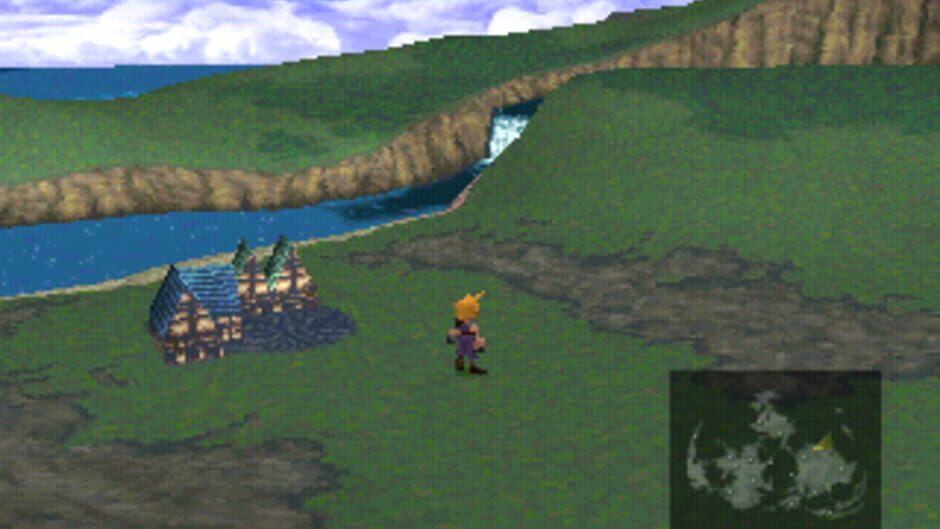
Those are the games a retro store owner said in October 2026 still attract buyers, alongside Castlevania: Symphony of the Night, Suikoden II, Silent Hill and Resident Evil, while much of the rest of the PS1 inventory moves more slowly than he expected.
Horror games cost more than their reputations suggest
Horror is where PS1 prices start to climb. Silent Hill sold for a typical $150 loose and $276 boxed in the summer of 2026. Resident Evil went for a typical $40 loose but $201 boxed in spring 2026, a much wider gap than on the role-playing hits.
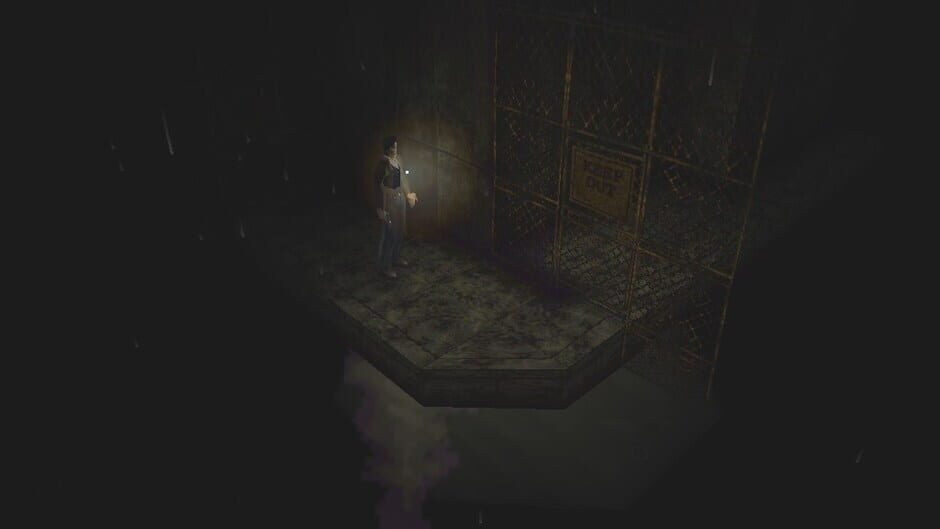
Castlevania: Symphony of the Night sits nearby, at a typical $89 loose and $167 boxed in the summer of 2026. So with these games, the case and manual are a large share of the price.
The late RPGs are the expensive shelf
The costliest PS1 games mostly came out as players moved on to the PS2. The Misadventures of Tron Bonne and Valkyrie Profile were released in 2000, the same year as the PlayStation 2, which likely contributed to their low sales and lack of reprints. Valkyrie Profile sold for a typical $139 loose and $272 boxed from 2025 into early 2026.
Suikoden II is said to have had fewer copies produced in North America. It went for a typical $108 loose and $190 boxed in the first half of 2025. Persona 2: Eternal Punishment sold for a typical $215 loose and $370 boxed in the same stretch of 2025 and 2026.
A modern release can cool an old price
When a costly PS1 game comes back, its price can drop. After Sony announced in February 2025 that the first three Armored Core games, released on PS1 between 1997 and 1999, would join the PS Plus Classics catalogue on PS4 and PS5, the originals were expected to fall in price.
Suikoden II is now on modern consoles too, as a digital HD Remaster. So before you pay a premium for an expensive PS1 game, check whether you can simply buy it again on a current system.
Collectors still chase the oddities
The same store owner said dedicated collectors still want games like Koudelka, Elemental Gearbolt and Revelations: Persona, even while some early 3D graphics haven't aged well and remakes give casual players less reason to seek out the originals.
That is the shape of PS1 collecting now. The hits are cheap and easy, and the money and the hunting are in a short list of strange, small-run games.