The Game Boy Advance came out in Japan on March 21, 2001, and by June 2010 the family had sold 81.51 million units. That is a lot of hardware and a lot of carts still in circulation, which is good news for anyone who wants to play them.
The less good news is that fakes are common, and the deceit occurs most with Pokémon games. The models matter more here than on any earlier Game Boy, too, because three of them light the screen in three different ways.
The model number on the SP decides the screen

The original Game Boy Advance has a reflective colour display that was hard to see in dark conditions. The SP fixed that in 2003 with a frontlight, and its clamshell made it the first Game Boy with a rechargeable battery. Then, on September 19, 2005, Nintendo released an SP in North America with a brighter backlit screen in place of the frontlight.
From the outside the two SPs look the same. The model number of the backlit one is AGS-101, while the original frontlit SP is AGS-001, and you'll find it on the label at the bottom of the unit. There is a quick button test as well: on the AGS-101 the brightness switch picks between two levels with no off setting, while on the frontlit model the same button turns the light on or off.

The difference shows in the price. A loose Pearl Blue AGS-101 sold for a typical $145 in May and June 2026. The AGS-101 was not officially released in Japan, so a Japanese SP is a frontlit one.
The SP has no headphone jack
Nintendo removed the 3.5 mm headphone jack from the SP, which every previous Game Boy had. Standard headphones need an optional adapter that plugs into the same port as the charger, so with the Nintendo adapter you can't charge and listen at the same time.
Third-party adapters split into two cords, power on one side and a headphone jack on the other. If sound matters to you, put one on the list with the console.
The Micro plays Advance games and nothing older

The Game Boy Micro came out in September 2005 with a backlit screen you can adjust and removable faceplates. Unlike every other Game Boy Advance model, though, it cannot play original Game Boy or Game Boy Color games. It also failed to meet Nintendo's sales expectations, selling about 2.4 million units worldwide.
So it is a lovely second machine and a poor only one. The original Advance and both SPs play the older carts, and the Nintendo DS, launched on November 21, 2004, plays Advance games as well.
Most carts have no battery to die
Most Game Boy Advance games have no battery at all. A cartridge database that lists the save type of thousands of licensed Advance carts puts only about one in five on the type of memory that can need a cell. The rest keep their saves in chips that hold data without power.
The ones that do have a battery are worth knowing before you buy: Castlevania: Circle of the Moon and Harmony of Dissonance, the Boktai games, Mega Man Battle Network and Mega Man Zero, and some copies of Metroid Fusion, among others. Replacing the cell means a tabbed CR1616, a tri-wing screwdriver and a soldering iron.
Ruby, Sapphire and Emerald only lose their clock
Pokémon Ruby, Sapphire and Emerald do have a battery, a CR1616, but it powers the clock only. The save is in flash. When the cell dies, the game says so at start-up: "The internal battery has run dry. The game can be played. However, clock-based events will no longer occur." Berries stop growing and the tide in Shoal Cave stops moving, but the save is untouched.
FireRed and LeafGreen dropped the clock, and the battery went with it. So if an Emerald loses its save, the battery is not to blame, and the cart deserves a closer look.
Check every Pokémon cart, and the box it came in
Start with the label. Every real Advance cart has numbers stamped into the right side of the label, and they can survive some wear. Pokémon Ruby, Sapphire and Emerald come in a deep, translucent red, blue and green, while FireRed and LeafGreen are bright and more opaque. Check the spelling of everything printed on the cart, and look for the trademark symbol, because a missing one means a fake.
You can even see part of the board without opening it. Look inside the opening where the pins are, ideally with a flashlight, and an authentic game shows the word "Nintendo" printed on the board above the pins. If it isn't there, you've got a bootleg.
Boxes are faked too. An authentic box is printed on grey cardboard with a fibrous texture, while most fakes are on bright white card stock, although some official Advance games did come in white boxes. And a box that says "Reproduction" anywhere on it is exactly what it says.
Every cart plays everywhere, so Japan is open
Like all Game Boy Advance systems, the Micro has no regional lockout on software, so a Japanese cart plays on a European or American console. That opens up games that never left Japan.

Mother 3 is the famous one. It was never localized or released outside Japan, due to its release near the end of the Advance's lifespan and Nintendo focusing on the DS. Even so, it is not expensive to own: loose Japanese copies sold for a typical $49 from late summer 2025 to mid 2026, and boxed ones for a typical $89 in 2026. An unofficial English fan translation came out in 2008 and received over 100,000 downloads within a week.
The big games are cheap
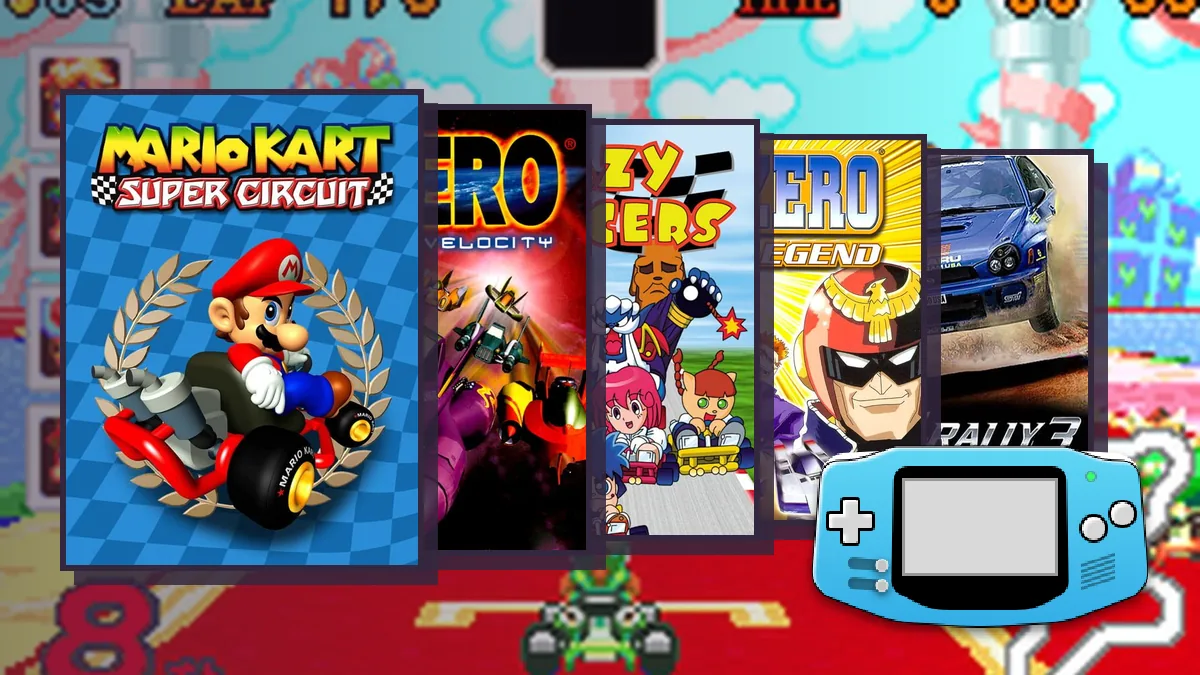
The best-known games on the system are easy on the wallet. Loose Mario Kart: Super Circuit sold for a typical $19 in May 2025, Golden Sun went for a typical $30 in January 2026, and the first Mega Man Battle Network sold for a typical $31 in late 2025. Metroid Fusion, one of the system's best, went for a typical $51 loose in autumn 2026.

Castlevania: Harmony of Dissonance sold for a typical $40 loose in early 2025 and Aria of Sorrow for a typical $100 loose in spring 2026. For most of the library, a loose cart costs about as much as a new game's DLC.
Pokémon is a price tier of its own
Ruby and Sapphire are the best-selling games on the system, and Pokémon still costs the most. Ruby and Sapphire sold 16.22 million copies and FireRed and LeafGreen 12.00 million, yet loose Ruby went for a typical $95 in late summer 2026 and Sapphire for a typical $100 earlier that year. Loose FireRed sold for a typical $130 in May 2026.
Emerald, which sold 6.32 million, about half as many as FireRed and LeafGreen, is the top of the tier: a typical $250 loose and $640 boxed in early 2026. That makes it the cart to check hardest.
The expensive shelf is the games nobody bought
Outside Pokémon, the costly Advance games are the ones that sold badly the first time. Ninja Five-O received generally positive reviews but failed to garner sales, and loose copies sold for a typical $322 from August 2025 to mid 2026. DemiKids, an Atlus spin-off of Megami Tensei, saw its Dark Version go for a typical $165 loose in 2025, and Tiny Toon Adventures: Scary Dreams sold for a typical $141 loose that year.
Sometimes the problem fixes itself. Ninja Five-O was re-released on February 25, 2025, for Switch, PlayStation and Windows, so you can now play it without hunting for the cart.