Sega discontinued the Dreamcast on March 31, 2001, after selling 9.13 million of them, and it was the last console Sega made. Sega chose its own GD-ROM disc format to avoid the expense of DVD licensing, and its short life left behind a library that is mostly cheap, a handful of late releases that are not, and a hardware problem every buyer should know about.
The good news is that the Dreamcast never quite died. Its open, hackable design kept a homebrew scene going, and people are still making new games for it more than 25 years later.
Test the disc drive before anything else

Original Dreamcast discs are read by a mechanical optical drive, and age eventually affects every one. A good console should boot games promptly, load reliably and keep working after it warms up. Repeated resets to the Dreamcast menu, constant seeking noises or a game freezing at loading screens can point to drive wear or a power supply problem.
So test more than one game if you can, ideally a clean pressed disc. Look inside the controller ports as well: each should hold a controller securely, and a console that only works through one port is a frustrating purchase for a system celebrated for local multiplayer. An intermittent drive isn't necessarily a deal-breaker if the price reflects the repair, but it should never be sold to you as a fully working machine.
An SD card drive can replace the disc drive
Because the drive is the weak part, replacing it has become routine. The KatanaDrive, for example, is a drive emulator for VA1 consoles that loads games from an SD card and replaces the ageing disc drive outright.
VA1 is the motherboard revision most buyers will encounter. VA0 consoles are early units, mostly Japanese, and VA2 systems are later and can be more restrictive for certain modifications. Don't let the revision outweigh condition, though: a clean VA1 with a healthy drive beats a poorly stored early model bought for its label.
Expect to set the clock
The Dreamcast keeps its clock on a rechargeable internal battery. When that fails, the console asks for the date and time after being unplugged. It is common rather than catastrophic, but replacing it usually means opening the console and soldering in a new battery.
For a player who leaves the console plugged in, it barely matters. For anyone who moves their setup around, factor it into the price.
The VMU beeps when its batteries are flat

The Dreamcast's memory card, the VMU, has a small screen of its own and runs on two CR2032 batteries. Without them it still works as a memory card, but it can't play its downloadable mini-games, and it beeps when the Dreamcast is switched on.
That beep is the sound of a lot of used VMUs, and it isn't a fault: new batteries silence it, and saves live in its flash memory, which holds 200 blocks for your games.
Original discs are region-locked
The Dreamcast is region locked for original discs, so a Japanese console won't simply play your American or European collection. A Japanese Dreamcast can still make sense if you collect imports, since Japanese games are often cheaper and the artwork is frequently different.
For most people, though, a console from your own region plus a well-chosen library is the cleanest route. Imports are a second shelf, not a replacement for the first.
Launch discs were faulty from the start
The Dreamcast's launch was marred by a glitch at one of Sega's manufacturing plants that produced defective discs. In 1999 Sega confirmed that the affected discs included the web browser disc shipped with the console, Blue Stinger and Sonic Adventure, and one store manager said one in ten copies of some launch games came back defective, easily.
So a launch-era disc that freezes at startup might be a bad pressing rather than a bad console. Test it in a second machine before you blame either.
Bootleg Dreamcast discs are everywhere
Unlike the PlayStation or Saturn, whose disc security held for years, the Dreamcast's did not, and fake games for it are out there in abundance. You can't open a disc to check a chip, but authentic copies carry identifying writing in the inner ring, embedded in the disc itself rather than printed on the art.
Hold any expensive Dreamcast disc up to the light and look for that ring. A disc with nothing there, no manual and a bargain price is almost certainly a copy.
Sega's hits cost very little
The famous games are cheap. Loose Crazy Taxi sold for a typical $18 from late 2025 into early 2026, Soul Calibur for a typical $18 and Shenmue for a typical $24 in late 2025. Sonic Adventure went for a typical $39 loose, and Jet Grind Radio for a typical $46.

Boxed copies cost a little more: a boxed Shenmue sold for a typical $40 and a boxed Soul Calibur for a typical $40 in December 2025. Skies of Arcadia sits higher, at a typical $85 loose from late 2025 into early 2026 and $140 boxed in February and March 2026.
The expensive shelf arrived as the console was dying
The costly Dreamcast games are the late and niche ones. Illbleed sold for a typical $160 loose and $315 boxed from 2025 into 2026. Giga Wing 2 went for a typical $251 boxed in 2025, and Project Justice for a typical $95 loose and $131 boxed.
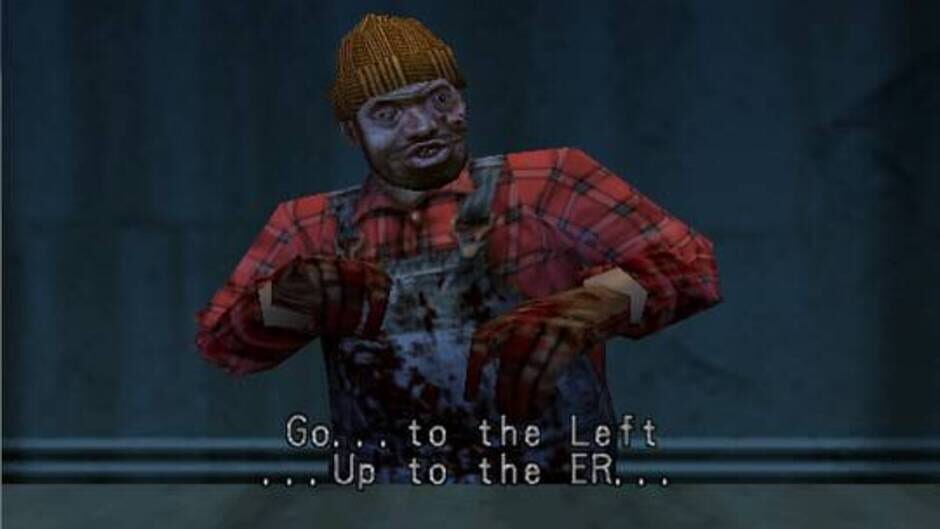
Europe has its own version of the story. Cannon Spike, a shooter starring Capcom characters, was the final game to release on the Dreamcast in Europe, and because it launched when the console was as good as dead, it was selling for around £300 on eBay in October 2024.
People are still making Dreamcast games
The Dreamcast's open, hackable design and light online footprint let a homebrew scene keep making games long after Sega left the hardware business. In 2026 a survival-horror game called White Creek hit Kickstarter as a new Dreamcast project.
For a collector that means the library hasn't closed. New releases are a shelf of their own, and the ones you want are worth buying when they come out rather than hunting for later.