Sega sold 30.75 million Genesis consoles, the Mega Drive everywhere outside North America, and the system plays a library of more than 800 games on cartridges. It was released in several different versions, some of them made by other companies.
For a collector that means two things. The games are mostly cheap and come in sturdy plastic cases, and the hardware needs a little homework before you pick which Genesis to own.
The Model 1 is the safe pick, the Model 2 the easy one

The Model 1 is usually the best all-around pick for collectors who want compatibility with every add-on. Its rear outputs give mono sound, though, and stereo comes from a headphone jack on the front. The Model 2 replaced those with a single port on the back for composite video, RGB and stereo sound, which makes it the least fussy console for regular play.
The Model 3 is the most limited. It is the smallest unit, but it only makes sense if you don't care about the Sega CD, the 32X or other expansions, so don't buy it as your only Genesis.
Check which games your model will actually run
From 1991, Sega built a check called the Trademark Security System into the Genesis III edition of the console: when a cartridge goes in, the console looks for the word "SEGA" in the cartridge's memory. Sega even demonstrated it rejecting an Ishido cartridge, one of Accolade's unlicensed games, at the Winter Consumer Electronics Show in January 1991.
Accolade later added the code to games like HardBall! and Star Control, but the earliest unlicensed carts are the ones to test on your specific console. Master System games are a separate question: the Power Base Converter is designed for the Model 1, and neither it nor the later Master System Converter II works with the Nomad or the Genesis 3.
Plastic cases made boxed copies cheap
For the most part, Mega Drive games came in plastic clamshell cases, and those cases survived where paper boxes didn't. That keeps complete copies close to loose prices. In September 2026, loose Sonic the Hedgehog 2 sold for a typical $11 and a boxed one for a typical $19, while Sonic the Hedgehog went for a typical $15 loose and $25 boxed.

Buyers want those cases filled. A retro store owner said in October 2026 that condition matters a great deal with Genesis collectors, that many want complete copies with the original box and manual, and that copies missing them can sit on the shelves much longer.
Some Genesis boxes are cardboard, and that is the collectible part
Not every game got a clamshell. Early Electronic Arts games from 1990 and early 1991 came in hard-top cardboard boxes in North America, much like PC games of the era, before EA moved to the plastic case. Accolade's first unlicensed games came in cardboard too.
From 1994, many later North American games were released only in cardboard flip-top boxes, including Sonic & Knuckles, Sonic Classics and Jurassic Park. Sonic & Knuckles was the only licensed game in cardboard in every region, because of its unusual cartridge shape. So a complete copy of these means a cardboard box, and cardboard rarely survives as well as plastic.
The famous games cost the least
Sega's hits and the big licences are everywhere. Mortal Kombat sold for a typical $10 loose in summer 2025, and Streets of Rage 2 for a typical $23 loose the same summer. Sonic & Knuckles went for a typical $30 loose and $70 boxed.
That fits what the store owner described: Sonic the Hedgehog, Streets of Rage, Michael Jackson's Moonwalker and Mortal Kombat sell reasonably well, while demand becomes more specialised beyond the well-known titles. In other words, Genesis inventory moves more slowly than Nintendo, which keeps it affordable.
A middle tier of action games costs more
Below the famous names and above the commons sits a tier of action games collectors seek out. Castlevania: Bloodlines sold for a typical $60 loose and $202 boxed in summer 2025, and Gunstar Heroes went for a typical $64 loose that year.

These are the games where boxes start to matter. The boxed Bloodlines costs more than three times the cart, which is a much wider gap than on Sonic.
The expensive shelf is games that came late and quietly
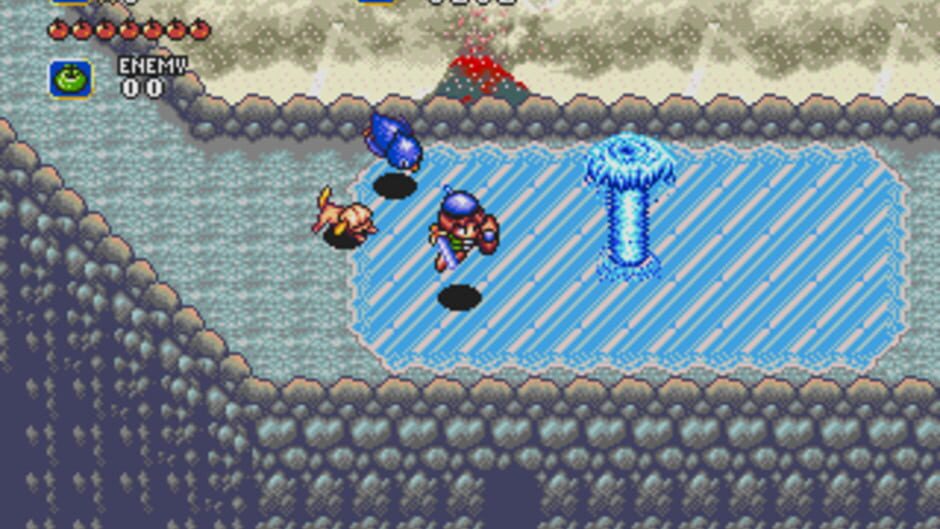
The costly Genesis games tend to be good games that few people noticed. Crusader of Centy was released in Japan in 1994, and Sega's North American branch passed on publishing it, so Atlus USA released it there in 1995. Loose copies sold for a typical $432 from early 2025 into 2026, and boxed copies for a typical $1,800.
MUSHA, a shooter published in America by Seismic, commands a high price today thanks to its middling performance at the time. Loose copies sold for a typical $300 from 2025 into early 2026, and boxed ones for a typical $850. Both games are playable far more cheaply now: Crusader of Centy is on Nintendo Switch Online, and MUSHA has been re-released on the Wii and the Switch.
Fakes follow the expensive games
Crusader of Centy is hard to find in any region, and there are plenty of fakes out there selling for less to fool collectors. The cheaper-than-usual copy is the one to be suspicious of.
Games that never came out in the West give themselves away more easily. Battle Mania 2 only had a limited release in Japan and Korea, so a copy dressed up as an American release is a fake. Whenever a Genesis game costs hundreds, ask for photos of the board inside the cart before you pay.
The Nomad plays your carts on the go, at a price

The Genesis Nomad came out in October 1995, only in North America, as a handheld that plays Genesis cartridges on a 3.25-inch backlit colour screen. It runs on six AA batteries for about four hours. About 1 million were sold, and it is considered a commercial failure.
A loose Nomad sold for a typical $310 from late 2025 into early 2026. It plays nearly the entire Genesis library, but not the 32X, the Sega CD or the Power Base Converter, and it uses regional lockout.
The CDX is a Genesis and a Sega CD in one
The Sega CD added its own library of disc games on top of the cartridges. Sega also sold the two together as the Genesis CDX, a combined, semi-portable unit, for $399.95, roughly $100 more than the separate Genesis and Sega CD cost at the time. It was a luxury even new.
It still is. A loose CDX sold for a typical $540 from late 2025 into early 2026. Test it with a disc before you pay, and treat the CDX as a nice piece rather than the cheap way into Sega CD games.