More than 1,000 games came out for the Game Boy, and the family it started sold 118.69 million units, counting the Game Boy Color. When Nintendo stopped making it, no console had ever sold more. That is the reason the grey carts still turn up in every junk bin and attic box you could name.
The other half of the story is age. The first model went on sale in Japan in 1989, so every cart has had more than thirty years to lose its save, and every popular one has had time to grow a fake twin.
The Pocket and the Light have the better screens

The original Game Boy runs on four AA batteries for up to 30 hours, and its screen shows four shades of green. In 1995 Nintendo sold it in red, yellow, green, blue, black, white and transparent cases under the Play It Loud! banner, but that revision was purely cosmetic, so a clear one plays exactly like a grey one.
The real change came in 1996 with the Game Boy Pocket. It needs just two AAA batteries, at the expense of providing just 10 hours of play, and in return its much-improved screen mostly eliminated ghosting and shows a true black-and-white picture instead of the green. Its smaller link port does need an adapter to connect to an original Game Boy, though.

The Game Boy Light kept the Pocket's screen and added a backlight with a blue-green glow, like the digital wristwatches of the day. It was released exclusively in Japan in 1998, in gold and silver, and gives about 12 hours of play on two AA batteries with the light on.
A cart that saves needs a working battery
Games that keep a save on the cart do it with a tiny CR1616 coin cell, and Nintendo appears to have soldered these in place. Getting inside takes a GameBit screwdriver, the smaller of the two sizes, because Nintendo never meant owners to open the cart at all.
In 2010 one writer bought nine unboxed carts at a junk store for $2 each, plus $3 for Mystic Quest, the one he really wanted. As luck would have it, its save battery was dead. The new cell had to be ordered in for $3.75, and then he had to pry the old one out of its soldered plates.
So before you pay for any game that saves, start it, save, switch the system off and load the save again. A cart that forgets is either due a new battery or, as the next point explains, not a real cart.
Look at the top of the cart first

Almost all fake Game Boy games are made in China and sold cheap. The quickest check is the top edge: every real Game Boy game has "Nintendo GAME BOY TM" moulded there, whatever the region, while bootlegs and reproductions usually say "GAME" or nothing at all.
The label is the next giveaway. Real labels are printed on satin finish paper with rounded corners, and a fake often uses the box art instead of the official cart art, sometimes stretched and pixelated. Turn it over, too, because a Phillips head screw on the back means it is fake. Inside, fakes often have black blobs of epoxy over their chips, which Nintendo almost never used.
Be careful with sealed copies as well. New copies of Metal Masters, a 1993 port with limited distribution, have been going for really cheap since November 2025, and they are so cheap that they are too good to be true.
The cart colour tells you which machine it needs
Game Boy carts come in three kinds. Grey ones are the original Game Boy games. Black ones are Dual Mode carts, which hold a Game Boy version and a Game Boy Color version and boot whichever suits the hardware. Clear ones were designed specifically for the Game Boy Color and are incompatible with the older monochrome models, so they are no use on an original Game Boy or a Pocket.
That also makes colour a fake check. Pokémon came on coloured carts, so a Pokémon Blue in a standard grey cart is a fake, as one collector found out after buying one without knowing.
Every cart plays everywhere, so read the label for the region
The Game Boy is region-free, so a Japanese cart runs on a British Game Boy with no adapter. That is useful for imports, and it also means the label is the only place the region shows.
Most fakes carry an American ESRB rating, since the United States was the bigger market. Every licensed game has the Nintendo Seal of Quality, which is an oval on American carts and a circle on European ones, and Japanese games use no seal at all. So a cart with an ESRB rating and a circular seal is a sure sign of a fake.
Most of the library costs less than lunch
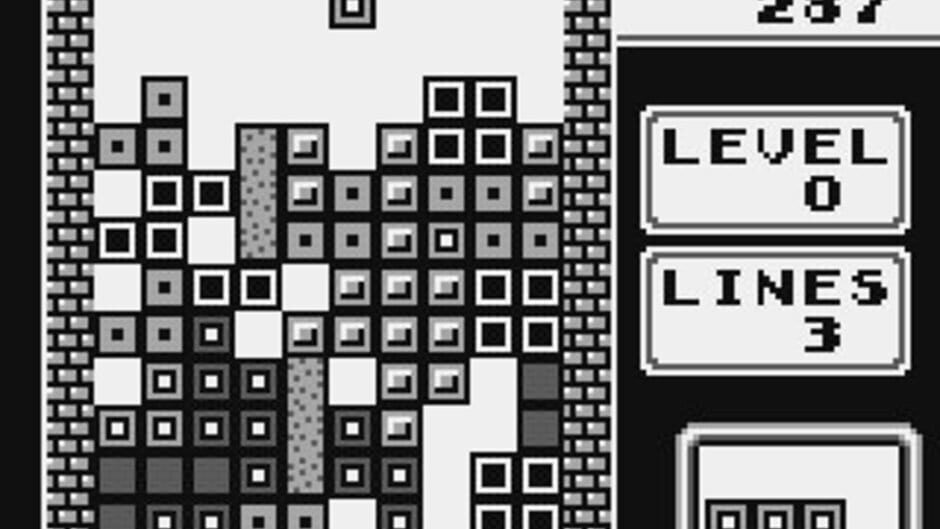
Tetris was bundled with the Game Boy in every region except Japan and shipped more than 35 million copies, so loose carts are everywhere. In September 2026 they sold for a typical $15 on eBay. Super Mario Land went for a typical $20 loose in the same weeks, and Mega Man: Dr. Wily's Revenge, the first Mega Man on the system, sold for a typical $18 loose in late 2025.
The famous games are the cheap ones because so many were made. That is the opposite of how the expensive shelf works.
The box costs more than the game
Loose carts are the cheap way in, and boxes are where the price climbs. A boxed Tetris sold for a typical $31 in summer 2026, about double the cart alone. The gap grows with demand: The Legend of Zelda: Link's Awakening went for a typical $39 loose and $220 boxed over the same months.
Pokémon shows it best. Pokémon Red, Blue and Yellow sold more than 46 million copies, and a loose Pokémon Red still sold for a typical $59 in September 2026, about four times a Tetris. Boxed, it went for a typical $470 that summer, which is a lot of money for the top-selling franchise on the system.
The expensive shelf is small print runs
The Game Boy games that cost real money are rarely the famous ones. They are titles with a low number of copies in circulation, Atlus wasn't keen on producing too many copies of its Puzzle Boy games, so Spud's Adventure sold for a typical $550 loose across 2025 and early 2026, and Amazing Tater went for a typical $602 loose in 2025.

Capcom and Konami had them too. Mega Man V, the fifth Game Boy Mega Man, came out in 1994 and sold for a typical $230 loose in 2025, more than twelve times the first Game Boy Mega Man. Kid Dracula, whose scarcity has driven up prices, went for a typical $181 loose from 2025 into early 2026. Sumo Fighter, hard to find due to the small number of copies in circulation, sold for a typical $240 loose in 2025. As on most handhelds, the price follows the print run rather than the fame.
Not For Resale carts are a small set of their own
Some carts were never meant for sale at all, and they usually contain a very early version of the game. Most are easy to spot, with "Not for Resale" printed in red on a white label. Others have plain white stickers on the back saying not for sale and property of Nintendo.
The known list is short, from Donkey Kong Land and Kirby's Dream Land 2 to Link's Awakening and Pokémon Yellow, and it is quite easy to collect a whole set, since there are not many known Not For Resale Game Boy games. For a collector who likes a finish line, that is a nice change in this hobby.
A flash cart keeps the expensive carts safe
Once you own a cart that cost real money, back it up and play the game from a flash cart like the EZ Flash Jr or Everdrive GB. With some games, there is a genuine chance you may never find another copy for the same price you paid.
The flash cart takes the wear instead. The original goes back on the shelf, where nobody can drop it in a car park.