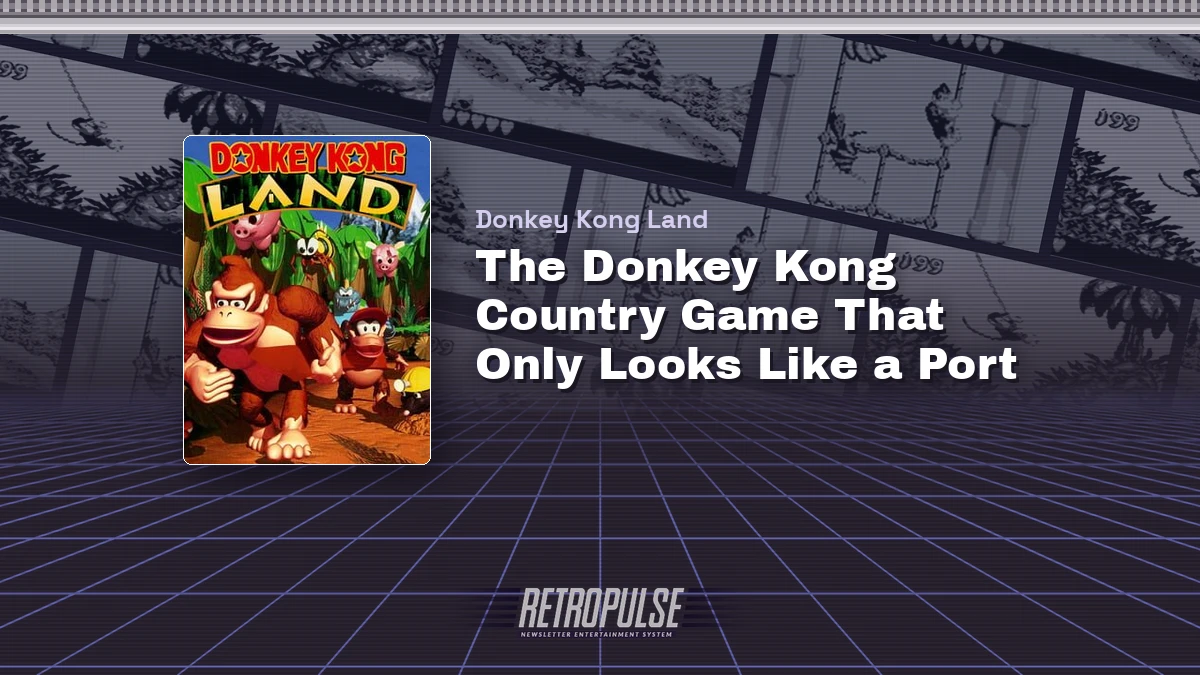
Donkey Kong Land was supposed to be a port. Rare's co-founder Tim Stamper asked the studio's Game Boy programmer, Paul Machacek, to squeeze Donkey Kong Country onto the handheld, and Machacek talked him into something else: a similar but original game. He argued it would barely take more effort and would reach people who hadn't bought Country, so the two games share a look and a cast but not a single level layout.
Its story even jokes about the job. Cranky Kong bets Donkey and Diddy that they can't pull off Donkey Kong Country's success on 8-bit hardware, then talks King K. Rool into stealing the banana hoard again to make it interesting. According to the manual, the bet is about having fun without "fancy graphics" and "modern music", which is a lot of sass from a gorilla on a monochrome screen.
Rare's yellow cartridge
Work began in 1994, alongside Donkey Kong Country itself, and took a year. Machacek first spent about three weeks adapting the engine from Rare's Game Boy Battletoads, and the team grew from just him to more than 15 people, working apart from the SNES teams on a spare Silicon Graphics workstation with a custom level editor. It came out in North America on June 26, 1995, in Japan as Super Donkey Kong GB that July and in Europe in August.
Nintendo shipped it in banana yellow cartridges instead of the usual grey, a tradition that continued through its sequels and Donkey Kong 64. It sold 3.91 million copies, the best-selling Donkey Kong game on a Game Boy, and two Donkey Kong Land sequels followed. A few of its ideas even made it back into the main series, K. Rool's pirate ship among them.
Country's moves, new levels
You control Donkey and Diddy across 30 levels in four worlds, swapping between them at will: Donkey is stronger and Diddy is faster. They jump, stomp enemies, swing on vines and blast out of barrel cannons, and it all feels like Country in miniature. The worlds go from snowy mountains and a pirate ship to beaches and underwater stages, then caves and rocky mountains, and finally a huge city that the manual hints is where Cranky fought Mario on a construction site.
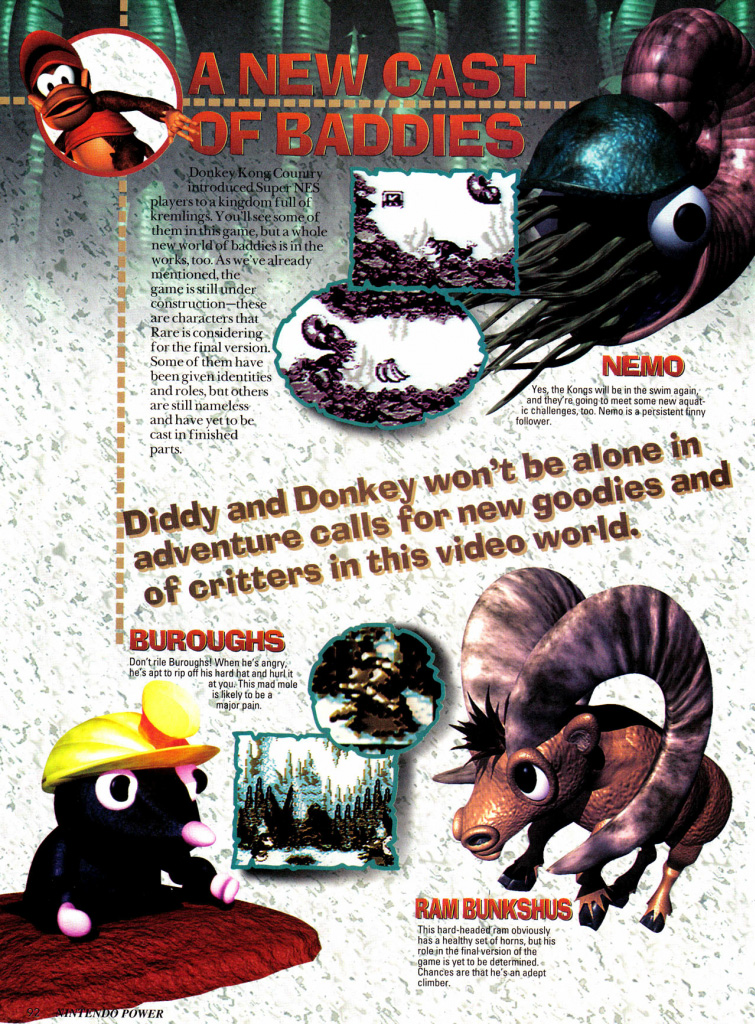
What makes it more than a shrunken copy is the new material. Cliffs and clouds join the familiar jungles and coral reefs, and some ideas exist nowhere else, such as a cliff level where rocks drop out of holes to crush you, or the Swirlwind, a tornado that hurts if you run into it but can be bounced on like a tire. The bosses are smaller than the console giants but surprisingly inventive, and all of them except the final King K. Rool fight are unique to this game.
Pre-rendered art in four shades of grey
Like Country, Land uses pre-rendered graphics compressed into sprites, and because the Game Boy's architecture is similar to the SNES at a basic level, Machacek could carry Country's artwork across. The results were impressive enough that retrospective reviewers call it a technical achievement. However, the art was reduced to the system's four shades rather than redrawn, so the screens look busier than a typical Game Boy game. One critic was much harsher, calling it "a blurry grey soup of pixel-junk", and enemies blending into the backgrounds can make it needlessly difficult.
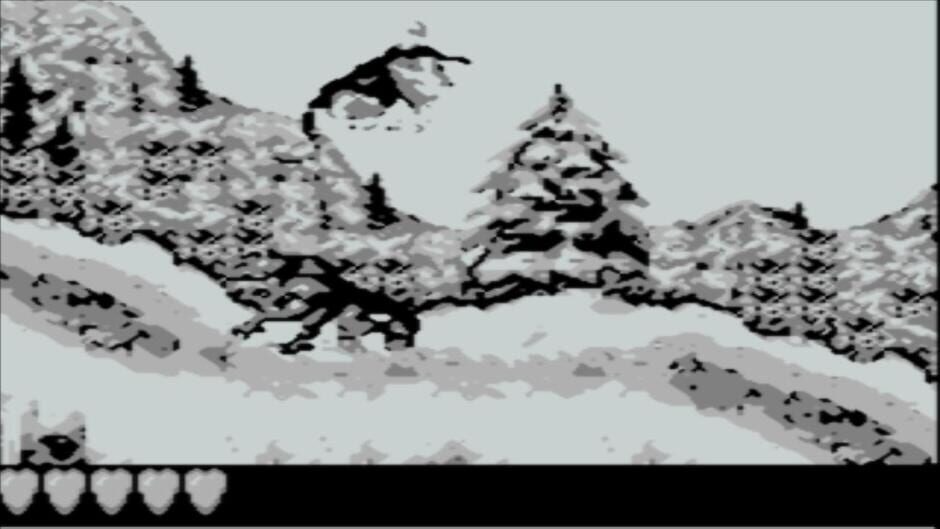
The camera is also zoomed in tight because of the low resolution, which makes the action feel cramped. On a Super Game Boy, at least, the game gets color palettes and a jungle border, and that color carries over to the Game Boy Color and Game Boy Advance.
David Wise and Graeme Norgate's 8-bit jungle
The music is where Land really shines. David Wise and Graeme Norgate converted Wise's Country soundtrack to the Game Boy's sound chip, and Norgate wrote new tracks for the new places. It was his first Game Boy project, he called it his most upbeat work, and Wise taught him tricks along the way: "You can repeat the melody three steps forward at a third of the volume to emulate an echo". One review ranked it among the best music on the Game Boy. Norgate later reused the boss theme in the Nintendo 64 game Blast Corps, and when asked why, he blamed laziness.
Kong letters as save points
Some changes were made for the small screen. Because reacting to obstacles is harder on the Game Boy's display, the team made boss fights more predictable and gave Expresso the ostrich the ability to defeat enemies, while the animal buddies were cut down to Expresso and Rambi the rhino. The K-O-N-G letters, which earned an extra life in Country, now save your progress instead. In theory that makes the game easier, but some letters are hidden well, so saving can be more frustrating than it should be.
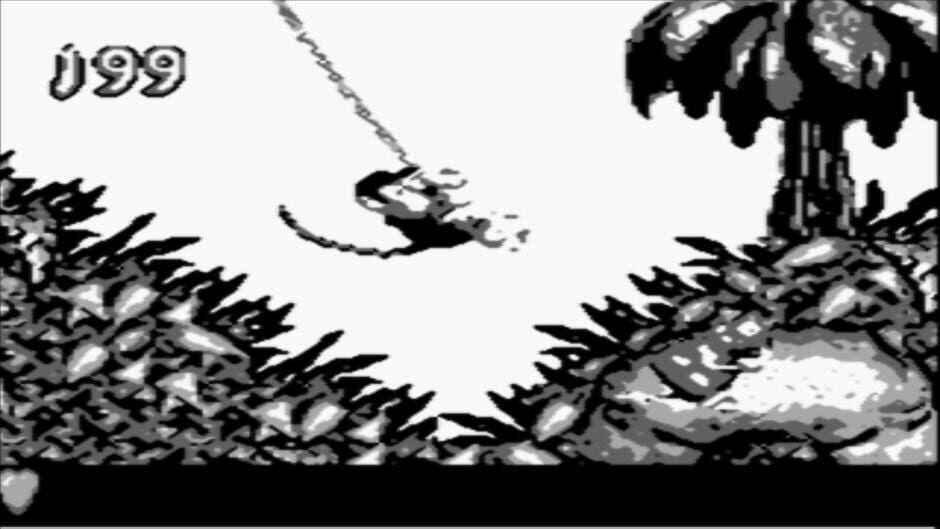
There's also one irritating bug. The scrolling sometimes lags when you fall, and occasionally enough that the game decides you dropped into a pit. Inside the code, meanwhile, a string named PFLOYD protects your save files, most likely a nod to Pink Floyd. (Somebody at Rare had good taste and a sense of humor about checksums.)
A tougher sell today, still worth a look
Donkey Kong Land is a better game than its reputation, and it was a better idea than a straight port. The visuals can be hard to read and the save system is fussy, but the levels are its own and the music is excellent. Even Machacek still counts it among his favorite projects. It's also easy to play now, since it has been in the Game Boy library in Nintendo Classics since November 2024.