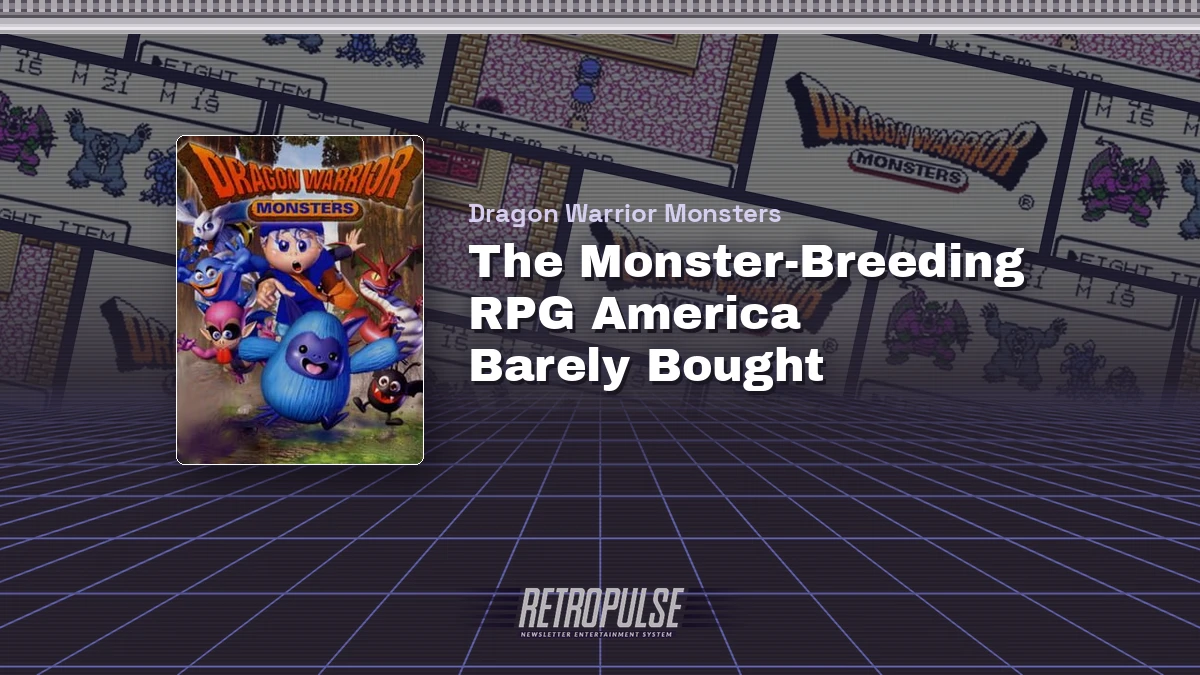
Dragon Warrior Monsters was a phenomenon in Japan and a footnote almost everywhere else. It sold 2.35 million copies there, 1.22 million of them in 1998 alone, which made it the fourth best-selling game of the year. In North America, meanwhile, it had sold just 60,000 copies by April 2000.
It also beat the hardware it was made for. The cartridge works on both the original Game Boy and the Game Boy Color, and in Japan it came out on September 25, 1998, before the Game Boy Color itself had launched. Early copies came on the grey cartridges of ordinary Game Boy games, and only later printings switched to the black ones that marked games for both systems.
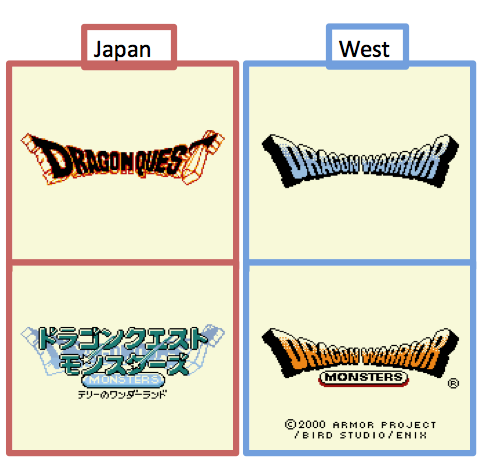
The first Dragon Quest on a handheld
This was the first Dragon Quest game made for a handheld, and the first in the series to come out in Europe. Tose developed it, but the series' core team was involved: Yuji Horii on design and scenario, Akira Toriyama on character design and Koichi Sugiyama on music. Eidos co-published it in North America and Europe in early 2000.
Its timing invited an obvious comparison. In Japan it was described as practically throwing down a challenge to Pokémon, and Western critics compared the two constantly, some telling fans to play it while they waited for Pokémon Gold and Silver. Most of them also pointed to the breeding system as the thing that set it apart. Reviews were good, too, with IGN giving it 9 out of 10, GameSpot an 8.7 and Famitsu 35 out of 40. It started a whole series, a 3DS remake followed in Japan, and the Game Boy Color original was later ported to the Switch.
Breed two monsters, raise the child
The story is borrowed from Dragon Quest VI. Terry and his sister Milly are children, and one night a monster snatches Milly away. A second creature, Watabou, takes Terry to the Kingdom of GreatTree, where winning the Starry Night Tournament comes with a wish, so Terry sets off with his first monster, a slime called Slib, to train a team that can win it.
You don't catch monsters with a ball here. Instead, you throw meat during a battle, and if the monster likes it, it may join you at the end. The real hook, however, is breeding. Once you pass Class F in the arena, the Shrine of Starry Night will pair any male and female monster of level 10 or higher, and both parents leave to produce an egg. The child inherits traits and skills from both, and its plus number raises its level cap. Bred monsters are much stronger than wild ones, some species only come from breeding, and the game is far harder if you skip it. Players still rave about this system, often calling it deeper than anything Pokémon offered.
Toriyama's monsters in a few colors
The cast comes from Akira Toriyama's Dragon Quest designs, and battles put big, clear monster sprites against a plain background, which reads well even on the original Game Boy's screen.

The dungeons behind the travel gates are mostly generated at random, with a few fixed maze and treasure floors mixed in. Later gates add poison swamps, lava and barriers that hurt as you walk on them, plus Mimics pretending to be treasure chests. (Never trust a chest that smiles.)
Sugiyama's music, pocket-sized
Koichi Sugiyama scored the game, so the music is unmistakably Dragon Quest, and critics at the time praised it along with the visuals. Coming out of a Game Boy speaker it sounds a little thin, but the melodies are strong enough to survive it.
Gates, tactics and a little theft
You reach new worlds through gates beneath the throne room, and each one opens only after you clear the matching class in the arena. Arena ranks each hold three battles, starting at G and climbing to S. At the bottom of each world waits a boss; some join you automatically, some can be won over with meat, and some never join at all. One hidden gate in the library opens only after you've befriended more than 100 different monsters.

In battle, your monsters act on their own tactics rather than direct orders, and wild-caught monsters with a high wildness rating may ignore you entirely. Training them and feeding them meat brings it down, while leaving them on the farm awake makes them wilder again. Rival monster masters roam the worlds too, and the game openly encourages you to win their monsters over with meat, which is theft with extra steps. With a link cable, two players can even breed their monsters together, and both walk away with an egg whose child is slightly stronger than usual.
Pokémon's grown-up cousin
Dragon Warrior Monsters is grindy and a little dry next to Pokémon, but its breeding system gives it a depth that keeps people coming back. If you like building a team over many generations, it's one of the best things on the Game Boy Color, and since it runs on an original Game Boy as well, any model will do.