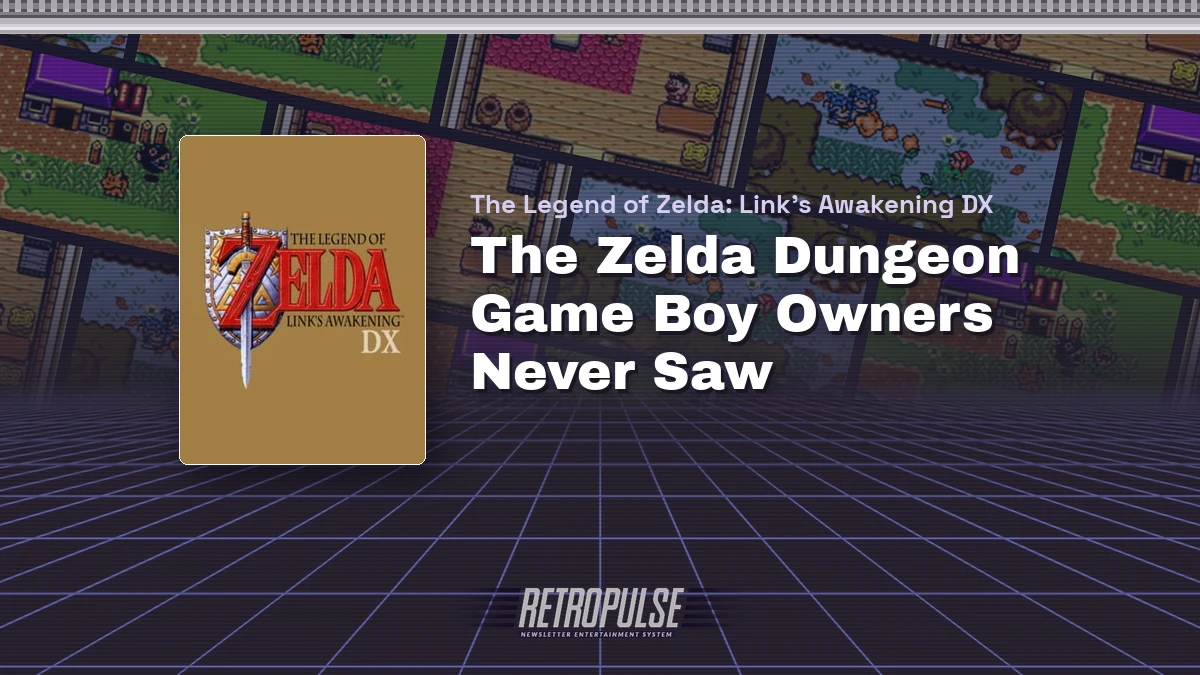
Link's Awakening was never an official project to begin with. It started as an unsanctioned side project, when programmer Kazuaki Morita built a Zelda-like game on one of the first Game Boy development kits and colleagues joined him after hours in what felt to them like an "afterschool club". Director Takashi Tezuka then asked for permission to make a real handheld Zelda, and what was meant to be a port of A Link to the Past grew into an original game. He also had Twin Peaks on his mind, which explains a great deal about the people on the island.
Five years later, Nintendo brought it back in color to promote the launch of the Game Boy Color, and the DX edition kept a secret from anyone still holding the old grey brick. Its new dungeon is built around color puzzles, so it cannot be opened on the earlier non-color Game Boy models at all. The cartridge still runs on the old machine; the dungeon simply never lets you in.
A hobby project that sold millions
The original had already done its job. It topped the Famitsu chart in Japan in June 1993 and helped push Game Boy sales up 13 percent that year. By 2004 it had sold 3.83 million copies, and DX added another 2.22 million on top, which is a lot of people for a game that began as an after-hours experiment.
The color edition kept earning long after that. When it reappeared on the 3DS Virtual Console in June 2011, it became the top-selling downloadable 3DS game of the year, with more than 338,700 copies sold. Its place in the series runs deeper than sales, however. It was the first Zelda on a handheld, and series producer Eiji Aonuma later called it the "quintessential isometric Zelda game".
A Zelda game with no Zelda in it
Tezuka wanted a spin-off, so he told writer Kensuke Tanabe to leave out the series staples, Princess Zelda and Hyrule included. Tanabe came back with an island that has an egg on top of a mountain, and Yoshiaki Koizumi turned that island into a dream. Link washes up on Koholint Island after a storm wrecks his boat and wakes in the house of Tarin and his daughter Marin. To leave, he has to gather eight instruments and wake the Wind Fish asleep in that egg, which gets uncomfortable once a mural in the Ancient Ruins reveals that the whole island is the Wind Fish's dream.
Tezuka said it felt like making a "parody of The Legend of Zelda", and the cast proves him right. From Twin Peaks he took the idea of a small community of "suspicious types", and the team then filled it with guests who had no business being there: Wart, Yoshi, Kirby, and Mr. Write, a lookalike of Dr. Wright from SimCity. There is even an enemy called Anti-Kirby that inhales almost anything. None of those cameos were authorized, which only makes them better.
Color for a game critics wanted in color
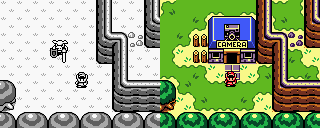
Back in 1993, the main complaints were the control scheme and the monochrome graphics, which some critics found hard to read. DX answers the second one. Every screen is now fully colorized, and reviewers singled out the color as an improvement. One even argued that it made the game easier, since fewer deaths came from graphics you couldn't make out.

The scores followed. DX holds a 91% average on GameRankings, and IGN gave it a perfect score, praising how Nintendo added new content while leaving the original game intact. As a result, the black and white version became the one you play out of curiosity.
Totaka's song is hiding in Richard's villa
The music came from Minako Hamano, Kozue Ishikawa, whose first game project this was, and Kazumi Totaka, who also handled the sound programming and every sound effect. Totaka likes to hide a short tune of his own in his games, and here it waits in Richard's villa: stand around for two and a half minutes and it plays. Richard himself is most likely a nod to Kaeru no Tame ni Kane wa Naru, the Game Boy game whose engine Link's Awakening reuses, so his villa plays a remix of that game's main theme with frogs hopping around the place.
DX brings a new piece as well. The Color Dungeon plays Yuichi Ozaki's take on Kondo's dungeon theme from the original The Legend of Zelda. Meanwhile, the German release hides a name trick: call Link MOYSE, after translator Claude Moyse, and the music turns into a techno remix. In DX, the same name plays a remix of Totaka's song instead, because of course it does.
Twelve photos and a dungeon in color
Underneath it all, this is classic top-down Zelda, except that some dungeon passages switch to a side-scrolling view with a bit of platforming. The Color Dungeon is optional, with its own enemies and puzzles built on color, and it is the only place in the game with green Rupees. They are worth five each, while the blue ones elsewhere are worth one, a reversal of the usual values in the series. Clear it and you choose a red tunic, which raises attack, or a blue one, which raises defense.

The other big addition is the camera shop. Once you visit, its owner turns up at certain spots around the island to take your picture, twelve photos in all, which you can view at the shop or print on the Game Boy Printer. One of them requires you to steal from the shop, which brands you THIEF for the rest of the game and gets you killed the first time you walk back in. So completing the album means committing a crime on camera. (Nintendo's idea of a scrapbook is a little dark.)
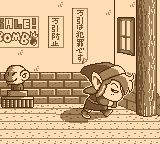
DX also adds hint messages to the boss battles. On top of that, the bomb arrow trick works here: equip the bow and the bombs, press both buttons at the same time, and Link fires an arrow with a bomb attached. Whether that was ever intended has never been confirmed.
Still the version to play
Plenty of players still call Link's Awakening their favorite Zelda, and DX is the version to play. It adds a dungeon and a photo album without touching what made the island special.
It also plays on the original Game Boy, minus the Color Dungeon. The 2019 Switch game, on the other hand, is a separate high-definition remake by Grezzo. If you want DX itself on a Switch, it is part of the Game Boy library in Nintendo Classics.