The first remake of Dragon Quest III never left Japan. The Super Famicom version arrived in late 1996, at the tail end of the console's life, and with Enix's American branch shut down since 1995 there was nobody to bring it over. By the time Enix returned to North America, the SNES was gone. So when the remake finally reached English-speaking players, it came in an unlikely form: a Game Boy Color cartridge, based on that Super Famicom version, released in North America on July 17, 2001.
It also came with a few surprises. At the very start, the game puts you through a dream full of moral dilemmas, in the style of Ultima IV, and your answers decide your personality. It was the first Game Boy Color RPG to carry a Teen rating, too, because the new translation restored adult material cut from the original American release.

The Super Famicom remake in your pocket
Dragon Quest III first appeared on the Famicom in 1988, and it reached the NES as Dragon Warrior III in 1992. For the Game Boy Color, Tose handled the conversion, and Japan got it on December 8, 2000. It sold 638,551 copies there, enough to make it the fifth best-selling Game Boy Color game in Japan, though well short of the Super Famicom remake's 1.4 million.
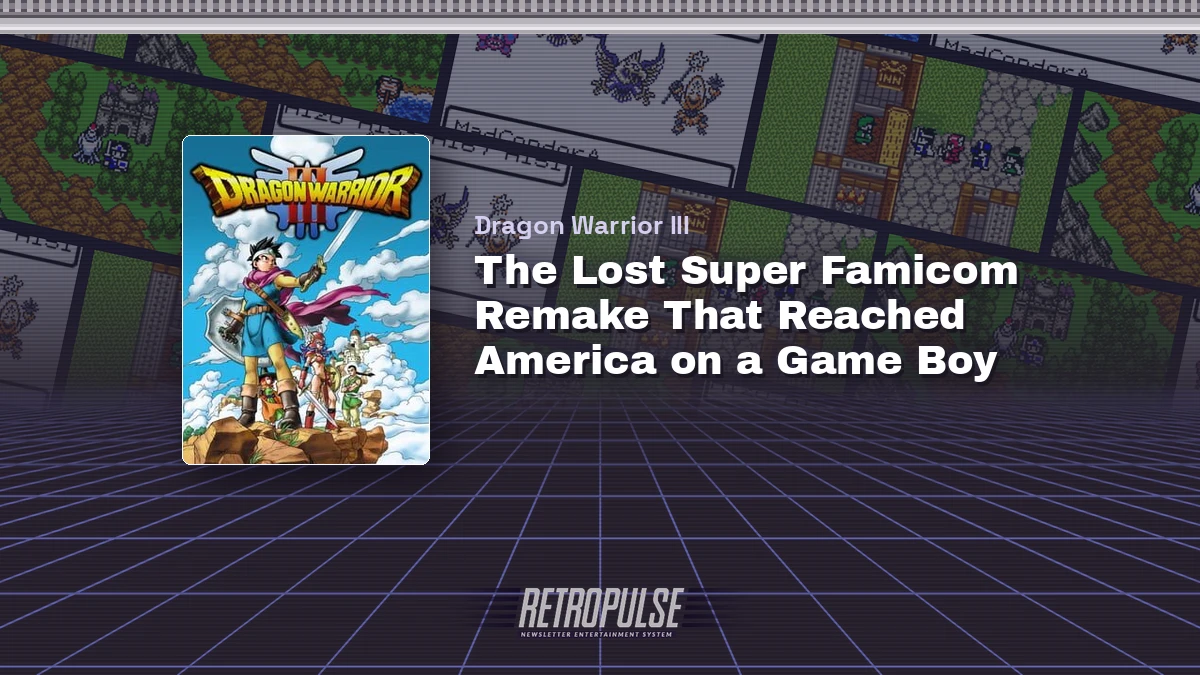
In North America, Enix gave the box an anime look because fans had asked for it on its message boards. The cartridge was one of the biggest Game Boy Color games released there, with a 32-megabit ROM. Reviews were strong: IGN gave it a perfect 10, Nintendo Power a 4 out of 5, and GameSpot a 7.6 along with a nomination for its best Game Boy Color game of the year, which went to the Zelda Oracle games instead.
Build your own party
The core is the same quest that made Dragon Quest III famous. On your sixteenth birthday the King of Aliahan sends you after Baramos, the archfiend your father Ortega seemingly died trying to stop, and you recruit up to three companions at the local tavern. Every one of them is yours to design. You pick a class such as Warrior, Fighter, Cleric, Mage, Dealer or Jester, and the remakes add the Thief, a quick class that can use boomerangs and whips.
Halfway through, the temple of Dhama lets any character of level 20 or higher change class, halving their stats and restarting at level 1 while keeping their spells. So a Mage can become a Warrior who still knows Mage magic, which is exactly as fun to plan as it sounds. The remakes even let you switch to Jester at Dhama, something the original refused to allow. On top of that, five magic seeds at the tavern adjust each recruit's starting stats, and the result sets their personality, which in turn decides which stats grow as they level up.
Smaller sprites, animated monsters
The graphics are a clear step down from the Super Famicom, although they look different from the NES version too. What the Game Boy Color does keep is the remake's battle animation: monsters and attacks now move in combat, a feature that first appeared in Dragon Quest VI.

The Game Boy Color's character artwork is the weakest part, arguably worse than the original drawings. Even so, the world itself is readable and colorful, and it borrows real places in ways that are fun to spot, from Romaly for Rome and Portoga for Portugal to Jipang, where the hero fights Yamata no Orochi.
Koichi Sugiyama on a handheld speaker
Koichi Sugiyama's score is the same Dragon Quest III music, and the Game Boy Color plays it at roughly the quality of the original NES release, so the Super Famicom's enhanced music doesn't make the trip. Still, the themes hold up, and hearing them on a handheld is part of the charm.
Medals, Pachisi and two extra dungeons
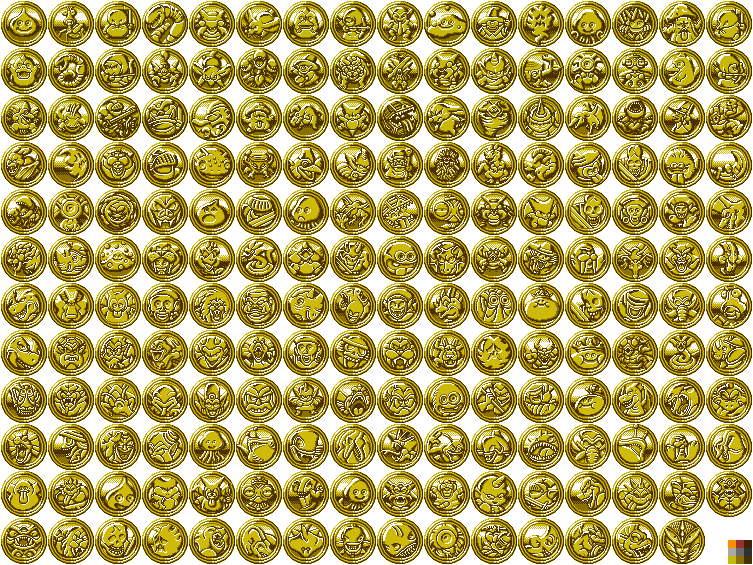
The remake's additions are where the Game Boy Color version earns its place. Mini Medals, the hidden collectibles from Dragon Quest IV, are scattered around the world to trade for items, and a second system, Monster Medals, drops from defeated enemies; two players can even swap Monster Medals over a link cable. Oddly, the cartridge also contains Monster Medal graphics for every monster from Dragon Warrior IV, which never appear in play.
There's also Pachisi, a giant board-game adventure in which you can win items, based on Yuji Horii's Itadaki Street series. After the main quest, two bonus dungeons open up. Meanwhile the quality-of-life upgrades from later games are all here: a bag for items instead of a bank, Tidy commands to sort them, a Full HP command that handles healing for you, and simpler door opening. (The doors were never that hard. Still, appreciated.)
The localization changed a few things, too. Many class names were renamed, Soldier becoming Warrior for example, and most characters keep their original Japanese names, so the legendary Erdrick is now Loto, although the spell names stay as English players knew them.
Still a great way to play it
Dragon Warrior III on the Game Boy Color is old-school, and GameSpot warned at the time that only the hardcore need apply. That's fair, but it misses how generous this version is. It has the Super Famicom remake's systems plus its own medals and secrets. Plenty of players still name it a favorite, sometimes even the best version of the game, and if you can find a copy, it's well worth playing.