The Nintendo Entertainment System sold 61.91 million units, and Nintendo only discontinued it in North America and Europe on August 14, 1995. That is a lot of grey cartridges, and most of them are still out there.
The machine itself is the complicated part. Nintendo designed the western NES to look like a video recorder rather than a games console, and the slot that made it look so respectable is the same slot that makes so many of them blink at you today.
The front-loader is cheap, the top-loader is reliable

The original NES hides the cartridge behind a hinged door. In October 1993 Nintendo released a redesigned version, the NES-101, with a top-loading slot and a single "dogbone" controller, for $49.99. It omits the 10NES lockout chip to avoid the original console's reliability issues, but it also omits AV output, so the standard model only gives you an RF signal.
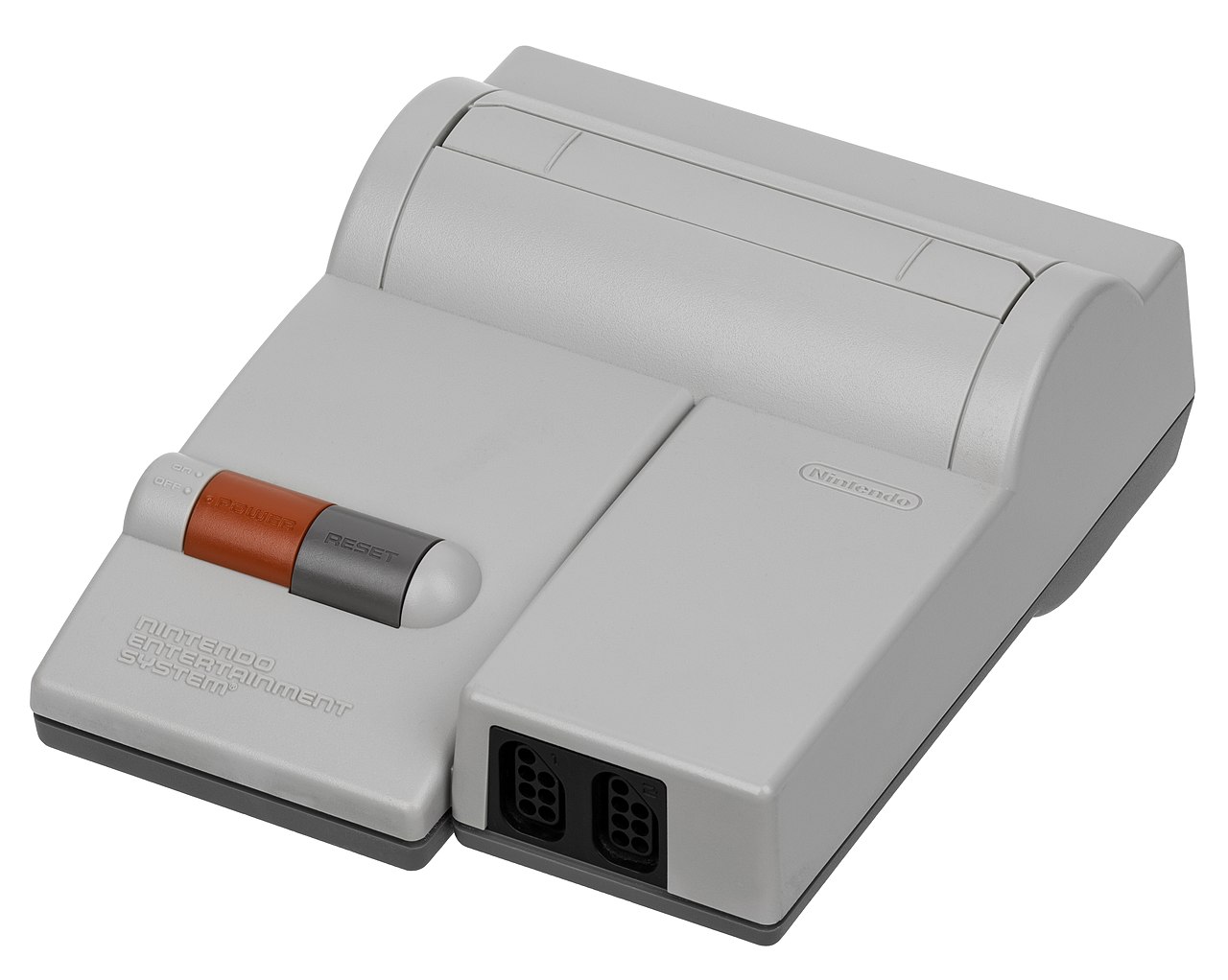
That trade shows in the prices. A loose front-loader sold for a typical $115 in late summer 2026, while a loose top-loader went for a typical $180 across 2025 and the first half of 2026. You pay extra for the one that boots first time, and you give up picture quality for it.
The blinking light is usually the slot, not the console
The front-loader's slot looks like a zero insertion force socket, but pushing the cartridge down bends the contact pins slightly. Frequent insertion and removal wears those pins out, and the design has proven more prone to dirt and dust than a standard edge connector.
Problems with the lockout chip then cause the console's most famous fault: the blinking red power light, as the chip resets the console once per second when it can't talk to the chip in the game. So a front-loader that blinks is often a dirty game or a tired connector rather than a dead machine. Blowing into the cartridge, the old cure, actually sped up tarnishing because of the moisture.
Save batteries are dying on schedule
NES games that save keep that save in memory behind a coin cell, a CR2032 inside the shell. A game that gives you a password stores nothing on the cartridge, so it has nothing to lose.
The Legend of Zelda was one of the first games to include an internal battery for saving, and it came in a gold shell when every other NES game was grey. Test the save on any battery game before you pay for it, since a dead cell means starting over every time you switch off.
Loose carts are cheap and boxes are not
Loose carts of the big games are cheap. Tetris sold for a typical $10 loose around the new year of 2026, Super Mario Bros. for a typical $19 loose in September 2026, and Mega Man 2 and Mike Tyson's Punch-Out!! for a typical $35 each.

Boxed is a different hobby. A boxed Super Mario Bros. went for a typical $294 that summer, more than fifteen times the cart, and boxed copies of Mega Man 2 and Punch-Out!! sold for a typical $212 and $202. The cardboard is where the money went.
Black boxes, first prints and labels have their own prices
Collectors treat the black box games as a set of their own, next to the Konami silver boxes and the Capcom purple boxes. Breaking the library into sub-sets like these makes a big NES collection feel achievable.
The first print of a game is the initial production run before Nintendo revised the packaging. Gameplay is identical, but collector value is not. One dealer sold a first-print Original Mario Bros. for three times the regular boxed price of around $215, and a Mike Tyson's Punch-Out!! with the letter from Tyson included in first prints went for $550 against the usual $198. A box whose hang tab was never used and still sits flush with the back sells for more, too.
Sometimes the label is the whole story. Bandai released Stadium Events in North America in September 1987 for its Family Fun Fitness mat. Nintendo bought the mat and renamed it the Power Pad, and the game came back as World Class Track Meet, which is common. Estimates put the number of Stadium Events copies that reached shoppers at about 200, so if you find a Power Pad game in a bin, read the label before you get excited.
Late Taito games are the expensive shelf
The NES games that cost serious money are mostly late ones. Taito released Little Samson in 1992, when stores were already turning their shelves over to the Super Nintendo, and the game earned strong reviews and weak distribution. Loose carts sold for a typical $2,434 from mid 2025 into 2026.
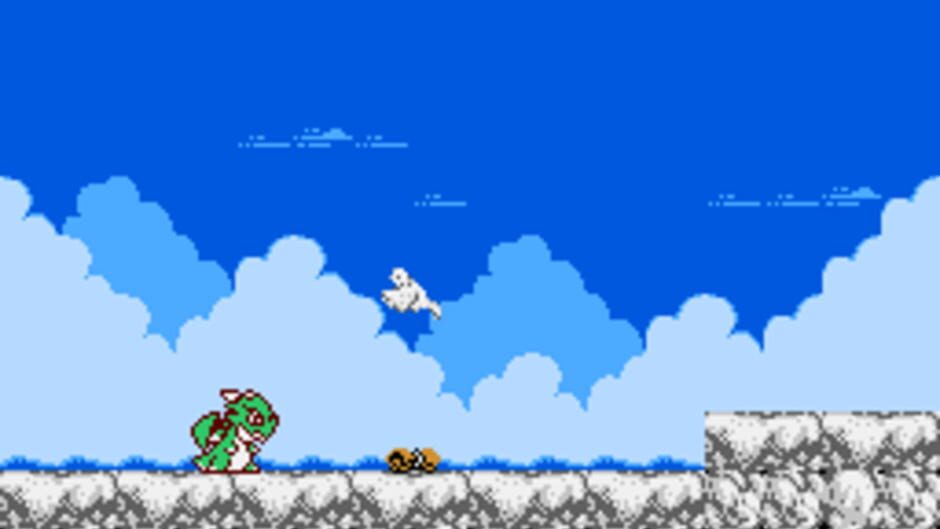
It isn't alone. Panic Restaurant, another Taito platformer, reached North America in October 1992 and sold for a typical $947 loose from 2025 into early 2026. Power Blade 2, also from 1992, went for a typical $1,199 loose over the same stretch. That combination of good game and late release is how NES titles become expensive.
Reproductions follow the money
Reproduction cartridges of Little Samson are common, so buyers open the shell or ask for photos of the board. An untorn label, clean contacts and genuine internals decide what a copy is worth, and the same goes for every other four-figure cart.
A rule of thumb follows from the prices above. Nobody fakes Tetris at $10. When a game costs hundreds, ask for a photo of the board before you pay.
Famicom carts are a different shape
The Japanese Famicom uses smaller cartridges with 60 pins, against 72 on the NES. To save money, some early North American games were simply Famicom cartridges attached to an adapter inside the NES shell, which is a fun thing to find if you ever open one.
So a Famicom cart won't go into an NES on its own; it needs an adapter. Japanese games are a separate shelf.
PAL carts are a separate shelf
Original NES consoles sold in different regions have different lockout chips, which enforces regional lockout between North America, most of continental Europe, and a third region covering the British Isles, Italy and Australasia. A European cart won't simply boot in an American front-loader.
The top-loader skips the lockout chip altogether, which removes that particular check. Either way, check which region a listing is before comparing it with the price you have in mind, because an American and a European copy of the same game are different products.
The Deluxe Set is worth more complete than in parts
The NES Deluxe Set came with the console, R.O.B. the robot and the Zapper light gun. In one dealer's guide from October 2025, a complete Deluxe Set in good condition sold for around $300 to $600, while one missing parts in rougher shape goes for $150 to $400.
Small things add up for collectors. The same dealer valued his own set at around $400 to $450 because it was missing the little bags for R.O.B., the Zapper, the controllers, the power pack and the TV converter. The game boxes are typically the most expensive part of a set, so check they are there before you agree a price.