The Super Nintendo sold 49.10 million units, and over 1,700 games were released for it. It arrived in North America on August 23, 1991, in a box that also held Super Mario World, which is why so many of us have a copy of that cart and so few of us still have the box.
That gap between the cart and the box is the first lesson of SNES collecting. The second is that the most famous role-playing games on the system cost more than the console that plays them.
The original console outputs more than the redesign
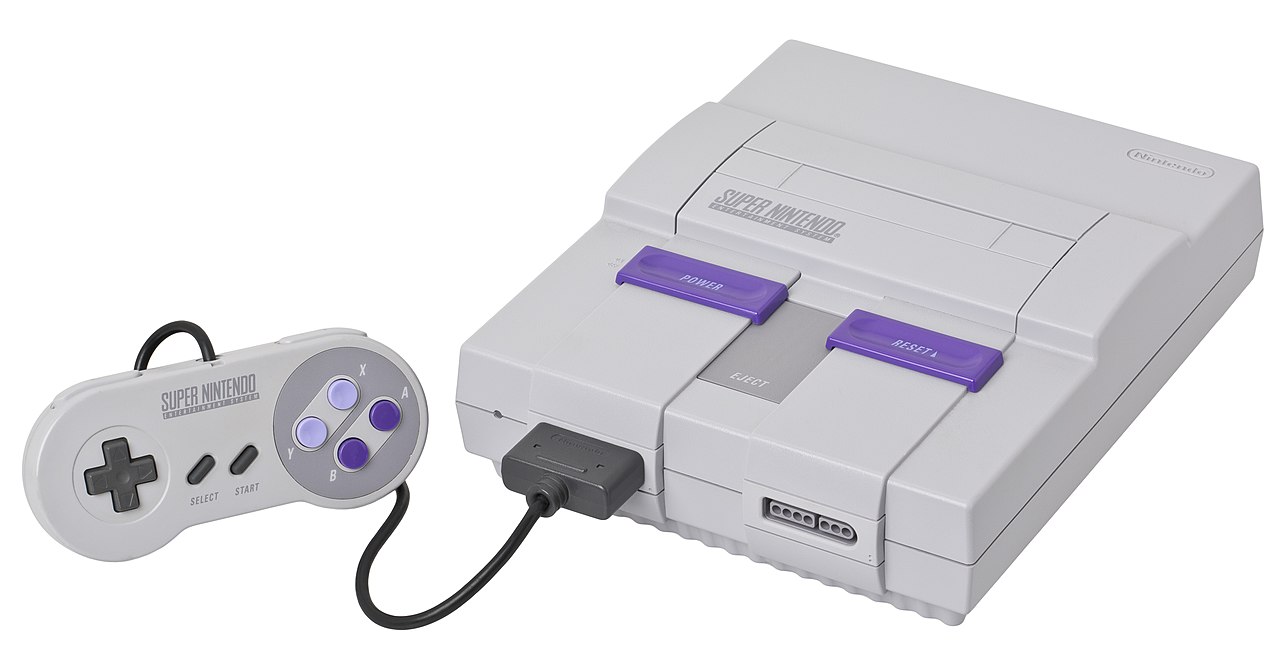
In October 1997 Nintendo released a redesigned model, the SNS-101 or New-Style Super NES, in North America for $99. Like the earlier New-Style NES, it is slimmer and lighter than its predecessor, but it lacks S-Video and RGB output. The original's MULTI OUT connector can output composite, S-Video and RGB, so if you care about picture quality on a modern setup, the original model is the one to buy.

A loose original console sold for a typical $105 in summer 2026, and a boxed one for a typical $277 from late 2025 into 2026. That is less than a loose Chrono Trigger, which says a lot about where the money in this hobby sits.
Expect the grey to have gone yellow
The plastic used in the casing of some older SNES and Super Famicom consoles is particularly susceptible to oxidation with exposure to air. Combined with the particularly light colour of the original plastic, that makes affected consoles turn yellow, and if parts of the case came from different batches of plastic, they yellow unevenly.
So a two-tone SNES isn't a fake or a franken-console. It is just old. Price a yellowed one as a player's machine, and look at photos of the actual unit rather than a stock picture.
Super Famicom carts are a different shape
Nintendo used both physical and hardware region locks. North American carts have a rectangular bottom with grooves that match tabs in the console, while other regions' carts are narrower with a smooth curve on the front and no grooves. Adapters or a modified console get past the shape, and a lockout chip in each console and cartridge keeps PAL games and North American or Japanese games apart.
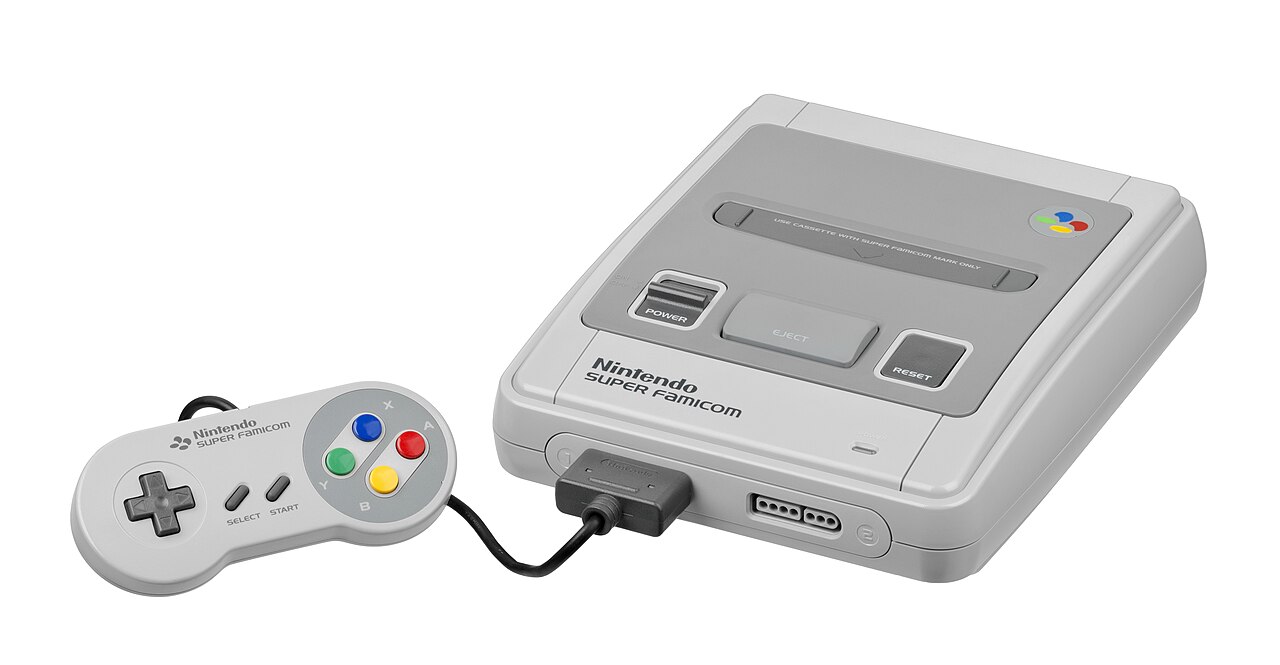
It is worth the trouble. A Japanese market report from September 2026 found loose Super Famicom Chrono Trigger carts at about ¥500 to ¥1,500 in Japanese shops, roughly $8.50 to $12, and complete boxed copies at about ¥3,000 to ¥6,000, roughly $35 to $60. The same game in English costs hundreds, as the next points show. You do have to read Japanese, of course.
Save batteries need replacing the careful way
SNES games that save keep that save in memory behind a CR2032 coin cell inside the shell, and games that use passwords store nothing on the cartridge. The cell is soldered to the board, so a dead save means opening the cart with a 3.8mm security bit and replacing the battery.
The replacement must be a CR2032 with pre-soldered tabs, not just any CR2032, because soldering directly to a battery can cause it to explode. Either buy tabbed cells or let someone with an iron do it, and test the save before you pay for any role-playing game.
The pack-ins are cheap and their boxes are not
The games that came with consoles or sold by the million cost very little loose. Super Mario World sold for a typical $18 loose in September 2026, Street Fighter II for a typical $17 and Donkey Kong Country for a typical $20 the same month. The Legend of Zelda: A Link to the Past went for a typical $40.
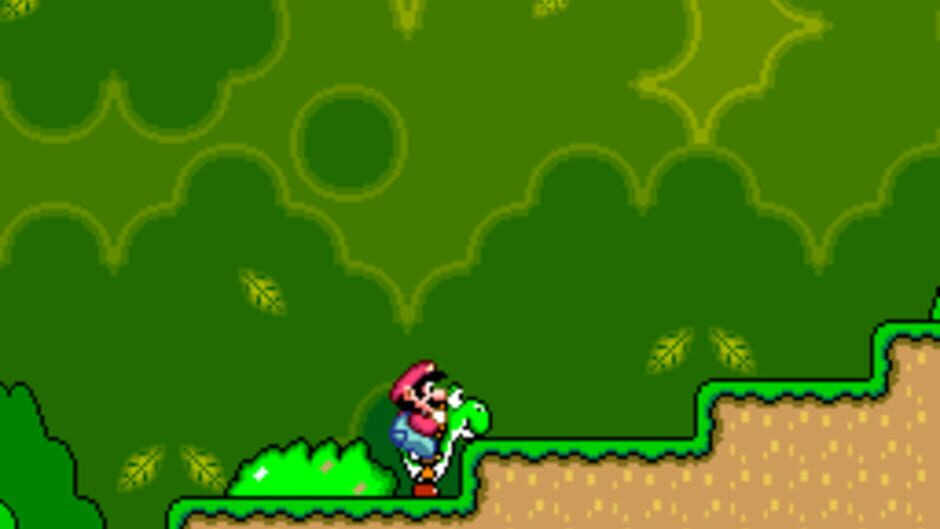
Boxed copies are a different matter. A boxed Super Mario World sold for a typical $613 in 2026, more than thirty times the cart. Millions of households ended up with a copy, so the cartridge is worth little, while the box and manual are the scarce part.
The cardboard is fragile, so condition is the price
Crushing is the main enemy of a boxed game. EarthBound's oversized box is the extreme case, since those large boxes rarely survived years in a closet with their corners intact, but every SNES box is cardboard and every one shows its years. That is why boxed prices swing so widely: a crushed corner and a sharp one are not the same object to a buyer.
So when you buy boxed, ask for photos of all four corners and the top and bottom flaps. If you only want to play, the loose cart is exactly the same game, at a fraction of the price.
The role-playing games are the expensive shelf
The SNES games that cost real money are mostly role-playing games. Chrono Trigger sold for a typical $260 loose and $924 boxed in summer 2026. Final Fantasy III went for a typical $85 loose that summer. EarthBound tops the list at a typical $400 loose in late summer 2026 and $2,551 boxed over 2026.

EarthBound shows why. It sold poorly in the US, around 140,000 copies against twice as many in Japan, and every copy came in a big box with a strategy guide included. A complete one needs that guide, which is why it costs so much more than the cart.
Rental and competition carts were never in shops
Some of the costliest SNES carts were never sold at retail. Hagane: The Final Conflict was exclusive to Blockbuster and could only be rented from its stores rather than bought, so surviving copies often show rental stickers or labels scraped by store staff. Loose carts sold for a typical $1,400 from mid 2025 into 2026.
Donkey Kong Country Competition went further. It was used for tournaments in Blockbuster stores, with only 2,500 copies made, and some were later given away through Nintendo Power. Carts like these are a separate hobby from collecting the library, and the safest way to approach them is to know the board inside before you look at the price.
Fakes give themselves away on the label and the board
Bootleggers are churning out fake classic games, and today some fake labels are printed professionally in factories. Labels are still the first check. Official labels were produced on expensive offset printing machines, so the illustrations are crisp and even the tiniest text is sharp, while a fake shows blurrier photos and text and is often badly cut or off centre.
The board is the final word. Open the cart with a gamebit screwdriver and compare it with a known real one, because you are not going to see a rat's nest of hand-soldered wires on any official Nintendo game. As a rule, the closer a listing gets to EarthBound money, the more photos you should ask for.
Some action games cost more than the classics
Below the role-playing games sits a tier of action games. Kirby's Dream Land 3 sold for a typical $200 loose in summer 2026 and Demon's Crest for a typical $170 loose in spring 2026, with boxed copies of Kirby's Dream Land 3 going for a typical $802 from mid 2025 into 2026.
By comparison, Super Metroid, one of the most celebrated games on the system, went for a typical $91 loose in September 2026. So on the SNES, fame is not what sets the price; how many copies were made and how many boxes survived matter far more.