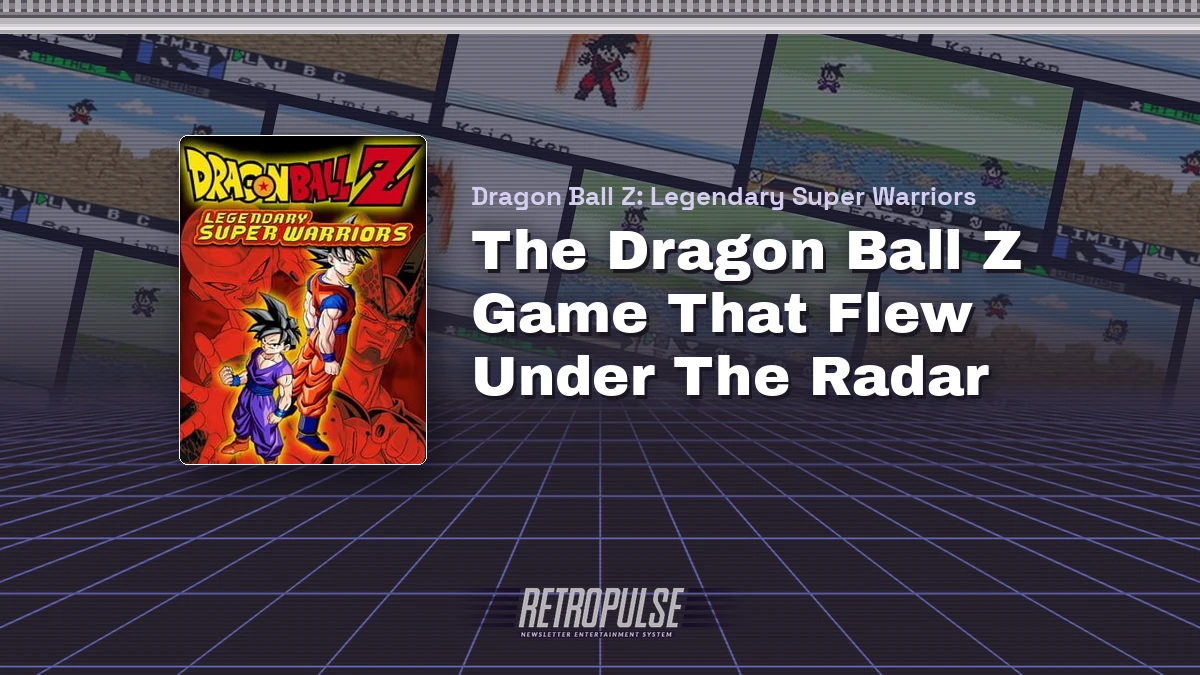
Legendary Super Warriors came out in the United Kingdom on June 28, 2002, six weeks before Japan got it. That alone is odd for a Japanese Dragon Ball game, but the timing is stranger still: it was a Game Boy Color cartridge arriving about a year after the Game Boy Advance launched, when most eyes had already moved to the new machine.
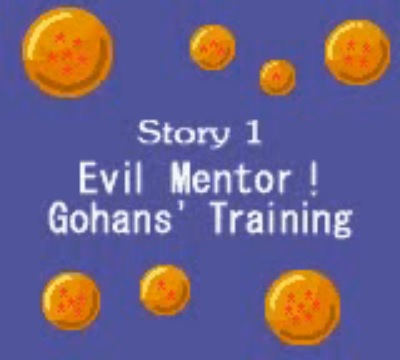
It was also something of a comeback. In Japan, it was the first Dragon Ball game after a gap of roughly five years, following Dragon Ball Final Bout in 1997, and a TV commercial even showed Goku and Gohan firing a Kamehameha together. Then the very first chapter title greets you with a typo, "Gohans' Training", so the game's English polish wasn't quite at the same level as its ambition.
A late Game Boy Color send-off
The studio behind it was Flight-Plan, with Banpresto publishing in Japan and Infogrames handling North America and Europe, where it shipped in English, French, German, Spanish and Italian versions. North America got it last, on November 8, 2002. In Japan it was the third Dragon Ball game on Game Boy hardware.
Reviews were cool. Famitsu gave it 19 out of 40, praising how easy the rules are to learn and how much action there is for a card game, while finding the balance lacking. Players have been warmer since. One called it a weird card-battler that "could have used a year more in the oven", yet plenty of people remember it as one of their favorite Game Boy Color games.
The whole series as a card game
The appeal is scope. The story covers the anime from the Saiyan Saga all the way to the end of the Buu Saga, told across 30 chapters, plus two extra chapters set in Future Trunks's timeline that open up when you meet certain conditions. Most of it is seen through Gohan's eyes, and when he's absent the story switches to Goku or another fighter.
Between fights you explore an overworld, where characters chat and extra cards lie waiting, and every tenth battle brings a saga boss: Frieza, Cell and finally Kid Buu. After each win you choose a card to unlock, so your deck grows with the story. Once you finish, a second playthrough starts with your data intact and the limits on who can fight removed, so you can finally stage matchups the anime never allowed. Heroes can be unlocked on the first run; the villains wait for the second.
Sprites that make the most of a small screen
The battles are small but lively, with compact fighter sprites set against simple skies and landscapes, and big moves such as Goku's Kaio-ken get a full-screen moment of their own. Between battles, the story plays out with character portraits and speech bubbles rather than cutscenes, which keeps things moving on a cartridge that has four sagas to cover.

The script also tones down the original dialogue, swapping talk of killing for talk of defeating, which makes some of the series' most brutal moments sound like a tournament result.
Decks of 20, button presses and phases
Before each fight you build a deck of 20 cards, with no more than three copies of any one card, from the 125 in the game. There are attack, support and defense cards, and each character has four stats: Health Points, Strength, Ki and Speed. Strength powers melee cards, Ki powers beams, and Speed decides accuracy, dodging and which phase you are in. Characters level up only four times each, so every stat choice matters.

Battles swap between an attack phase and a defense phase. Cards cost Card Cost points, and one way to earn them is a command attack, which asks you to hit a string of buttons in time. Each successful press deals damage and adds one point, while a mistake hands your opponent a counterattack. Pressing B at the right moment counts as a success and keeps the combo going, and pressing A stops early and banks what you have. Position matters too: standing close raises your attack and gives you more time for button inputs, while keeping your distance raises your defense. (It is, in short, a card game where you still have to mash buttons. Very Dragon Ball.)
Up to three cards can be set as a character's limited moves, which can then be used again and again while powered up, and some fighters can transform, into a Super Saiyan for example, once you meet the right conditions. A post-game battle mode pits you against random opponents until you lose, with exclusive cards waiting for anyone who can keep a streak going, and a link cable mode lets two players battle or trade.
Worth it for Dragon Ball fans
Legendary Super Warriors is clunky in places, and the balance never quite settles. Even so, it squeezes the entire run of Dragon Ball Z into a Game Boy Color cartridge with a battle system that rewards both planning and reflexes. If you have any affection for the series, it's well worth tracking down; as a Game Boy Color-only cartridge, it needs a Game Boy Color or later.